
Introduction to Vendor Document for Project Systems Architecture
In a large industrial project, the control system architecture is much more than a drawing showing DCS, PLC, servers and networks. It defines how the different automation and safety systems will work together and where each vendor is responsible. A clear architecture can prevent costly engineering changes, communication problems and integration issues later in the project.
The Vendor Document for Project Systems Architecture becomes especially important during vendor bidding, technical evaluation, detailed engineering, testing and commissioning. It provides a practical connection between the project requirements prepared by the engineering company and the actual system proposed by the vendor.
In a typical process plant, the architecture may include field instruments, remote I O, DCS controllers, PLC systems, SIS or ESD systems, Fire and Gas systems, operator stations, engineering stations, application servers, historical servers and several communication networks. Understanding how these elements are connected is essential for instrumentation and control engineers.
What Is a Vendor Document for Project Systems Architecture?
Purpose of a Vendor System Architecture Document
A vendor system architecture document is prepared by the supplier to show how its proposed control, automation and safety system will satisfy the requirements of the project.
The document normally identifies the major system components, controllers, servers, workstations, networks, communication interfaces and external systems. It gives the engineering team a clear picture of what the vendor intends to supply.
Relationship Between Project Requirements and Vendor Architecture

The vendor architecture should be developed against the project design system architecture. The design architecture is normally prepared by the engineering company after considering the process requirements, control philosophy, shutdown philosophy, project specifications, communication requirements and package interfaces. The vendor then develops its proposed architecture around those requirements.
Master Global Control System Standards Before Engineering Approval: 30+ International Standards for Control Systems: The Complete Guide for Automation & Instrumentation Engineer
Vendor System Architecture in EPC Projects
The normal relationship can therefore be understood as:
- Project requirements
- Design system architecture
- Material requisition
- Vendor proposal
- Vendor system architecture
- Technical clarification
- Final approved vendor architecture
The vendor document should not simply be a standard product brochure or a manufacturer’s generic architecture. It needs to demonstrate how the proposed system will actually be configured for the project.
Unlock Powerful Engineering Templates Every Instrumentation Engineer Needs: Downloadable Engineering Documentation Instrumentation and Control Templates
Why Is the Vendor System Architecture Document Important?
How Vendor Architecture Supports Technical Evaluation
During procurement, different vendors can propose different equipment, platforms, communication arrangements and system configurations for the same project requirement. Some vendors may also use products from different manufacturers.
Identifying Missing System Components and Interfaces
This makes technical comparison difficult if every vendor presents its architecture in a completely different way. A properly prepared vendor system architecture makes it easier to identify missing equipment, additional facilities, communication requirements and differences in system configuration.
Clarify ESD And SIS Differences Before Making Safety Decisions: ESD vs SIS Difference When to Use Each and Practical Engineering Guide
Supporting Detailed Engineering and Commissioning
The document helps engineers to:
- Verify compliance with project requirements
- Compare different vendor proposals
- Identify missing system components
- Review communication interfaces
- Check redundancy arrangements
- Understand network architecture
- Clarify vendor responsibility
- Review third party package integration
- Support FAT and IFAT planning
- Support detailed engineering
- Reduce commissioning and troubleshooting problems
A good architecture document can therefore expose a problem before the purchase order is finalized rather than after equipment has arrived at site.
Refer the below link for theWhat is HAZOP Study in Instrumentation Engineering for EPC Engineers in Process Industries
Design System Architecture vs Vendor System Architecture
What Is Project Design System Architecture?
The design system architecture represents the project’s intended control and safety system arrangement. It is developed before vendor selection and forms an important part of the technical basis for system procurement.
What Is Vendor System Architecture?
The vendor system architecture represents how a particular supplier intends to satisfy that design.
Key Differences Between Design and Vendor Architecture
This distinction is important. A vendor should not simply submit a preferred standard architecture and expect the project team to accept it without review.
For example, the project architecture may require DCS, ESD, PLC based package systems, operator stations, engineering stations and redundant control networks. One vendor may propose a common platform for DCS and ESD, while another may propose separate systems. Both solutions may be technically possible, but the engineering team must determine whether each proposal satisfies the project requirements.
Why Architecture Differences Must Be Reviewed
The reference material also highlights that different vendors may offer similar systems using different brands, models or configurations. This is why the architecture must be reviewed together with the material take off, specifications and other technical documents.
Master Shutdown Planning Before Safety Risks Become Costly: Shutdown Philosophy: Engineering Documentation for Process Safety and Emergency Shutdown Systems
What Should Be Included in a Vendor Project Systems Architecture Document?
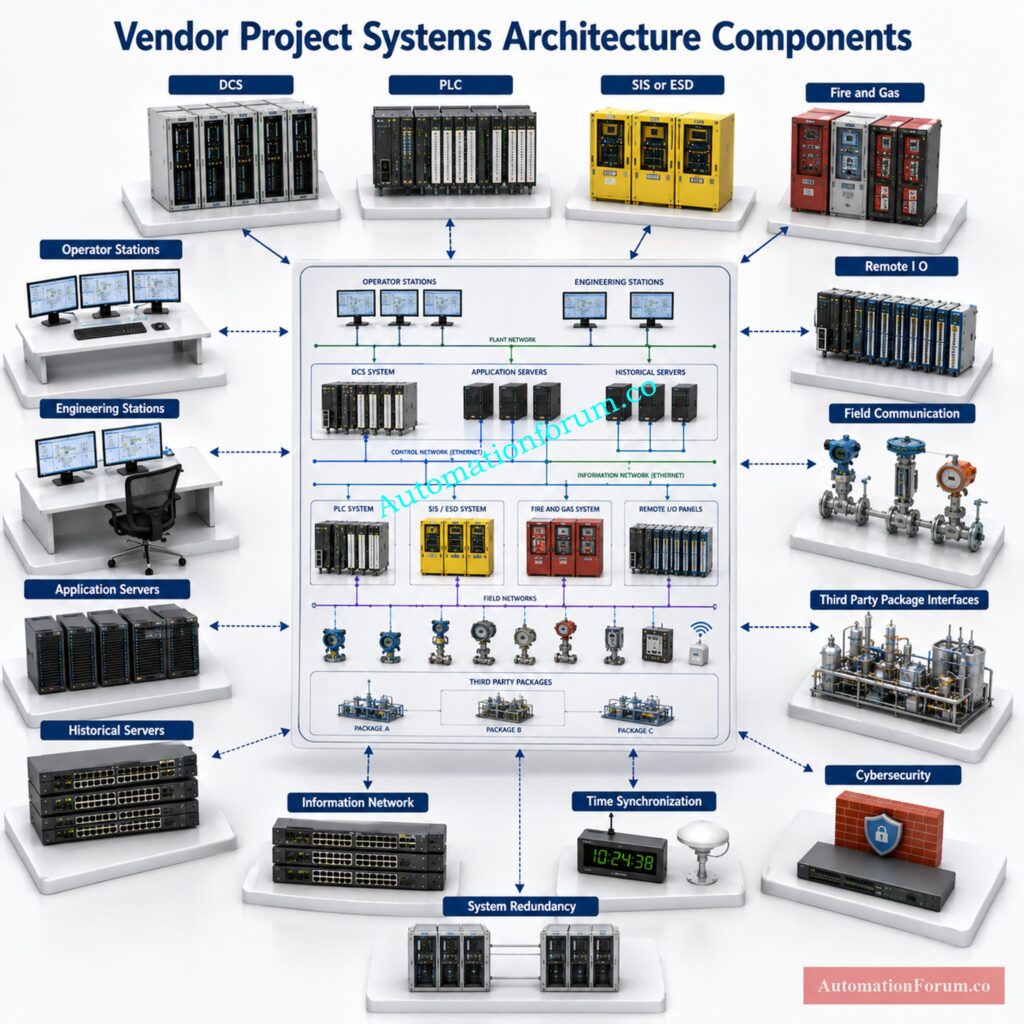
The exact content depends on the project and system package, but a typical vendor system architecture document may identify the following:
DCS, PLC, SIS and ESD Control System Platform
The architecture should show the selected DCS, PLC, SIS or ESD platform and the major controllers associated with each system.
Servers and Operator Workstations
Operator stations, engineering stations, application servers, historical servers and other important system computers should be identified where applicable.
Know The Essential I&C Standards Behind Reliable Engineering: Key Instrumentation & Control (I&C) Standards Every Engineer Should Know
Control Network and Information Network
The document should clearly show control networks, information networks, network switches and important communication paths.
Network redundancy should be visible where it is required by the project.
Remote I O and Field Communication
Remote I O arrangements, field communication networks, serial interfaces and industrial Ethernet connections should be identified where applicable.
Third Party Package Interfaces
Interfaces with package PLCs, analyzers, Fire and Gas systems, electrical systems and other third party systems should be clearly represented.
Avoid Commissioning Failures With Proper Loop Testing: Loop Check vs Functional Test in Instrumentation Commissioning
Time Synchronization and Network Services
The architecture should indicate how important systems receive time synchronization when required.
Cybersecurity and Network Segregation
Where cybersecurity requirements apply, the architecture should provide sufficient information about network segregation, access arrangements and system boundaries.
System Redundancy and Spare Capacity
Important redundancy arrangements for controllers, networks, servers and other critical components should be clearly identified.
The architecture should always be read together with the relevant specifications, material requisition, bill of material and interface documents rather than being treated as a standalone document.
Strengthen PLC Alarm and Trip Documentation Before Commissioning: PLC Alarm and Trip Documentation Procedure – EPC PLC Automation Engineer Guide
DCS and ESD System Architecture Considerations
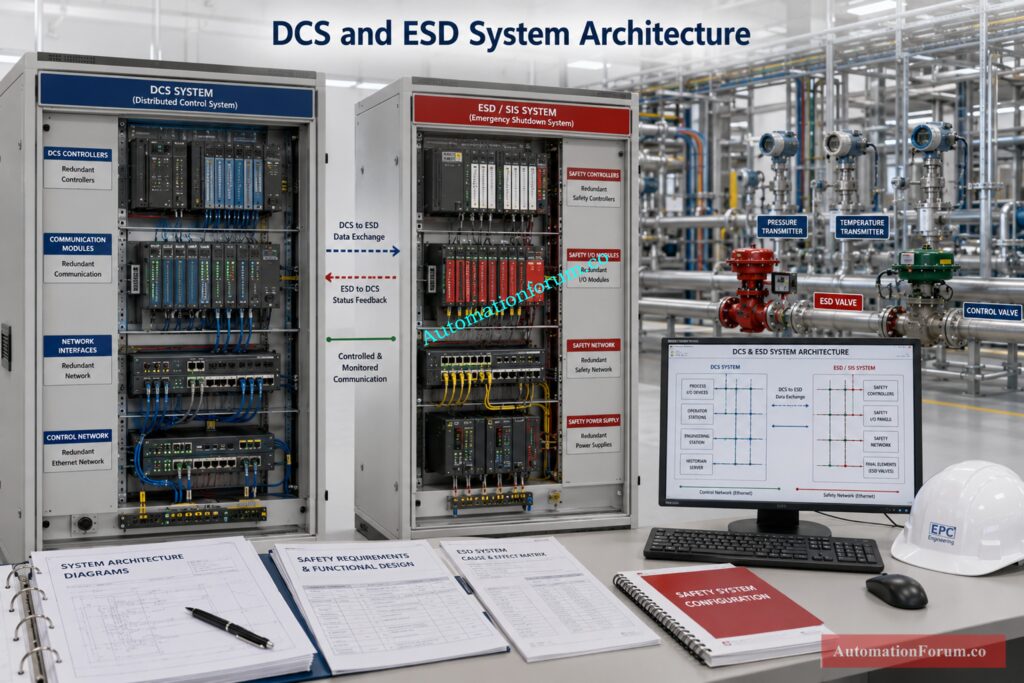
- DCS and ESD architecture requires particular attention because control functions and safety functions have different purposes.
- A project may use a common vendor platform for both DCS and ESD, or it may use separate platforms. A common platform can simplify integration and vendor responsibility. However, the architecture still needs to satisfy the required independence of safety functions.
- Communication between DCS and ESD must therefore be carefully reviewed. Engineers should identify what information is exchanged, why it is exchanged and how the communication is implemented.
- Communication should not be allowed to compromise the independence required for safety functions.
- Where different vendors are responsible for DCS and ESD integration responsibility becomes even more important. The project should clearly define who is responsible for interface testing and resolving communication or integration problems.
Get Critical Alarm Setpoints Right Before Plant Startup: Alarm & Trip Setpoint List in Instrumentation Engineering
What Is the Role of Vendor Architecture During the Bid Stage?
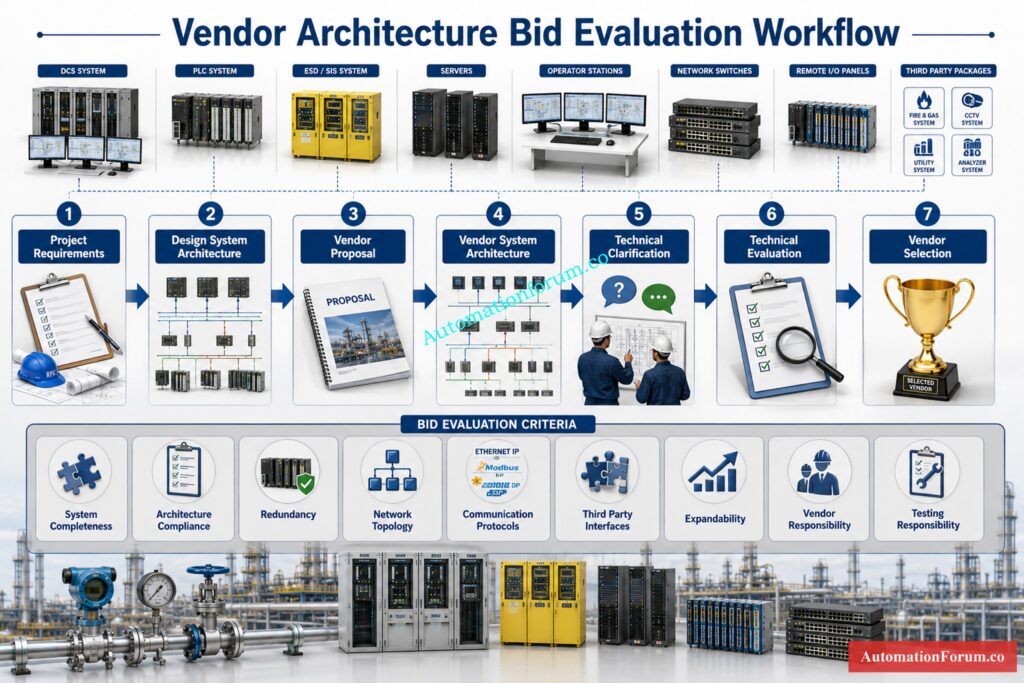
Bid Stage Vendor System Architecture
During bidding, vendors normally do not perform the same level of detailed engineering that they would perform after receiving the purchase order. Their architecture is therefore often a general representation of the proposed system.
This does not mean the document can be ignored.
Technical Queries and Vendor Clarifications
The engineering team should review the proposed architecture and issue technical queries when important information is missing. The reference material describes how clarification requests can help vendors align their proposed architecture with the project format and requirements.
Understand ESD Signal Selection Before Finalizing System Design: How are ESD Signals Selected? Complete ESD Signal Selection Guide
What Engineers Should Review During Bid Evaluation
During bid evaluation, engineers should review:
- System completeness
- Architecture compliance
- Controller quantity
- Redundancy
- Network topology
- Communication protocols
- Server and workstation requirements
- Third party interfaces
- Expandability
- Vendor responsibility
- Testing responsibility
- Future expansion capability
The objective is not simply to select the architecture with the largest number of features. The objective is to identify the proposal that meets the project requirements clearly and reliably.
Build Complete PLC Records That Simplify Troubleshooting: PLC System Documentation Guide: Essential Records for Industrial Automation
How to Compare Vendor System Architecture Documents
- A practical comparison starts by using the project design architecture as the common reference.
- First, identify every major system block required by the project. Then check whether each vendor has represented the same function.
- Next, compare controllers, servers, workstations, networks, communication interfaces and redundancy.
- The bill of material should then be checked against the architecture. This is important because a component shown on the architecture may not always be included correctly in the commercial or technical offer.
- Engineers should also look for enhancements. A vendor may provide additional facilities that improve the proposed solution. These should be identified separately from missing requirements so that the technical evaluation remains fair.
- A structured comparison should cover system capacity, spare capacity, network redundancy, communication capability, package integration, cybersecurity, testing responsibility and future expansion.
Refer the below link for the Types of Engineering Drawings and Documents used in Instrumentation
How to Review Communication and Network Architecture
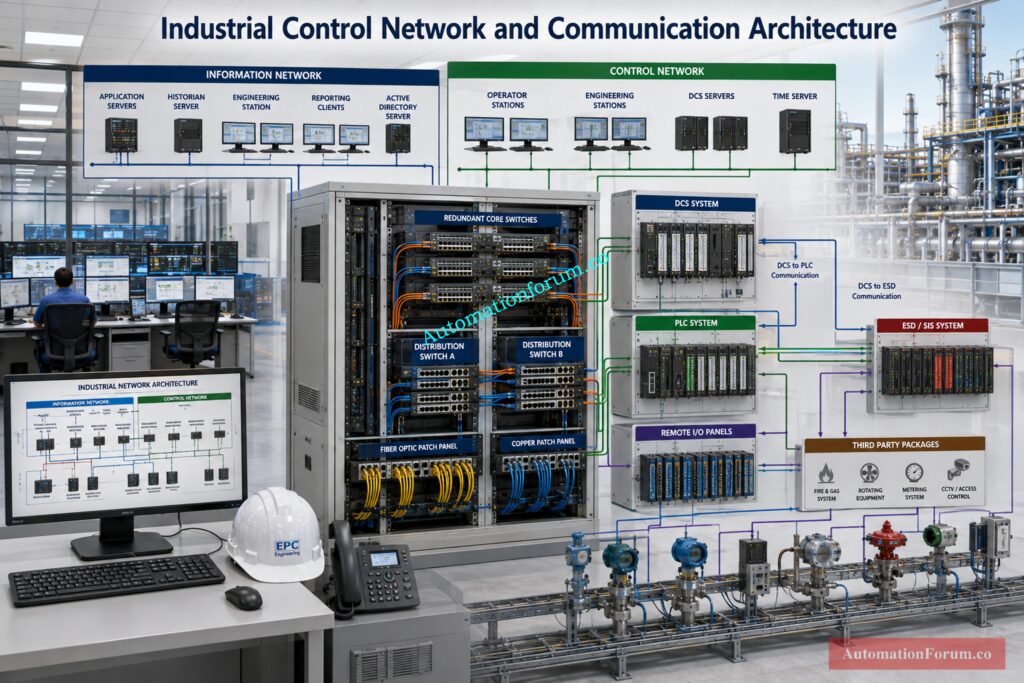
- Communication is often one of the areas where vendor proposals differ most.
- The architecture should make major communication paths easy to understand. Engineers should review DCS communication with PLC systems, ESD communication, package interfaces, server connectivity and remote system connections.
- The review should also consider network redundancy, network segregation, communication protocols, time synchronization and diagnostic facilities.
- For a large plant, unclear communication architecture can create serious problems during commissioning. A system may appear complete on paper while an important interface responsibility remains undefined.
- Every major interface should therefore have a clear source, destination, communication method and responsibility.
Verify Safety Integrity Before Approving Critical Protection Systems: SIL Verification Report (Safety Integrity Level Verification Report)
How Does Vendor Architecture Support IFAT and System Integration?
- Integrated Factory Acceptance Testing, commonly called IFAT, becomes important when several systems must operate together.
- For example, a project may require DCS, ESD, PLC package systems and simulators to exchange signals and commands before shipment to site.
- If two vendors supply interconnected systems, the project must define who is responsible for integration testing.
- This is particularly important when DCS and ESD systems are supplied by different vendors.
- The project may require one vendor to take responsibility for the integrated test, preferably with the required simulators or representative systems available for testing.
- The reference source specifically highlights the value of IFAT for checking system integrity when different systems are involved.
- Interface problems discovered during IFAT are usually much easier and less expensive to resolve than the same problems discovered during site commissioning.
Catch DCS Problems Before They Reach Your Plant: Factory Acceptance Test Procedure for Distributed Control System DCS
How Is the Final Vendor System Architecture Developed?
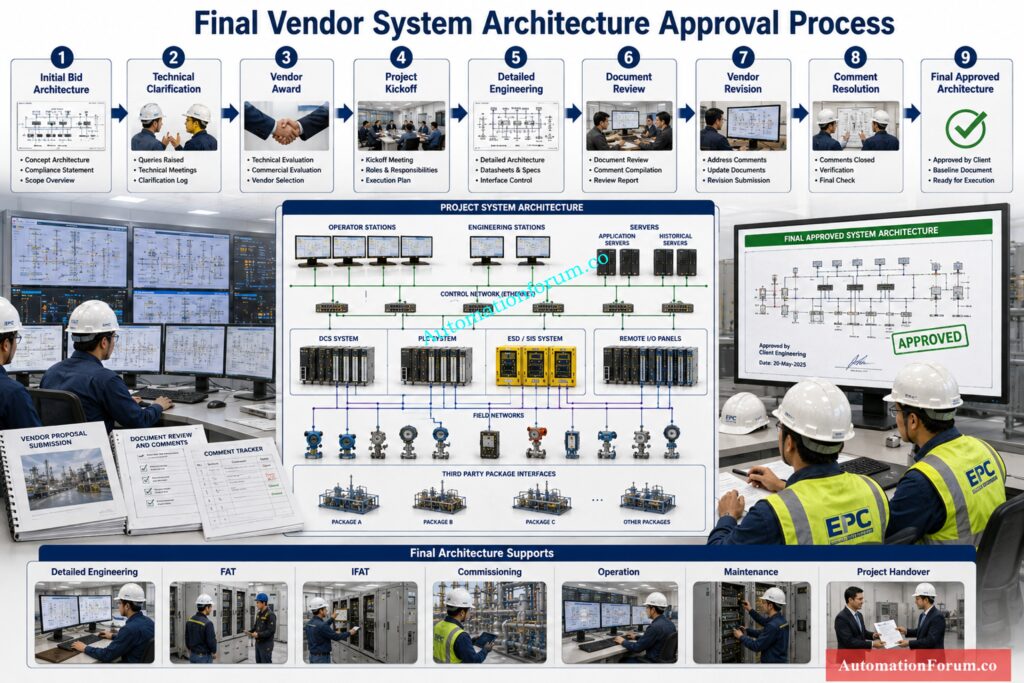
The vendor architecture does not remain unchanged after vendor selection.
It normally develops through several stages:
- Initial bid architecture
- Technical clarification
- Vendor award
- Kickoff meeting
- Detailed engineering
- Document review
- Vendor revision
- Comment resolution
- Final approval
After the vendor receives the purchase order, more detailed information becomes available. Controllers, networks, communication interfaces, servers and other system components can then be defined more accurately.
The final architecture may also include supporting tables, explanatory information, referenced drawings and related documents. The reference article notes that the final revision becomes considerably more detailed as project execution progresses.
The final document should provide enough information to support engineering, testing, commissioning, operation and future maintenance.
Discover The Complete Engineering Document Checklist You Need: 82 Essential Drawings and Documents for Instrumentation and Control Engineers
Vendor System Architecture Review Checklist
- Verify that every required system is represented.
- Verify that system boundaries are clear.
- Verify that communication interfaces are identified.
- Verify controller and network redundancy.
- Verify network topology.
- Verify protocol compatibility.
- Verify third party interfaces.
- Verify cybersecurity requirements.
- Verify vendor responsibility boundaries.
- Verify testing and IFAT responsibilities.
- Verify future expansion capability.
- Verify consistency with the material requisition and project specifications.
See How Third Party Systems Connect With DCS: Integrating Third-Party Systems with a Distributed Control System (DCS): Checklist
Common Problems in Vendor System Architecture Documents
- One common problem is a missing interface. The equipment may be shown, but the communication path or responsibility is not defined.
- Another problem is insufficient redundancy information. A diagram may show two networks without clearly explaining whether the arrangement provides the required redundancy.
- A mismatch between the architecture and bill of material is another important concern. It can lead to procurement gaps and later commercial or technical changes.
- Engineers may also find unclear package integration, undefined vendor boundaries, incomplete server information or assumptions that were never formally agreed.
- These issues are small on paper but can become major problems during FAT, IFAT or commissioning.
Understand The Control Architecture Behind Modern Process Plants: System Architecture
Best Practices for Reviewing Vendor System Architecture
- Prepare a clear project design system architecture before requesting vendor proposals.
- Define minimum architecture requirements in the material requisition.
- Use a common architecture format wherever practical so that vendor proposals can be compared fairly.
- Raise technical clarification questions before final technical evaluation.
- Review the architecture together with specifications, bill of material, interface documents and vendor deviation lists.
- Maintain proper document revision control throughout the project.
- Do not approve an architecture simply because it resembles a standard vendor solution. Always check whether it satisfies the actual project requirements.
Build A Reliable Instrument Index Without Missing Critical Data: Instrument Index Generator for EPC Instrumentation Projects
Conclusion: Importance of Vendor System Architecture in EPC Projects
The Vendor Document for Project Systems Architecture is not simply a diagram submitted by a control system supplier. It is an important engineering document that connects project requirements with the actual control and safety system solution proposed by the vendor.
A good vendor system architecture helps engineers evaluate proposals, identify missing facilities, understand communication interfaces, define responsibilities and plan integrated testing.
Its importance continues after vendor selection. The document becomes progressively more detailed during detailed engineering and eventually supports FAT, IFAT, commissioning, operation and final project handover. The reference material similarly describes the vendor architecture as a document that begins at a general level during bidding and develops into the final project design during execution.
For instrumentation, automation and control engineers, careful review of this document can prevent many expensive problems before they reach the plant.
Trace Every Instrument Signal From Field To Control: Instrument Loop Diagrams
Frequently Asked Questions About Vendor System Architecture
What is a vendor document for project systems architecture?
A vendor document explains how the proposed DCS, PLC, ESD, networks, servers and interfaces will meet project requirements.
It helps engineers review the vendor solution during bidding, detailed engineering, testing and commissioning.
Why is a vendor system architecture diagram important during bid evaluation?
This provides the project team with a clear technical insight for comparing vendor offerings.
It also helps to identify missing equipment, interface gaps, redundancy difficulties and unclear vendor duties.
What is the difference between design system architecture and vendor system architecture?
The design system architecture defines the project’s required control and automation arrangement.
The vendor system architecture shows how the selected vendor will implement that requirement.
Check HART Communication Before Troubleshooting Becomes Difficult: Advanced HART Loop Calculator for Reliable 4 to 20 mA and HART Communication
What should be included in a control system architecture document?
It should show controllers, DCS, PLC, ESD or SIS, servers, workstations, networks, remote I O and communication interfaces.
It should also clearly identify redundancy, third party connections and major system boundaries.
When should the final vendor system architecture document be approved?
The final architecture should be approved after vendor award, detailed engineering and resolution of technical comments.
It should precisely reflect the final system configuration prior to testing, commissioning and handover of the project.
What are the vendor documents?
Vendor documents are technical documentation provided by the vendor to detail its equipment, design, performance and conformity to the project requirements.requirements.
They commonly include drawings, data sheets, system architecture, manuals, calculations, specifications and inspection documents.
What is a vendor in project management?
A vendor is a corporation or provider who provides the equipment, materials, software or technical services needed for a project.
The vendor works to authorized specifications, procurement requirements, timeline and quality standards in EPC projects.
What documents are required for project management?
Common project documents include project schedule, scope documents, specifications, procurement documents, vendor documents, drawings, quality records and progress reports.
The exact document list depends on the project type, contract requirements and engineering discipline.
What are the five main types of vendors?
The five common vendor categories are manufacturers, distributors, wholesalers, service providers and contractors.
In industrial projects, vendors may also be classified according to the equipment, package or specialist service they supply.
What are the 7 steps of the supplier selection process?
The typical seven steps are defining requirements, identifying suppliers, issuing enquiries, evaluating technical and commercial offers, checking vendor capability, negotiating terms and selecting the supplier.
A structured process helps the project team balance technical compliance, quality, cost, delivery and long term reliability.
What are the top 10 vendor management systems for businesses?
SAP Ariba, Coupa, Oracle Procurement, Ivalua, Jaggaer, GEP SMART, ServiceNow, Zip, Procurify and Vendorful are examples of popular vendor management tools.
The best vendor management system relies on the size of the firm, the complexity of procurement, approval procedure, integration demands and project requirements.
Refer the below link for the Instrument Power Supply Load Calculator: 7 Critical Steps for Accurate 24VDC Power Supply Sizing
