
- Why Understanding Inhibit vs Bypass in Process Plants Matters
- What Is an Inhibit in Process Automation?
- What Is a Bypass in Process Automation?
- What Is Override Control in Process Automation?
- Inhibit vs Bypass in DCS, PLC and SIS
- How Inhibit and Bypass Work in Control Logic
- Inhibit and Bypass Applications in DCS Systems
- PLC Interlock Inhibit and Bypass Applications
- Inhibit and Bypass in ESD and SIS Systems
- Practical Inhibit and Bypass Examples in Process Plants
- IEC 61511 and IEC 61508 Requirements for Safety Function Bypass
- How to Calculate Bypass Exposure Time
- Inhibit and Bypass Troubleshooting in Process Plants
- Inhibit and Bypass Best Practices for EPC and Maintenance Engineers
- When Should Inhibit or Bypass Not Be Used?
- Frequently Asked Questions About Inhibit and Bypass
- Conclusion: Inhibit vs Bypass in Process Plants
Why Understanding Inhibit vs Bypass in Process Plants Matters
During plant startup, an instrument may generate repeated alarms, a pump interlock may prevent equipment operation, or a shutdown valve may require maintenance testing. Engineers must determine whether an inhibit or bypass is appropriate before changing the normal control response. Although these terms are sometimes used interchangeably, their actual effects depend on the configured logic and the function involved. An alarm inhibit may suppress an alarm indication, whereas a bypass affecting a safety instrumented function may prevent a protective shutdown from occurring. Understanding Inhibit vs Bypass in Process Plants is essential for safe operation, effective troubleshooting and controlled maintenance, particularly when the affected function protects personnel, equipment or the environment.
What Is an Inhibit in Process Automation?
An inhibit is a defined condition or function that prevents a particular response when specified logic conditions are satisfied. In a DCS, an inhibit may suppress an alarm during an approved startup sequence or prevent an interlock response under defined operating conditions.
The effect depends on the design. Inhibiting an alarm indication does not necessarily disable the associated trip logic. However, inhibiting a trip response can reduce protection and must receive an appropriate safety assessment.
Typical applications include startup sequencing, process transitions, alarm management and approved equipment testing.
Refer the below link for the Maintenance Override Switch in ESD and SIS Systems
What Is a Bypass in Process Automation?
A bypass temporarily prevents a selected part of a control or protection path from producing its normal response. Depending on the implementation, this could involve an instrument input, a logic function, an output or a final control element.
For example, a software bypass may prevent a shutdown demand from acting on a valve even though the physical valve and process line remain unchanged. A physical line bypass is different because it redirects process flow around equipment.
Engineers must verify the actual logic behavior rather than relying on the operator screen label. In some systems, inhibit and bypass describe overlapping functions.
Download the Essential Safety Terms Every Engineer Should Know: Functional Safety Terminology – Excel Download for Industrial Automation
What Is Override Control in Process Automation?
Override control is a control strategy in which one control objective takes priority over another when specified process conditions occur. For example, a protective override may limit a control valve demand to prevent a process variable from exceeding an operating constraint.
In maintenance and safety applications, the term override may also describe a temporary manual or logic action. Engineers must distinguish these applications from normal override control strategies and verify whether the action affects a protective function.
Identify the Triggers That Demand Immediate Emergency Valve Closure: Signals for Emergency Valve Shutdown in Critical Processes
Inhibit vs Bypass in DCS, PLC and SIS
Inhibit and bypass functions can affect alarms, permissives, interlocks and shutdown actions differently. Their actual behavior depends on the control system configuration and the function involved. The following table compares their typical applications in DCS, PLC, ESD and SIS environments.
| Engineering aspect | Inhibit | Bypass |
| Basic purpose | Prevents a defined response under specified conditions. | Excludes a selected signal or logic path from its normal operation. |
| DCS application | Used for alarm inhibition, startup sequences and defined control logic conditions. | Used to bypass selected interlocks or permissives when authorized. |
| PLC application | Prevents a specified logic response when configured conditions are satisfied. | Temporarily excludes a selected input, condition or logic function from its normal operation. |
| ESD and SIS | May suppress a response associated with a safety function, depending on the design. | May impair a safety instrumented function by preventing its normal protective action. |
| Alarm and trip impact | Alarm inhibition may leave trip logic active, but trip inhibition can reduce protection. | The effect depends on the bypassed path and whether it participates in a protective action. |
| Typical use | Startup sequencing, alarm management and approved testing activities. | Maintenance, proof testing and approved temporary impairment of a function. |
| Operator visibility | The inhibited status should be identifiable, with relevant events recorded. | The active bypass should be clearly indicated, monitored and recorded. |
| Authorization | Requirements depend on the function, operational risk and site procedures. | Safety related bypasses require the applicable authorization and bypass management process. |
| Restoration | Confirm that the inhibit has cleared and normal logic behavior has returned. | Remove the bypass under the approved procedure and verify the affected function. |
| Main risk | An expected alarm, interlock or protective response may be suppressed. | A required control or protective action may become unavailable. |
How Engineers Should Interpret Inhibit and Bypass Functions
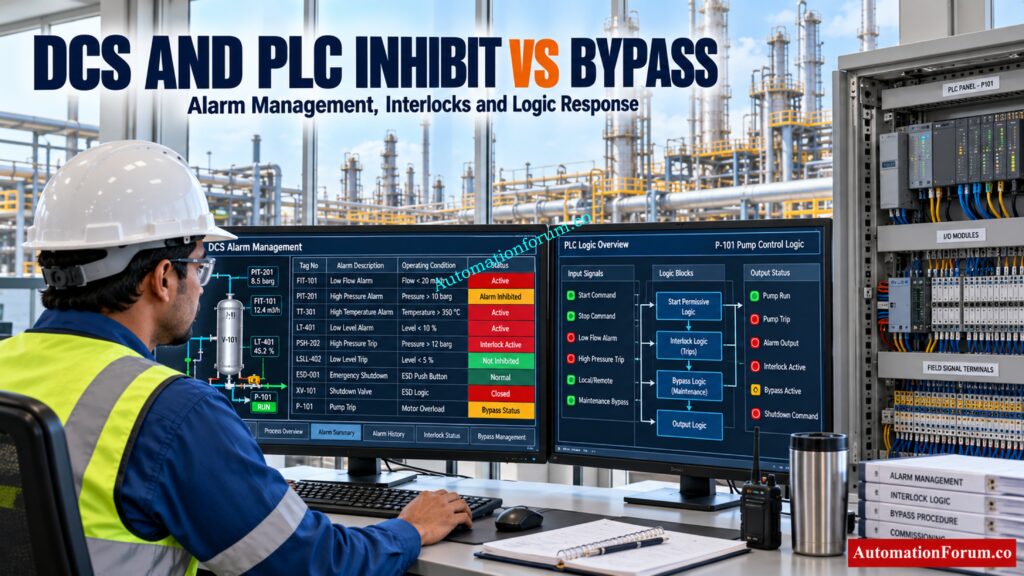
In DCS applications, an alarm inhibit may prevent an unnecessary alarm during a defined startup sequence without disabling a separate shutdown function. Engineers must confirm that the inhibition applies only to the intended response.
Both inhibitors and bypasses can influence safety protection in ESD and SIS applications. A bypassed sensor channel, logic function or shutdown valve may degrade the system’s capacity to respond to a hazardous circumstance
The key engineering principle is that the function’s actual behavior matters more than its name. Before applying an inhibit or bypass, identify what response will be suppressed, what protection remains available, how the change will be indicated and recorded, and how normal operation will be verified after restoration.
Trace Every Instrument Signal Before Troubleshooting Control Failures: Instrument Loop Diagrams
How Inhibit and Bypass Work in Control Logic
Normal Interlock Operation in Process Plants
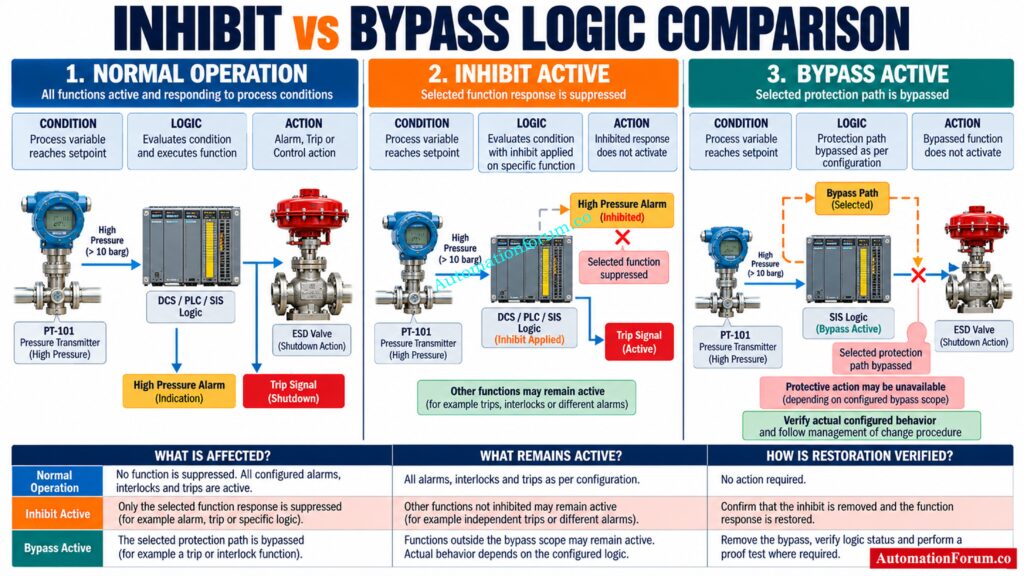
A pressure transmitter detects high high pressure. The configured logic evaluates the signal and initiates the required shutdown when the defined trip conditions are met.
Master Voting Decisions That Can Make or Break Plant Safety: 2oo3 Voting Logic Explained: How it Works, Why it is Used and Where it Applies
How Inhibit Functions Affect Control Logic
A startup condition can turn off a specific low flow warning as the pump is accelerating. The engineer must ensure that the inhibit is for the desired alarm and duration of operation only. Any independent trip or protection function will continue to perform as intended unless otherwise changed by a separately evaluated and approved change.
Build a Strong Shutdown Strategy Before Costly Engineering Mistakes: Shutdown Philosophy: Engineering Documentation for Process Safety and Emergency Shutdown Systems
How Bypass Functions Affect Protective Actions
A selected shutdown input is bypassed during an approved test. The associated shutdown action may no longer occur when that input demands it. The affected function must be clearly identified, monitored and managed under the applicable impairment procedure.
Stop Guessing Which Signals Your Emergency Shutdown Must Include: How are ESD Signals Selected? Complete ESD Signal Selection Guide
Inhibit and Bypass Applications in DCS Systems
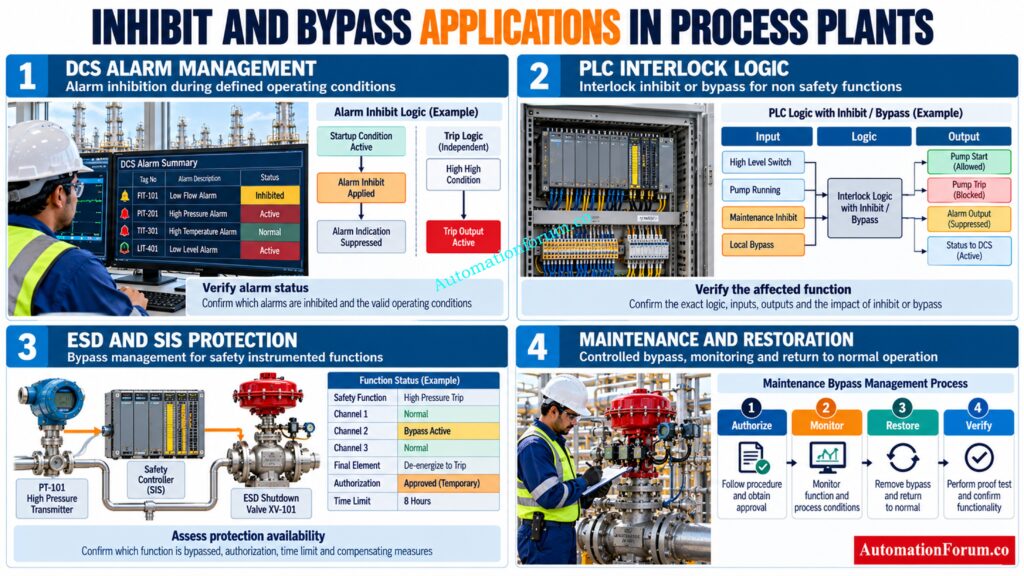
DCS inhibit functions commonly support alarm management, startup sequencing and defined process transitions. Alarm inhibition should follow the site alarm philosophy, with clear operator indication and event records.
A recurring nuisance alarm should not automatically be solved by suppressing a protective response. Engineers should investigate instrument faults, process instability, configuration errors and alarm settings before deciding on an appropriate control measure.
Uncover the Safety Gaps That Put Process Plants at Risk: Process Safety vs Functional Safety: Key Differences, SIS, SIF, SIL & IEC 61511 Guide
PLC Interlock Inhibit and Bypass Applications
PLC interlock inhibition may be used during commissioning, equipment testing or maintenance when permitted by the approved design and procedure. Engineers must distinguish routine equipment control logic from PLC logic that performs a formal safety function.
If the PLC is part of a safety system, its safety requirements and management procedures apply. A familiar PLC programming operation must not be assumed acceptable merely because it is technically possible.
Know Exactly When Your Plant Needs Emergency or Process Shutdown: ESD vs PSD: Difference Between Emergency Shutdown System and Process Shutdown System
Inhibit and Bypass in ESD and SIS Systems
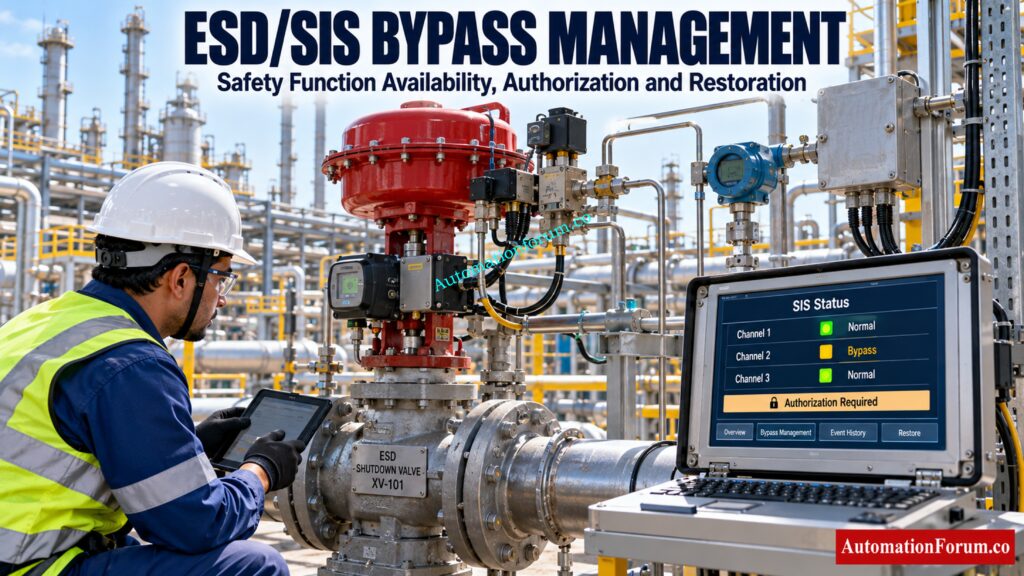
An emergency shutdown system and a safety instrumented system require stricter control when an inhibit or bypass affects a safety instrumented function. Examples include sensor bypasses, logic solver overrides and final element bypasses.
A bypass must never be used simply to avoid an inconvenient shutdown.
Practical Inhibit and Bypass Examples in Process Plants
Low Flow Alarm Inhibit During Pump Startup
A temporary startup inhibit may prevent an expected low flow alarm from repeatedly activating during an approved sequence. The startup condition and release criteria must be defined. Engineers must confirm that a genuine low flow hazard will not be concealed and verify normal alarm behavior after startup.
Pressure Transmitter Calibration and High Pressure Trip Bypass
Shutdown Valve Bypass During Proof Testing
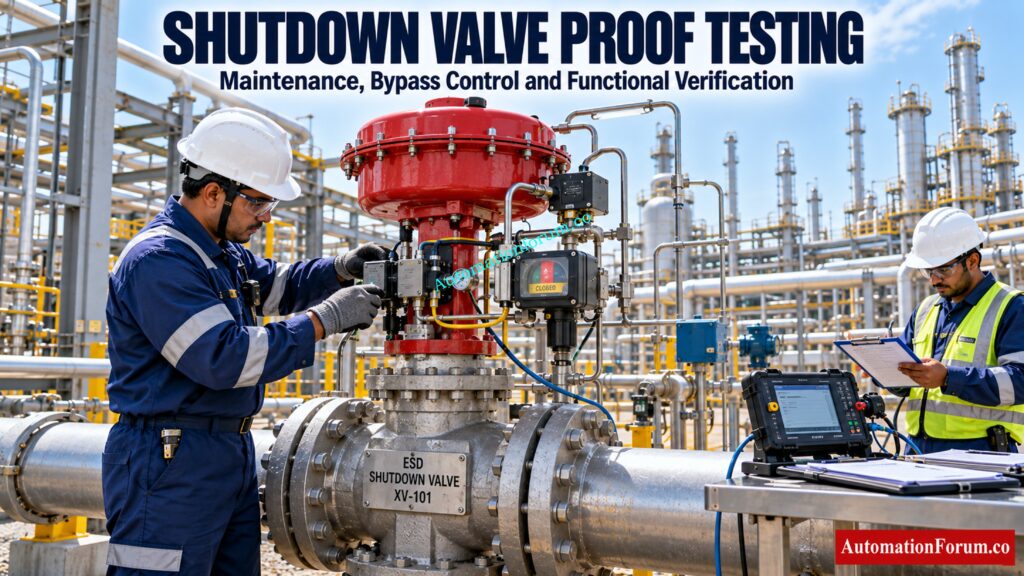
Testing a shutdown valve or solenoid may require a defined test arrangement. A final element bypass can prevent the shutdown demand from producing its intended physical action. The approved test procedure must specify the permitted arrangement, monitoring, restoration and functional verification.
ESD Two Out of Three Voting Logic Maintenance
In a two out of three voting arrangement, two of three channels must satisfy the configured voting condition to initiate the defined action. Bypassing one channel changes the available voting configuration and may reduce fault tolerance. The resulting protection must be reassessed; the original safety integrity level cannot simply be assumed to remain valid.
Refer the below link for the Understanding 2 out of 2 SOV: Working & Configuration
IEC 61511 and IEC 61508 Requirements for Safety Function Bypass
No single checklist or universal time limit guarantees safety. Requirements depend on the applicable standard edition, project design, operating conditions and jurisdiction.
Avoid Dangerous Design Errors That Can Compromise Safety Functions: Top Critical Mistakes in Safety Instrumented System Design as per ISA 84 Standard
How to Calculate Bypass Exposure Time
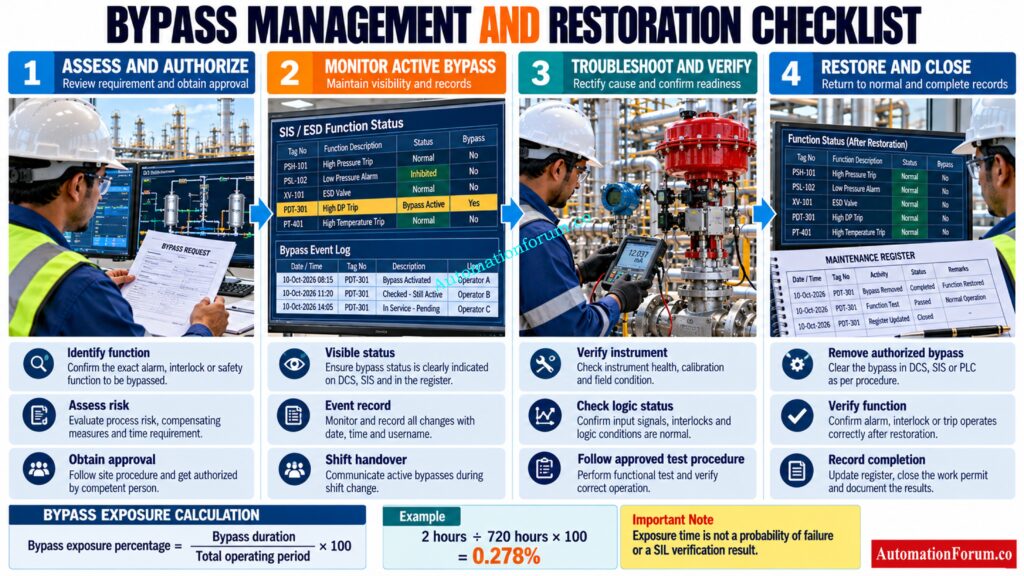
Bypass exposure percentage = (Bypass duration / Total operating period) × 100
For a bypass lasting 2 hours during a 720 hour operating period:
(2 / 720) × 100 = 0.278%
This represents the proportion of operating time during which the defined bypass was active. It is not a failure probability, risk reduction factor or SIL verification result. Adequacy of the remaining protection depends on the hazard, affected function, process conditions and available independent protection layers.
Improve Shutdown Reliability With Smarter Instrument Redundancy Decisions: Redundant Transmitters Explained: Reliability, Voting Logic and SIL for Instrumentation Engineers
Inhibit and Bypass Troubleshooting in Process Plants
Inhibit Remains Active After Startup
Check the configured release condition, sequence status, operator indication and event history. Follow the approved procedure to restore normal operation and verify the expected response.
Bypass Status Is Missing from the Operator Display
Verify the status indication, operator display, event records and bypass register are configured. If SIS status uncertain, treat as safety issue, escalate using site approved process.
Manage Safety Overrides Without Leaving Critical Protection Exposed: IEC 61511 Safety Bypass And Override in Instrumentation and Control System Maintenance
Expected Shutdown Trip Does Not Occur
No illegal logic changes or additional bypasses may be made online. Confirm instrument state, logic conditions, output status and final element response using the approved troubleshooting technique.
Maintenance Bypass Remains Active After Testing
Alarm Inhibit is Mistaken for Trip Bypass
Confirm exactly which signal, indication or logic response is affected. Escalate any uncertainty involving a protective function to the responsible control and functional safety personnel.
Stop Confusing These Two Critical Industrial Protection Systems: ESD vs SIS Difference When to Use Each and Practical Engineering Guide
Inhibit and Bypass Best Practices for EPC and Maintenance Engineers
- Define inhibit and bypass behavior in the control philosophy.
- Document the intended behavior in cause and effect charts and logic diagrams.
- Include applicable bypass requirements in the safety requirements specification.
- Test status indications, alarms and event records during FAT and SAT.
- Maintain an accurate register of active inhibits and bypasses.
- Record outstanding impairments during shift handover.
- Verify the affected function after maintenance and testing.
- Review repeated inhibits and bypasses to identify underlying design or maintenance issues.
Operations, instrumentation, process engineering and functional safety teams should coordinate whenever protection availability changes.
Understand the Safety Fundamentals Every Instrumentation Engineer Must Know: What is SIS, SIF and SIL? An In-Depth Guide to Functional Safety in Process Industries
When Should Inhibit or Bypass Not Be Used?
Verify SIL Performance Before Your Safety Design Gets Approved: SIF PFDavg / SIL Verification – Complete Guide + Online Calculator (IEC 61508 / 61511)
Frequently Asked Questions About Inhibit and Bypass
What is the difference between override and bypass control?
Override control gives priority to one control objective or signal over another under defined conditions. A bypass excludes a specified signal or logic path from its normal operation.
What is the difference between inhibit and bypass in a DCS?
An inhibit suppresses a given response under some conditions. A bypass removes a specific signal or logic channel from normal operation. The specific behavior relies on the configured logic and the function being affected.
What is the difference between inhibit and inhibition?
Inhibit describes the act of preventing a defined response, while inhibition refers to the act or state of suppressing that response. Both terms are used when discussing control logic and alarm management.
Fix PLC Output Failures Before They Disrupt Plant Operations: PLC Input ON but Output Not Energizing: Complete Troubleshooting Guide
Can a safety interlock be bypassed during maintenance?
What is the difference between alarm inhibit and trip bypass?
An alarm inhibit may suppress an alarm indication without disabling the associated trip logic. A trip bypass may prevent a protective shutdown action and therefore requires careful safety assessment.
How should an active SIS bypass be monitored?
Does bypassing one channel in a 2oo3 voting system affect safety?
Yes, skipping a channel can impact voting and diminish fault tolerance. The protection so resulting shall be assessed, not assumed to be a genuine Safety Integrity Level.
Find the DCS Control Problems Others Often Miss: Checklist for Troubleshooting Control Valve in DCS Loop
Conclusion: Inhibit vs Bypass in Process Plants
Refer the below link for the Testing and Repair Deferral – IEC Guidelines, Procedure, and Best Practices
