
- SmartBlue vs HART Communicator Overview
- What Is SmartBlue?
- What is a HART Communicator
- SmartBlue vs HART Communicator Comparison
- SmartBlue vs HART Communicator Comparison Table
- Real World Use Cases
- Advantages and Limitations of SmartBlue
- Advantages and Limitations of HART Communicator
- Which One Should Instrumentation Engineers Choose?
- SmartBlue vs HART Communicator for Modern Process Plants
- Frequently Asked Questions About SmartBlue vs HART Communicator
- Which is faster, SmartBlue or HART communicator?
- How to use Endress Hauser Smart Blue?
- Is SmartBlue enough for daily maintenance?
- Which tool is better for calibration?
- Can SmartBlue replace HART communicator?
- Does SmartBlue work in hazardous areas?
- Why do engineers still use HART communicators?
- Which tool is better for new smart transmitter setup?
- What should a maintenance engineer carry?
- Final verdict on SmartBlue vs HART Communicator
SmartBlue vs HART Communicator Overview
Why instrumentation engineers compare SmartBlue and HART Communicator
In modern process industries, field instrumentation is no longer limited to wired communication and manual configuration. With the rise of digitalization, wireless diagnostics, and mobile-based tools, instrumentation engineers now have multiple options for configuring and maintaining smart field devices.
In process plants, the difference between a fast fix and a long delay often comes down to the tool used in the field. That is why SmartBlue vs HART Communicator is such an important topic for instrumentation engineers, calibration technicians, maintenance teams, and plant operators.
Key differences between SmartBlue and HART Communicator
Both tools are useful, but they solve different problems.
- SmartBlue app is built for modern smart devices with Bluetooth communication
- HART communicator is a proven field tool for HART enabled instruments
- SmartBlue helps with wireless access, faster setup, and simple diagnostics
- HART communicator remains the safer choice for legacy systems and calibration work
If you work in a refinery, chemical plant, power plant, EPC project, or water treatment plant, knowing which tool to use can improve productivity and reduce downtime.
Stop HART Failures Before They Damage Your Plant: HART Transmitter Diagnostics: What Your Field Device is Telling You
What Is SmartBlue?
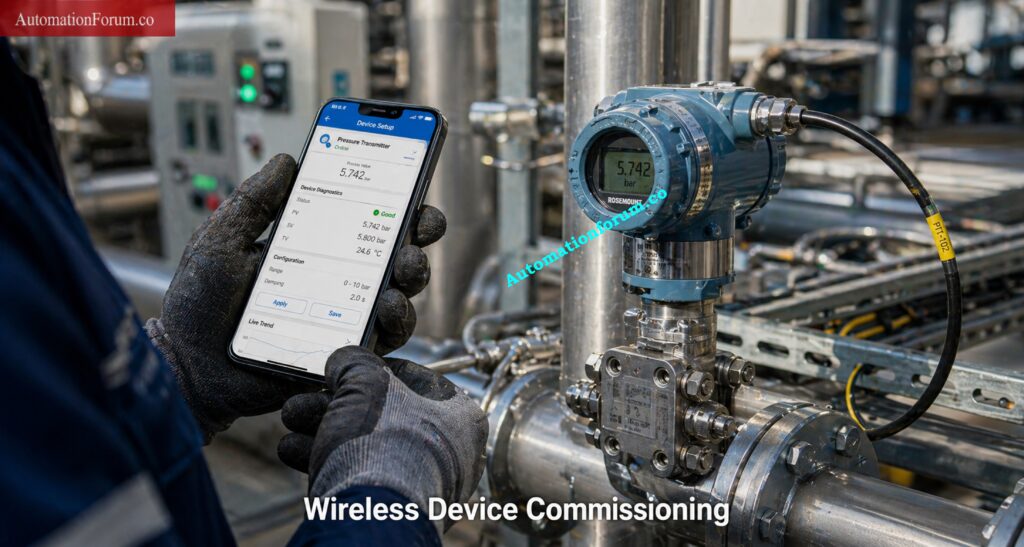
SmartBlue is a mobile based application used for smart transmitter configuration, diagnostics, and wireless communication through Bluetooth.
Key features of SmartBlue
- Connecting to supported field devices without using physical cables or opening wiring terminals
- Reading live process values such as pressure, level, temperature, or flow directly from the field instrument
- Checking alarms, warnings, and diagnostic messages during routine maintenance or troubleshooting
- Performing Bluetooth enabled commissioning on new smart devices during plant startup
- Making parameter changes quickly when the device is installed in an elevated, confined, or difficult location
- Supporting maintenance teams that want faster access to modern instruments with less manual effort
Main features of SmartBlue for process industry maintenance
- It saves time during commissioning because communication starts wirelessly
- It reduces physical interaction with the instrument, which can improve safety in some situations
- It is easier for many technicians to learn because it feels like a regular mobile app
- It helps engineers move faster during plant rounds, especially when many supported instruments must be checked
- It fits well into digital maintenance workflows where quick diagnostics are more important than wired access
Where SmartBlue works best in plant operations
- New projects where smart transmitters are being installed for the first time
- Plants that have adopted Bluetooth enabled field instruments
- Maintenance rounds where quick checks are needed without carrying extra tools
- Locations where access is difficult and opening enclosures is inconvenient
4-20 mA, Fieldbus, and HART Compared for Engineers: Comparison between Conventional (4-20ma) connection, Foundation-Fieldbus, and HART?
Real-world SmartBlue use cases
- A radar level transmitter mounted on a tank can be configured without opening the transmitter housing
- A pressure transmitter in a running unit can be checked during a routine round
- A technician can quickly verify diagnostics during a shutdown without carrying extra hardware
SmartBlue is especially useful where speed, convenience, and mobile access matter.
HART vs Fieldbus: The Comparison Engineers Need Now: Difference Between Fieldbus and HART Communication Protocols: Complete Comparison Guide for Process Automation Engineers
What is a HART Communicator
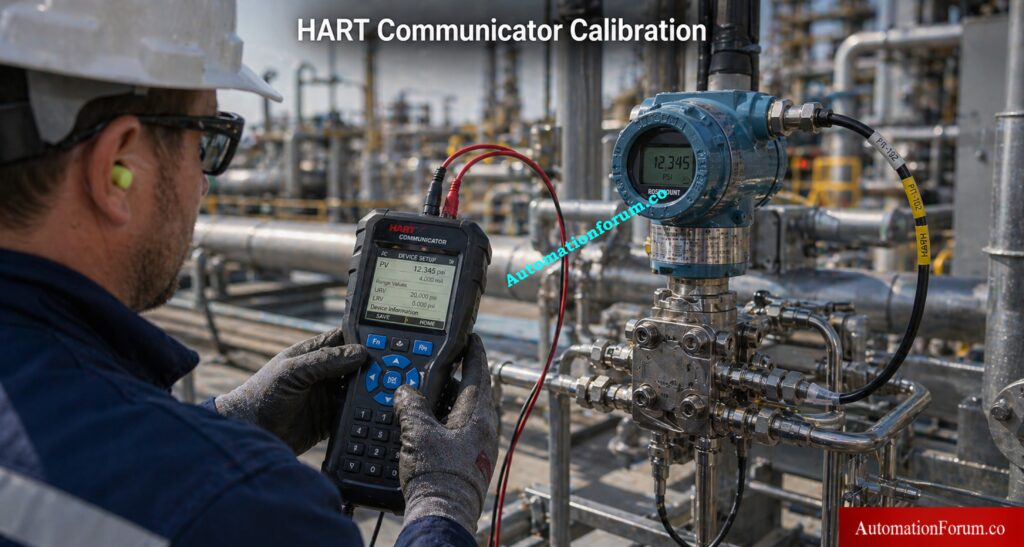
A HART communicator is a handheld device used for HART protocol device setup, calibration, configuration, and troubleshooting.
Main applications of HART communicator
- Calibrating transmitters and performing trim functions with reliable wired access
- Setting up valve positioners and other HART enabled field devices
- Conducting loop checks during commissioning and startup activities
- Reading instrument diagnostics, configuration data, and device status
- Troubleshooting field instruments in older plants where wireless tools may not be supported
- Supporting maintenance teams that need one tool for many different HART devices
What HART Protocol Really Means for Instrument Engineers: What is HART Protocol?
Main uses of HART communicator in process plants
- It works with a very wide range of HART enabled instruments
- It is trusted in harsh industrial environments where reliability matters most
- It is still the preferred tool for many calibration and maintenance jobs
- It supports both legacy devices and many modern instruments
- It is familiar to most experienced instrumentation engineers and technicians
Where HART communicator is the better choice
- Shutdown maintenance where many instruments must be checked
- Brownfield plants with a mix of old and new devices
- Calibration jobs that require stable communication and accurate setup
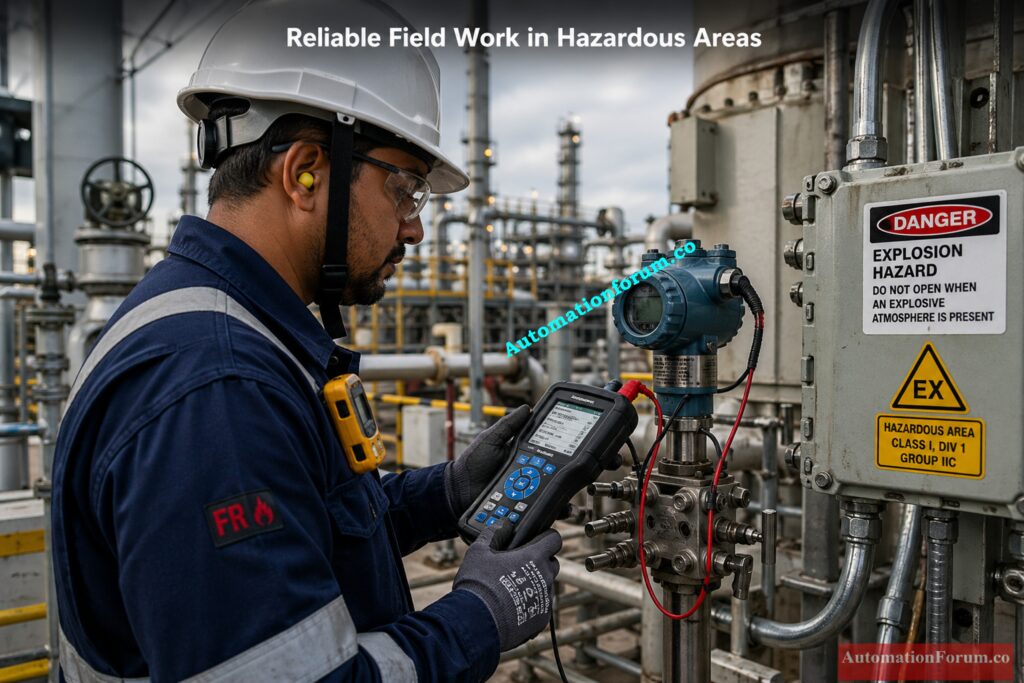
- Hazardous area work where an approved communicator is the safer choice
Twisted Pair Cable Tips for Clean Industrial Signals: Twisted Pair Cable in Industrial Signal Transmission: The Essential Guide for 4-20 mA and RS 485 Systems
Real-world HART communicator use cases
- A pressure transmitter in a power plant needs calibration during outage work
- A valve positioner in a chemical plant needs quick setup
- An older flow transmitter in a refinery must be checked during maintenance
The HART communicator remains a reliable and universal field maintenance tool.
Configure HART Parameters Correctly and Avoid Major Errors: Best Practices for Configuring HART Parameters in DCS Software
SmartBlue vs HART Communicator Comparison
Ease of use
SmartBlue
- Very easy to use because the interface is designed like a modern mobile application
- Reduces the chance of mistakes during routine setup because the screen flow is simple
HART communicator
- Requires experience with HART device structure and parameter locations
- Better suited for technicians who already understand instrument configuration logic
- Strong choice when detailed calibration or more advanced device work is required
Portability
SmartBlue
- Runs on a smartphone or tablet, which makes it very convenient in the field
- Does not require carrying a separate dedicated communicator
- Fits easily into a pocket or small pouch
- Saves space in the toolbox and reduces the weight of field gear
HART communicator
- A separate handheld device that must be carried and charged
- More rugged and purpose built for industrial use
- Slightly less convenient than a phone based app, but still practical
- Often preferred when a dedicated maintenance device is needed for plant work
Set Modbus Baud Rate Right and Prevent Failures: Key Factors to Consider When Setting Baud Rate in Modbus Networks
Device compatibility
SmartBlue
- Works only with supported Bluetooth enabled devices
- Best suited for newer smart transmitters and digital field instruments
- Limited value in plants that still rely heavily on older devices
- Very useful when the entire asset base is moving toward modern communication methods
HART communicator
- Supports a very wide range of HART enabled field devices
- Useful in plants that have equipment from different vendors
- Excellent for legacy systems that have been running for many years
- Often the safest choice when compatibility is more important than convenience
Refer the below link for the Duplicate Modbus Address in Temperature Multiplexers Causes Plant Shutdown – Real Incident & Root Cause
Communication method
SmartBlue
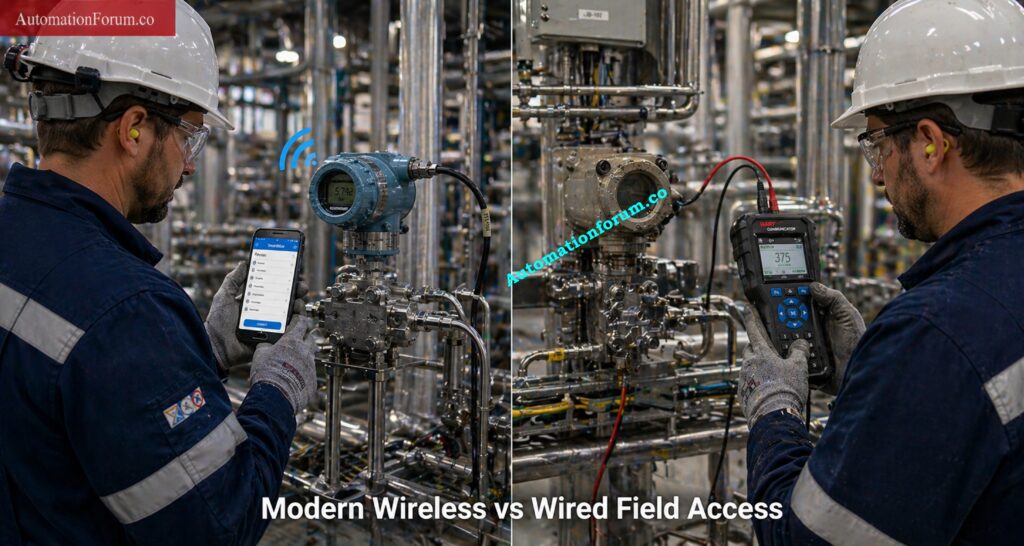
- Uses wireless Bluetooth communication
- No physical connection is needed to access the device
- Makes quick checks easier during routine maintenance
- Reduces the time spent connecting leads or opening enclosures
HART communicator
- Uses the wired 4 to 20 mA loop for communication
- Offers stable and dependable access to the field device
- Less affected by wireless interference or pairing issues
- Better for critical plant work where communication stability matters
Field diagnostics
SmartBlue
- Shows diagnostics in a clear and visual format
- Makes it easier to identify alarms, warnings, and device health issues quickly
- Helps maintenance teams decide whether a device needs immediate attention
- Works well for rapid inspections and routine plant checks
HART communicator
- Delivers useful diagnostic data in a practical field format
- Not as visual as a mobile app, but still highly dependable
- Valuable when deep troubleshooting is required
- Often used when engineers need to confirm whether the issue is in the device, the loop, or the installation
Commissioning speed
SmartBlue
- Usually faster for supported devices because the connection is wireless
- Reduces time spent on physical setup steps
- Helps startup teams move quickly during commissioning
- Very useful when many instruments must be configured in a short time
HART communicator
- Slower because it requires a physical connection and manual handling
- Still dependable when exact setup is important
- Often chosen when commissioning must be done carefully and consistently
- Best when plant reliability is more important than speed
Maintenance convenience
SmartBlue
- Very convenient for routine plant maintenance
- Helps technicians access data without opening panels unnecessarily
- Useful for high mounted or hard to reach devices
- Reduces effort during quick inspection rounds
HART communicator
- Requires more physical access to the device
- Less convenient for quick spot checks
- Still strong for detailed maintenance and calibration tasks
- Preferred in plant areas where stable wired access is needed
Training requirement
SmartBlue
- Easy for new technicians to pick up quickly
- Requires minimal training compared to traditional communicators
- Helps teams become productive faster
- Reduces the learning curve for modern maintenance workflows
HART communicator
- Requires more technical knowledge and field experience
- Better suited for experienced instrumentation staff
- Often used by teams that have worked with HART instruments for many years
Cost effectiveness
SmartBlue
- Often less expensive because it can use existing mobile devices
- Reduces the need for extra dedicated hardware in some cases
- Good value for plants moving toward digital maintenance
- More economical for supported instruments and fast field checks
HART communicator
- Higher upfront cost because it is a dedicated industrial tool
- Still cost effective because it covers a very wide range of devices
- Good long term investment for plants with mixed instrument populations
- Worth the cost where universal compatibility is needed
Reliability in plant conditions
SmartBlue
- Very useful, but depends on Bluetooth support and device compatibility
- Performance can vary based on environment and field conditions
- Best in plants that have already adopted the right instruments and workflow
- Excellent when convenience is needed and the setup is supported
HART communicator
- Highly reliable in difficult plant environments
- Works consistently even when wireless tools may struggle
- Trusted for critical maintenance jobs
- A better fit when reliability cannot be compromised
Use in hazardous areas
SmartBlue
- May be restricted depending on plant policy and mobile device approval
- Requires careful checking before use in classified areas
- Not always the first choice for hazardous zone work
- More suitable where Bluetooth use is specifically approved
HART communicator
- Often available in intrinsically safe versions
- Widely accepted in hazardous environments
- Strong choice for field work in classified areas
- More established for direct instrument communication in plant safety systems
Integration with modern instruments
SmartBlue
- Designed for modern smart transmitters and newer device families
- Works well with digital plant environments
- Fits current trends in remote access and wireless maintenance
- Often preferred in plants upgrading to smart instrumentation
HART communicator
- Works with both older devices and many newer HART instruments
- Helps bridge the gap between legacy and modern systems
- Still essential in plants with long equipment life cycles
- Remains one of the most practical plant maintenance tools available
Install HART and WirelessHART Devices the Right Way: Step-by-Step Guide for Installing and Commissioning HART and WirelessHART Devices for Engineers and Technicians
SmartBlue vs HART Communicator Comparison Table
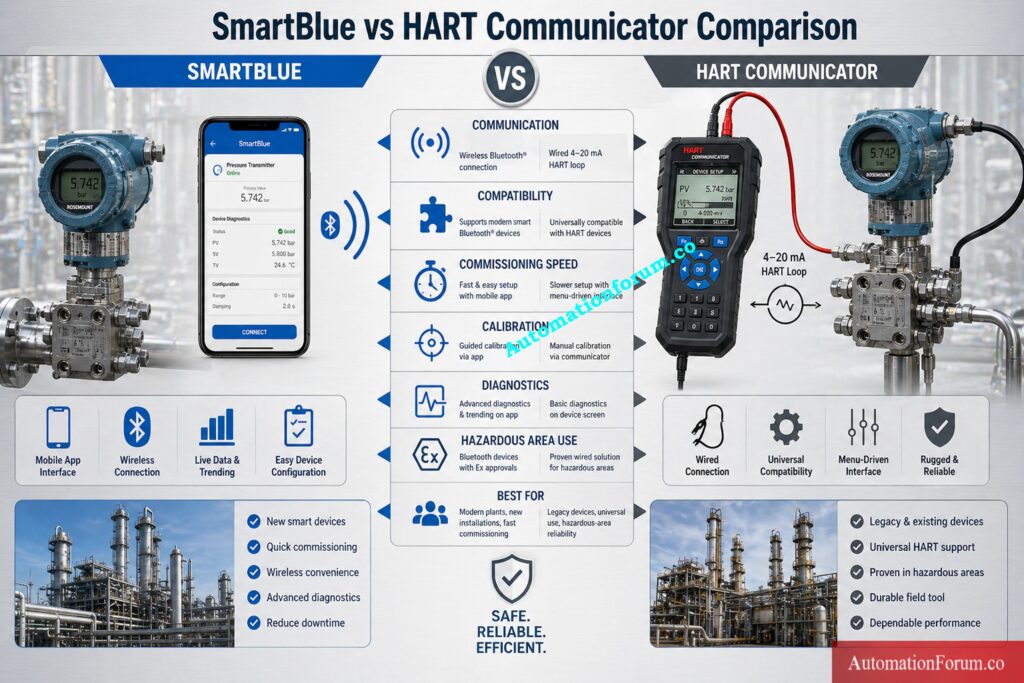
| Feature | SmartBlue App | HART Communicator |
| Communication | Bluetooth wireless | Wired loop |
| Compatibility | Supported Bluetooth devices | Wide HART support |
| Ease of use | Very easy | Moderate |
| Portability | Very high | High but dedicated |
| Diagnostics | Clear and visual | Reliable and practical |
| Commissioning speed | Fast | Moderate |
| Calibration use | Limited by support | Very strong |
| Hazardous area use | Depends on policy | Widely established |
| Best for | Modern smart devices | Legacy and mixed plants |
Troubleshoot Control Valves Faster with Smart Diagnostics: Closed-Loop Control Valve Troubleshooting: HART, Fieldbus and Diagnostics Skills Quiz
Real World Use Cases
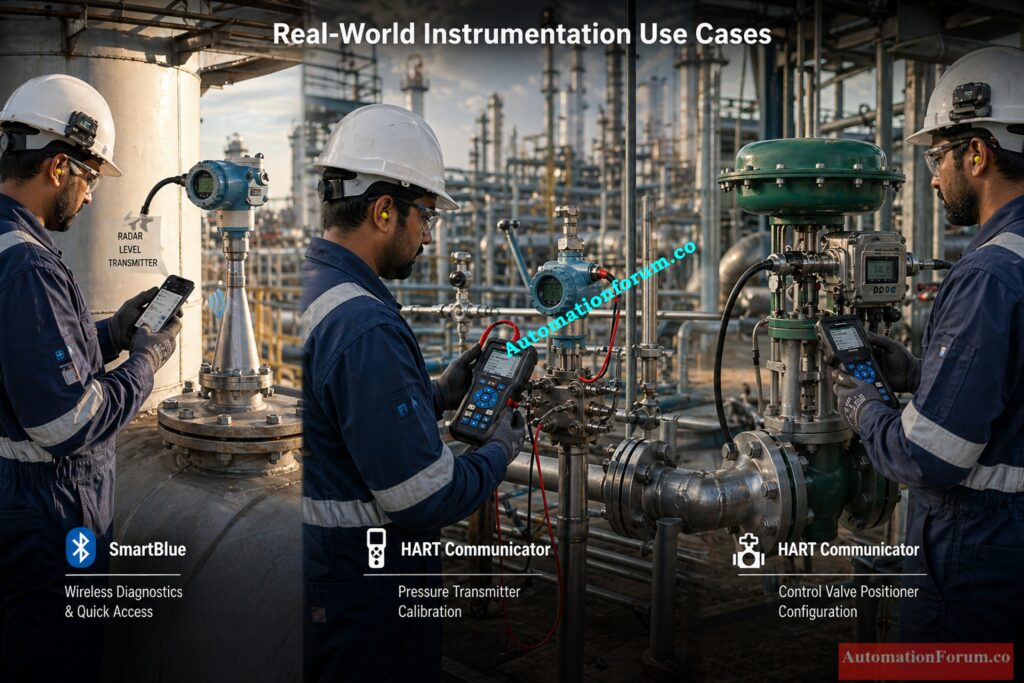
Routine transmitter calibration
- HART communicator is usually the better choice
- It provides stable access during calibration and trim work
- It supports the kind of accuracy required for field verification
- It works well across a wide range of process instruments
Commissioning new smart devices
- SmartBlue is often the better choice
- It speeds up setup and parameter entry
- It reduces physical handling during startup
- It is especially useful in EPC projects and new installations
Troubleshooting in the field
- SmartBlue is helpful for supported instruments when fast access is needed
- HART communicator is better when the plant includes mixed or older devices
- The best choice depends on the exact instrument and the issue being investigated
Valve positioner setup
- HART communicator remains a strong choice
- It is widely compatible with many positioners used in process plants
- It is dependable for adjustment, testing, and confirmation of response
Maintenance during shutdown
- HART communicator is usually better for broad plant coverage
- SmartBlue is useful when supported devices are present
- Many shutdown teams use both tools depending on the asset list
Quick diagnostics on site
- SmartBlue is excellent for instant checks
- It helps technicians verify alarms and device health quickly
- Very useful for walk rounds and short maintenance visits
Why the 250-Ohm Resistor Is Non-Negotiable for HART: Why is a 250-Ohm Resistor Important for HART Communication?
Advantages and Limitations of SmartBlue
SmartBlue advantages for instrumentation engineers
- Wireless access saves time
- Easy to learn and easy to use
- Good for modern smart transmitter configuration
- Reduces physical handling and cable work
- Helps with fast diagnostics and maintenance rounds
SmartBlue limitations in industrial maintenance
- Limited to supported devices
- Bluetooth range may restrict use
- Not suitable for every hazardous area situation
- Cannot replace wired tools for all calibration work
Challenge Your HART Skills with Advanced MCQs Today: Advanced HART Protocol Quiz: 25 MCQs with Detailed Explanations
Advantages and Limitations of HART Communicator
HART communicator advantages for field maintenance
- Works with many HART devices
- Excellent reliability in plant conditions
- Strong for calibration and troubleshooting
- Trusted in hazardous areas
- Useful in both legacy and mixed plants
HART communicator limitations compared to SmartBlue
- Requires physical connection
- Slower than wireless tools
- Less convenient for fast checks
- Higher cost as a dedicated device
Pressure Transmitter Calibration Wiring Made Simple with HART: Wiring Diagram for Pressure Transmitter Calibration in Workbench using HART
Which One Should Instrumentation Engineers Choose?
The practical answer depends on your plant and devices.
When to choose SmartBlue
- The instrument supports Bluetooth
- You want faster commissioning
- You need quick diagnostics
- Your plant is using newer smart devices
- Mobility matters in your workflow
When to choose HART communicator
- You work on legacy instruments
- You need calibration and trim support
- You operate in hazardous zones
- You require universal compatibility
- You want a proven maintenance tool
Best practical approach for plant maintenance
- Use SmartBlue for speed and convenience
- Use HART communicator for reliability and broader support
- In real plants, both tools complement each other well
WirelessHART Interview Questions Every Engineer Should Master: Understanding Wireless HART: A Comprehensive interview Questions & Answers
SmartBlue vs HART Communicator for Modern Process Plants
Instrumentation work is becoming more mobile and more connected.
What is changing
- More smart transmitters now support Bluetooth
- More plants are adopting digital asset management
- More maintenance teams are using mobile apps
- Wireless device communication is becoming more common
- Diagnostics are becoming faster and easier to read
What this means for engineers
- Less time spent wiring communicators
- Faster commissioning of modern instruments
- Better access to live device status
- Improved maintenance productivity
- More efficient field work in new and existing plants
Why HART communicator will remain relevant
- Legacy plants will continue to use HART
- Mixed instrument fleets are still common
- Calibration jobs still need stable communication
- It remains a trusted plant maintenance tool
Understand PV, SV, TV, and QV Without Confusion: Explained: The Four Main Process Variables (PV, SV, TV, QV) in HART Transmitters – Complete Guide for Instrument Engineers
Frequently Asked Questions About SmartBlue vs HART Communicator
Which is faster, SmartBlue or HART communicator?
How to use Endress Hauser Smart Blue?
Use the Endress+Hauser SmartBlue app to connect via Bluetooth to a supported transmitter, then view live values, diagnostics, and parameters directly on your mobile.
Modify settings, perform basic configuration, and monitor device status wirelessly without opening the instrument or using cables.
Is SmartBlue enough for daily maintenance?
SmartBlue is useful for daily checks on modern devices, diagnostics, and quick adjustments. But it cannot cover every instrument in a plant.
Which tool is better for calibration?
HART communicator is usually better for calibration work because it gives stable wired communication. It is more reliable for trim and setup tasks.
Can SmartBlue replace HART communicator?
No, SmartBlue cannot fully replace HART communicator. Many devices still need HART support for complete field work.
Does SmartBlue work in hazardous areas?
It may work depending on certification, site rules, and device approval. It is not always the first choice in hazardous areas.
Why do engineers still use HART communicators?
Engineers still use them because they are reliable, widely compatible, and trusted in industrial plants. They work well for both old and mixed devices.
Which tool is better for new smart transmitter setup?
SmartBlue is often better for new Bluetooth-enabled smart transmitters. It is faster and easier for commissioning.
What should a maintenance engineer carry?
In a mixed plant, carrying both tools is the best option. SmartBlue helps with modern devices, while HART communicator covers legacy and calibration work.
Follow the Right HART Calibration Procedure Every Time: HART transmitter calibration procedure – For pressure transmitter
Final verdict on SmartBlue vs HART Communicator
The SmartBlue vs HART Communicator comparison is not about choosing a winner for every situation. It is about choosing the right tool for the right field job.
SmartBlue is better for
- wireless convenience
- fast commissioning
- quick diagnostics
- modern smart transmitters
- simple plant maintenance
HART communicator is better for
- calibration
- legacy devices
- hazardous areas
- mixed instrument environments
- universal field support
For instrumentation engineers, the best practice is clear.
- Use SmartBlue where supported
- Use HART communicator where reliability and compatibility matter more
That is the most practical answer for real process industry work.
Refer the below link for the Foundation Fieldbus Installation and Best Practices – Complete Guide for EPC and Maintenance Engineers
