
- ISO Instrument Calibration Audits in Process Industries
- What is an ISO Instrument Calibration Audit?
- Key ISO Standards for Process Instrument Calibration
- Purpose of Instrument Calibration Audits in Process Industries
- Why Internal Calibration Audits are Critical in Process Plants
- Scope of Calibration Audit in Process Instrumentation
- Calibration Audit Scope Areas in Process Plants
- Pre Audit Preparation for ISO Instrument Calibration Audit
- Common Non Conformities Found During Calibration Audits
- Best Practices for Maintaining ISO Calibration Compliance
- How Often Should Calibration Audits Be Conducted?
- Benefits of a Strong Calibration Audit System in Process Industries
- Internal Audit Checklist for Instrument Calibration in Process Industries
- Download Internal Audit Checklist for ISO Process Instrument Calibration (Excel)
- Calibration Audit Frequently Asked Questions
ISO Instrument Calibration Audits in Process Industries
In modern process industries, instrument calibration is one of the most important things to do to make sure quality. Instrumentation that works well is very important for plants that work in the oil and gas, petrochemical, power generating, pharmaceuticals, fertilizer manufacture, and water treatment industries. Field instruments that are connected to PLC, DCS, and safety systems constantly check and control process parameters like pressure, temperature, flow, level, and analytical composition.
The results can be very bad if these tools give wrong measurements. Incorrect readings may lead to process instability, product quality issues, environmental violations, or even major safety incidents. For example, an improperly calibrated pressure transmitter in a boiler system could cause incorrect control actions that lead to overpressure conditions.
As part of their quality management systems, firms use organized ISO calibration audit procedures to make sure that their measurements are accurate and meet international standards. An instrument calibration audit checklist helps verify whether measuring equipment is properly calibrated, traceable to national standards, and maintained according to documented procedures.
ISO internal audits are very significant in process plants because they help companies find calibration problems before external certification audits or regulatory inspections. A well-implemented ISO internal audit instrumentation program makes sure that measurements are accurate, that they can be traced, and that all production processes follow the rules.
Master ISO Calibration Now: ISO Standards For Instrumentation Calibration Complete Guide for Industrial Engineers
What is an ISO Instrument Calibration Audit?
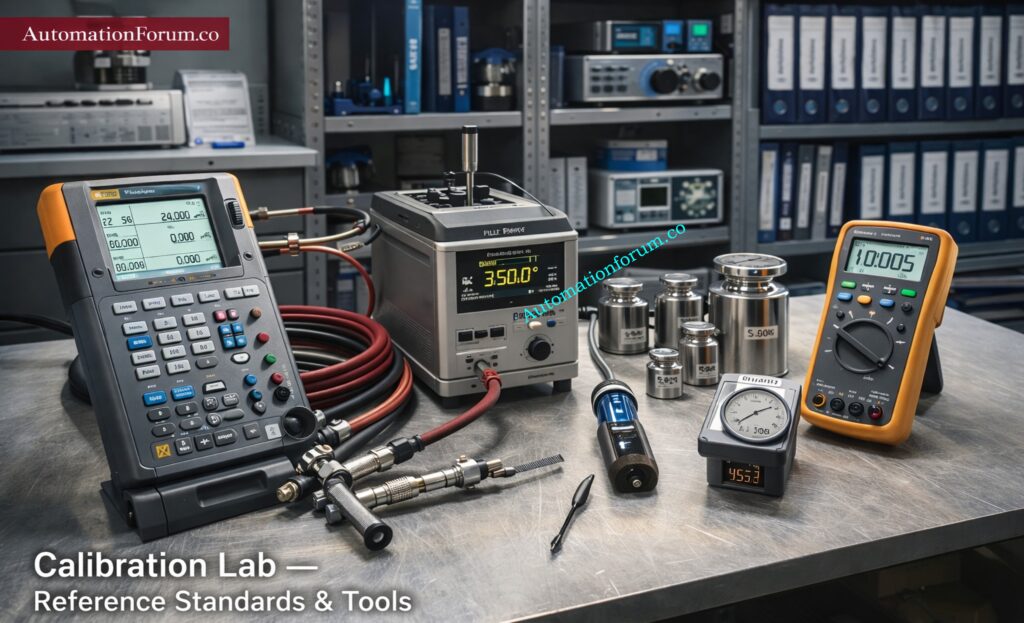
Definition of Instrument Calibration Audit
An ISO instrument calibration audit is a planned check of the organization’s measurement and calibration processes to make sure they follow both international standards and the organization’s own rules.
Objectives of Calibration Verification in Process Plants
The audit checks to see if the tools used to monitor and control processes are properly calibrated, can be traced back to known measurement standards, and are managed through a structured calibration system.
Importance of Measurement Traceability in Industrial Calibration
Calibration audits usually check to see if a company is following a number of ISO standards that deal with quality management and measurement systems.
Stop Over Calibrating Schedule Smart: Calibration Interval Schedule Procedure for Process Instrumentation Using Risk-Based Method
Key ISO Standards for Process Instrument Calibration
ISO 9001 Requirements for Calibration of Measuring Equipment
This is the standard for quality management systems around the world. It requires businesses to make sure that the measurement tools they use to check if a product meets standards are calibrated or checked at set times using standards that can be traced.
ISO IEC 17025 Calibration Laboratory Competence Standard
This standard defines the competence requirements for calibration and testing laboratories. Calibration laboratories accredited to ISO 17025 demonstrate their ability to produce technically valid calibration results.
ISO 10012 Measurement Management System Requirements
ISO 10012 provides requirements for establishing a measurement management system that ensures measurement processes and equipment deliver reliable and traceable results.
ISO 14253 Measurement Verification and Uncertainty Rules
These standards work together to make up the basis for calibration audit instrumentation systems used in factories.
Trim Pressure Sensor Like a Pro: Smart Pressure Transmitter Sensor Trim Guide with Diagrams & Calibration Steps
Purpose of Instrument Calibration Audits in Process Industries
Calibration audits verify that:
- Measuring instruments produce accurate readings
- The findings of measurements might be linked to national or international standards.
- Calibration methods are well documented.
- Instruments stay within tolerable limits of error
- It is clear what the calibration intervals are.
- Calibration records are kept and can be found.
In the end, calibration audits make sure that the plant’s measuring system is accurate and can support safe and efficient production.
Calibrate Your Calibrator Dont Risk It: Why Calibrating your Calibrators is Critically Important: Accuracy, Compliance and ISO 17025 and NIST Traceability
Why Internal Calibration Audits are Critical in Process Plants
In process industries, internal calibration audits are very significant since measuring systems have a direct impact on the safety of the plant, the quality of the products, and the reliability of the operations.
In manufacturing, measurements can be done at different times, but in process plants, measurement equipment must work all the time, 24 hours a day.
Any change in an instrument can have an instantaneous effect on how well the plant works.
Process Control Accuracy in DCS and PLC Systems
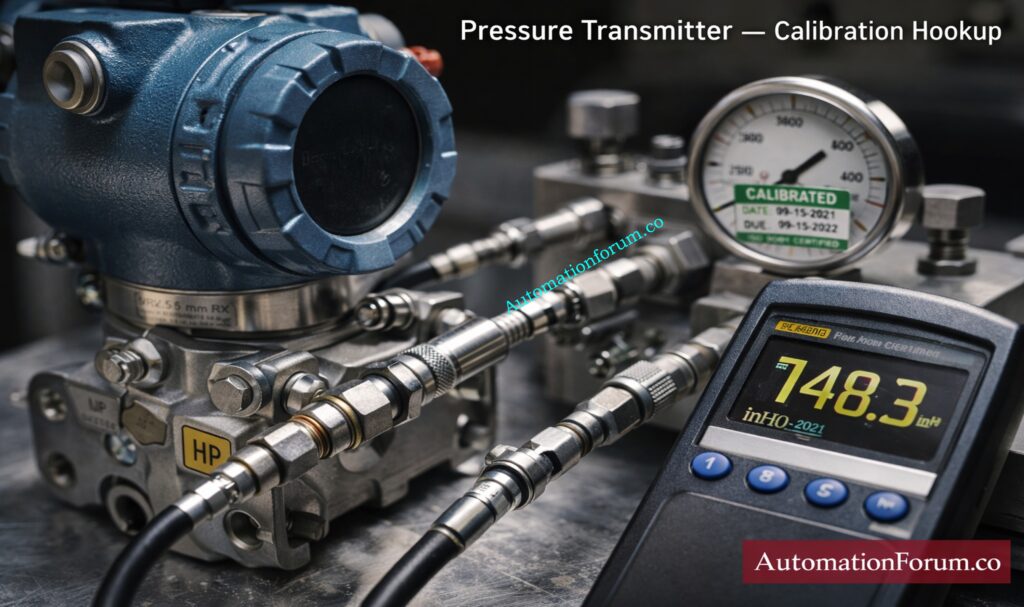
DCS and PLC platforms are examples of advanced process control systems that modern process facilities use. These systems control pumps, valves, compressors, and reactors using sensor data in real time.
Some examples are:
- Pressure transmitters that control the pressure at the compressor’s discharge
- Flow transmitters that control how much feed flows to reactors
- Temperature sensors that control the heating zones in a furnace
If these instruments drift out of calibration, the control system will respond incorrectly, potentially causing process instability or equipment damage.
Safety Instrumented Systems and Emergency Shutdown Sensors
Reliable sensors are very important for safety systems.
For example:
- High pressure shutdown transmitters
- Emergency shutdown switches
- Flame detectors
- Gas detectors
If these tools are not set up appropriately, the Safety Instrumented System (SIS) might not go off when there is a dangerous condition.
Calibration audits therefore play a direct role in plant safety management.
Stop Confusing Calibration and Reranging: Why Calibration Isn’t the Same as Re-ranging in Process Instrumentation
Custody Transfer Measurement Accuracy in Oil and Gas Plants
In oil and gas industries, many instruments are used for custody transfer measurement where product quantities are measured for financial transactions.
Examples include:
- Coriolis mass flow meters
- Ultrasonic gas flow meters
- Tank level measurement systems
Even tiny mistakes in measurement might lead to big differences in money.
Environmental Monitoring and Regulatory Compliance
Regulatory audits are done on tools used for environmental monitoring.
Some examples are:
- Stack emission analyzers
- Effluent pH analyzers
- Continuous emission monitoring systems
Calibration audits make guarantee that the data used for environmental reporting is correct and can be used in court.
Product Quality Assurance in Pharmaceutical and Chemical Plants
In fields like medicines and specialized chemicals, the quality of a product depends on keeping stringent process conditions.
Some examples are:
- Reactor temperature measurement
- Batch mixing flow control
- Sterilization temperature monitoring
If these tools aren’t calibrated correctly, they can make goods that don’t meet specifications and cost a lot of money to make.
Refer the below link for the Top 15 Common Calibration Mistakes in Industrial Instruments
Scope of Calibration Audit in Process Instrumentation
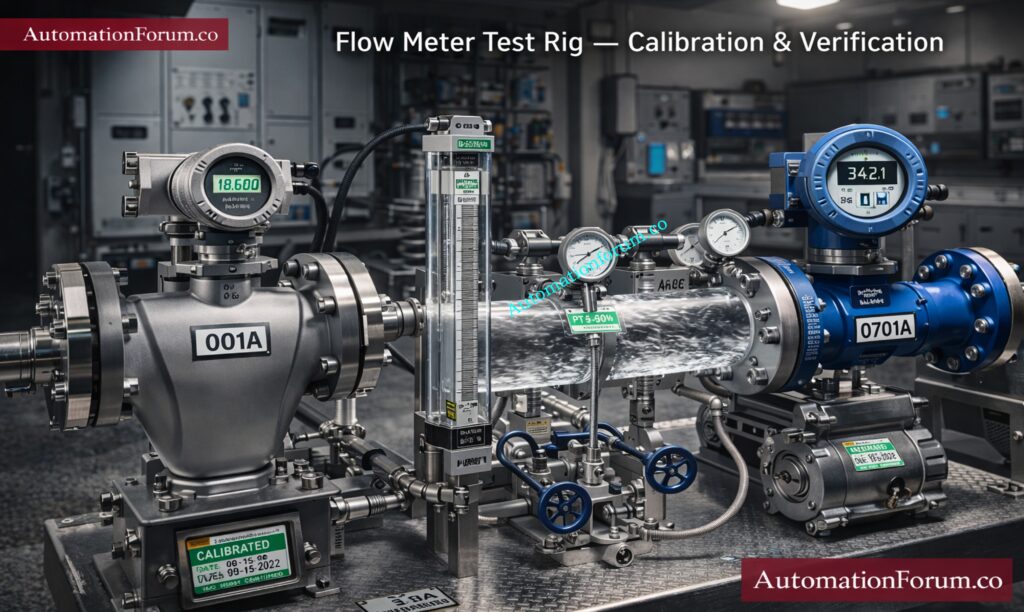
A calibration audit in process industries usually includes all of the measuring and monitoring tools that affect the operation of the process, safety, product quality, and compliance with environmental laws.
Process Instruments Typically Included in Calibration Audits
Process plants use a wide range of field instruments that must be included in calibration programs.
Common examples include:
Pressure instruments
- Pressure transmitters
- Differential pressure transmitters
- Pressure gauges
- Pressure switches
Temperature instruments
- RTDs
- Thermocouples
- Temperature transmitters
- Temperature indicators
Flow measurement instruments
- Orifice flow meters
- Magnetic flow meters
- Coriolis flow meters
- Ultrasonic flow meters
Level instruments
- Radar level transmitters
- Ultrasonic level transmitters
- Differential pressure level transmitters
- Displacer level transmitters
Analytical instruments
- Gas analyzers
- Oxygen analyzers
- pH analyzers
- Conductivity transmitters
Control and safety devices
- Control valves
- Positioners
- Limit switches
- Safety shutdown sensors
Follow Calibration Rules Now: Calibration Guidelines
Calibration Audit Scope Areas in Process Plants
A comprehensive process plant calibration audit normally evaluates several operational areas.
These include:
Calibration Procedures and Work Instructions
Check that there are written calibration protocols for each type of instrument.
Calibration Records and Documentation Review
Checking whether calibration reports contain required details such as test points, tolerances, and technician identification.
Measurement Traceability Verification
Verification that calibration standards are traceable to national metrology institutes.
Calibration Interval and Scheduling Evaluation
Determining if the calibration frequencies are right for the instrument’s importance.
Instrument Tagging and Identification Verification
Making sure that each instrument has a unique tag number that is connected to its calibration records.
Calibration Labeling and Due Date Marking
Check that the calibration labels show the last calibration date and the next required date.
Calibration Software and Asset Management Systems
Checking out digital solutions like CMMS, databases for asset management, or calibration.
This wide range of tasks makes sure that the facility has a strong calibration management system.
Which Calibrator Is Right Find Out: Different types of Calibrators and their Calibration Procedures
Pre Audit Preparation for ISO Instrument Calibration Audit
To do an internal calibration audit well, you need to be well-prepared. If auditors don’t prepare well enough, they could miss important problems or not look at important parts of the calibration system.
Verification of Instrument Master List and Database
The first thing to do is check the instrument master database.
This list should have:
- Instrument tag number
- Instrument type
- Location
- Calibration frequency
- Last calibration date
- Next calibration due date
- Instrument criticality classification
CMMS or asset management systems usually keep the instrument master list up to date.
Review of Calibration Schedule and Overdue Instruments
Auditors need to check that calibration schedules are being followed correctly.
The review should find:
- Overdue instruments
- Instruments approaching calibration due date
- Instruments removed from service
- Spare instruments stored in warehouse
This stage helps find problems with the schedule before the audit starts.
Complete Guide Instrument Calibration: Instrument Calibration in Process Industries – Complete Guide
Review of Previous ISO Audit Findings and Corrective Actions
Look at past ISO audit reports, whether they were done internally or externally, to find problems that keep coming up.
Auditors should check to make sure that the corrective actions that were suggested in previous audits have been carried out and checked.
Verification of Calibration Procedures and Document Control
Calibration procedures should exist for all instrument types.
Procedures usually include:
- Calibration method
- Test equipment required
- Calibration tolerance
- Test points
- Documentation format
The plant’s document control system must treat procedures as regulated documents.
Verification of Calibration Reference Standards
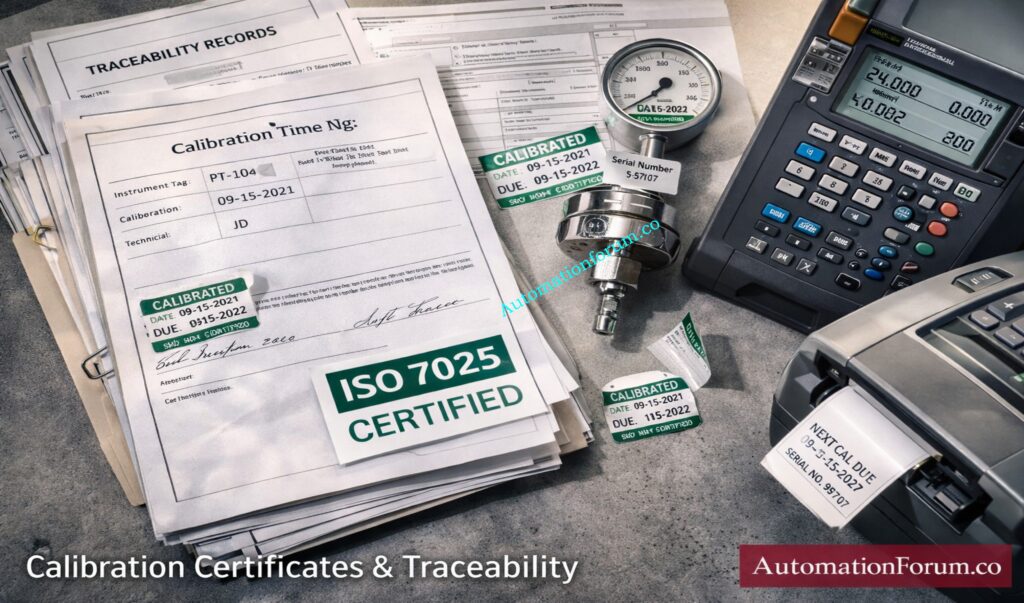
Calibration tools that technicians use must also be calibrated.
Some common instruments for calibrating are:
- Pressure calibrators
- Temperature dry block calibrators
- Multifunction calibrators
- Loop calibrators
Auditors need to check that these standards have valid calibration certifications and paperwork that shows where they came from.
Pick Master Instrument in 6 Steps: 6 Steps Guide to Selecting a Master Instrument for Calibration
Technician Training and Competency Verification
Calibration technicians should have the right training and skills.
Auditors should look over:
- Training records
- Certification records
- Experience levels
- Procedure familiarity
To make sure that calibration is accurate, technicians must be skilled.
Calibration Certificate Completeness Verification
Calibration certificates must have all the information they need, such as:
- Instrument identification
- Calibration date
- Calibration results
- Measurement uncertainty
- Reference standards used
- Technician signature
- Approval signature
During audits, incomplete certifications could cause nonconformity results.
Calibrate Weighing System Properly: Weighing System Calibration Procedure
Nail Analytical Calibration Every Time: Analytical Instruments Calibration Procedures
Common Non Conformities Found During Calibration Audits
During ISO audit instrumentation examinations, auditors often see the same calibration management problems come up again and over again.
Finding these problems early on helps companies make their calibration systems better.
Missing or Incomplete Calibration Records
One of the most common things that auditors uncover is that calibration records are missing or not complete.
This frequently happens when technicians complete calibration but don’t write down the results in the maintenance system correctly.
Auditors can’t check calibration if there isn’t enough documentation.
What Is a Calibration Certificate Read Fast: What is a Calibration certificate ?
Overdue Instrument Calibration
Another prevalent problem is that equipment work after their calibration due date.
This happens a lot because of:
- Poor scheduling
- Lack of automated reminders
- Limited manpower during plant shutdowns
Calibration that is past due makes measurements less certain and could make process data incorrect.
Incorrect or Outdated Calibration Procedures
Sometimes, technicians employ old methods or wrong ways to calibrate.
This could be because of:
- Poor document control
- Lack of training
- Improper procedure updates
Calibration findings can be wrong if the wrong steps are taken.
Get Control Valves Calibrated Right: Control Valve Calibration Procedures
Use of Uncalibrated Reference Standards
Calibration tools need to be calibrated, too.
If a technician uses a calibrator that has expired, all of the measurements made with that device are no longer reliable.
Missing Measurement Traceability Documentation
One of the most important ISO requirements is measurement traceability. It must be possible to trace calibration results back to known national or international measuring standards.
Not being able to keep track of things is a big problem that auditors notice.
Poor Instrument Tagging and Identification
Auditors can’t connect instruments to calibration records without the right identification.
Calibrate Displacement Sensors Fast: Displacement Measurement Instrument Calibration Procedures
Best Practices for Maintaining ISO Calibration Compliance
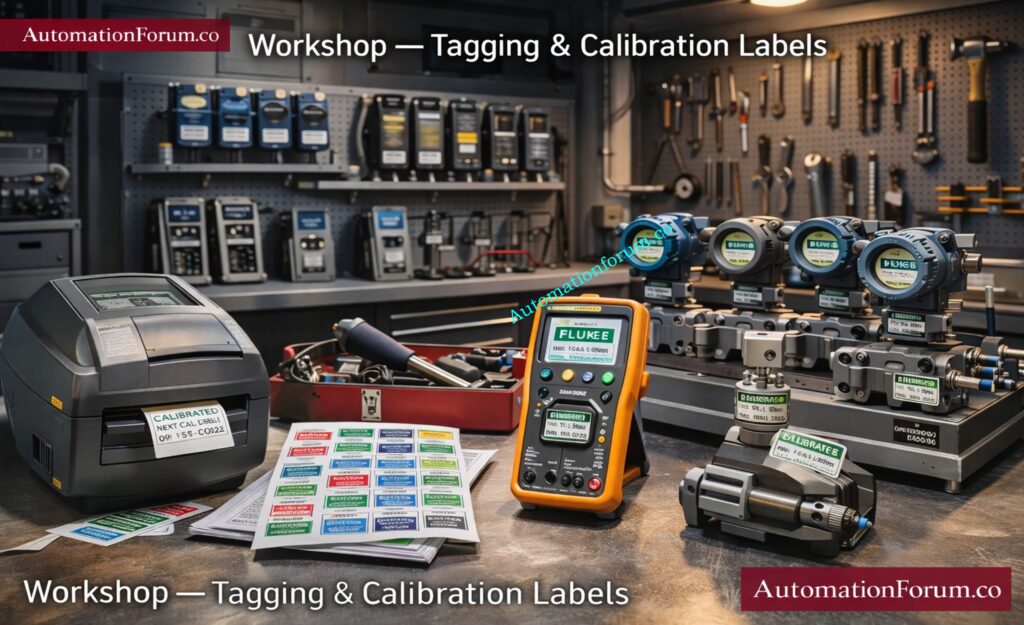
To be in conformity with ISO calibration, you need to do more than just calibrate your equipment every so often. It needs a well-organized and well-managed system for taking measurements.
Digital Calibration Management Systems for Process Plants
Calibration management software that works with CMMS platforms is used in modern plants.
For example:
- SAP PM
- Maximo
- Asset management systems
- Calibration management databases
These technologies assist keep track of calibration history and make scheduling easier.
Risk Based Calibration Interval Management
Not all instruments need to be calibrated at the same time.
Instruments that are really important should have shorter intervals, while instruments that are not very important might have larger intervals.
Risk-based approaches assist make the best use of maintenance resources.
Instrument Criticality Classification Methods
Instruments should be classified according to their effect on:
- Safety
- Environment
- Product quality
- Production efficiency
During audits and planning for maintenance, critical tools are given priority.
Automated Calibration Notifications and Scheduling
Automated notifications assist technicians find devices that are getting close to their calibration due dates.
This lowers the chance of instruments being late.
Calibration Document Control and Record Management
Calibration procedures, calibration records, and traceability certificates must be maintained under strict document control systems.
This ensures that technicians always use the latest procedures.
Validation vs Calibration Know the Difference: Differences Between Validation and Calibration
Technician Training and Calibration Skill Development
Regular training programs improve calibration accuracy and reduce human error.
Training may include:
- Calibration techniques
- Instrument troubleshooting
- ISO audit awareness
- Measurement uncertainty concepts
Well trained technicians are a key factor in maintaining calibration system reliability.
Fix Signal Convertors Calibrate Now: Signal Convertors Calibration Procedures
How Often Should Calibration Audits Be Conducted?
Calibration audits are normally included within the organization’s internal ISO audit program.
How often these audits happen depends on how complicated the plant is and how important its measurement systems are.
Typical Internal ISO Audit Frequency in Process Plants
Calibration audits are done by most organizations:
- Once per year
- Twice per year in highly regulated industries
Usually, the organization’s ISO 9001 internal audit schedule lines up with the annual audits.
Risk Based Calibration Audit Planning
Some plants check high-risk measuring systems more often, like:
- Custody transfer flow meters
- Environmental monitoring instruments
- Safety shutdown transmitters
Every three months, these systems may be checked to make sure the measurements are accurate.
External ISO Certification and Surveillance Audits
ISO certification bodies usually do:
- Annual surveillance audits
- Full recertification audits every three years
During these audits, calibration management systems are rigorously checked to make sure they meet ISO standards.
Regular internal audits help businesses find problems early and keep up with rules all the time.
Stop Guessing Calibrate Temperature: Temperature Calibration Procedure
Benefits of a Strong Calibration Audit System in Process Industries
For process companies, a strong calibration audit instrumentation program can save a lot of time and money.
Improved Measurement Reliability and Process Stability
Regular audits make sure that tools stay accurate and within acceptable tolerance levels.
Measurements that are accurate make processes more stable.
Enhanced Process Control and Operational Efficiency
When instruments are properly calibrated, control systems operate more efficiently.
This leads to:
- reduced process variability
- improved energy efficiency
- optimized production rates
Master Pressure Calibrators Buy Guide: Master Pressure Calibrators: Precision Tools for Accurate Pressure Instrument Calibration
Regulatory Compliance and Audit Readiness
Many fields have very severe rules that they have to follow.
Calibration audits show that you are following:
- ISO standards
- environmental regulations
- safety regulations
Reduced Production Losses and Downtime
Wrong measurements can often cause processes to go off track, products to not meet specifications, or plants to shut down.
Calibration audits lower these hazards.
Improved Plant Safety and Risk Reduction
Accurate sensor readings are necessary for safety instrumented systems to work.
Regular checks on safety equipment make sure they work right in emergencies.
Consistent Product Quality and Customer Satisfaction
Accurate instruments make ensuring that process parameters stay within the right range.
This makes sure that the quality of the products is always good and that customers are happy.
Level Sensors Calibrate for Accuracy: Calibration Procedures for Level Measurement Devices
Internal Audit Checklist for Instrument Calibration in Process Industries
For the plant to run safely and reliably, it is important to keep the process instrumentation correct. In the oil and gas, petrochemical, power generation, pharmaceutical manufacturing, and water treatment industries, thousands of instruments are always measuring things like pressure, temperature, flow, level, and analytical data. If these tools aren’t set up appropriately, the facility could have problems with process stability, product quality, not following the rules, or even safety.
Engineers can use an instrument calibration internal audit checklist to make sure that calibration activities are always in line with ISO standards and factory procedures.
An instrument calibration internal audit checklist helps engineers systematically verify whether calibration activities meet ISO requirements and plant procedures. This checklist supports ISO 9001 calibration compliance, ensures measurement traceability, and helps auditors evaluate calibration procedures, records, technician competency, and calibration equipment traceability.
The following detailed ISO calibration audit checklist is designed for:
- Instrumentation engineers
- Calibration technicians
- Maintenance engineers
- Quality assurance engineers
- ISO internal auditors
- Reliability engineers in process industries
It provides a structured method to audit calibration management systems, calibration procedures, calibration equipment, documentation, traceability, and non-conformance handling.
Pressure Instruments Calibrate This Way: Calibration Procedures for Various Pressure Measuring Instruments
Download Internal Audit Checklist for ISO Process Instrument Calibration (Excel)
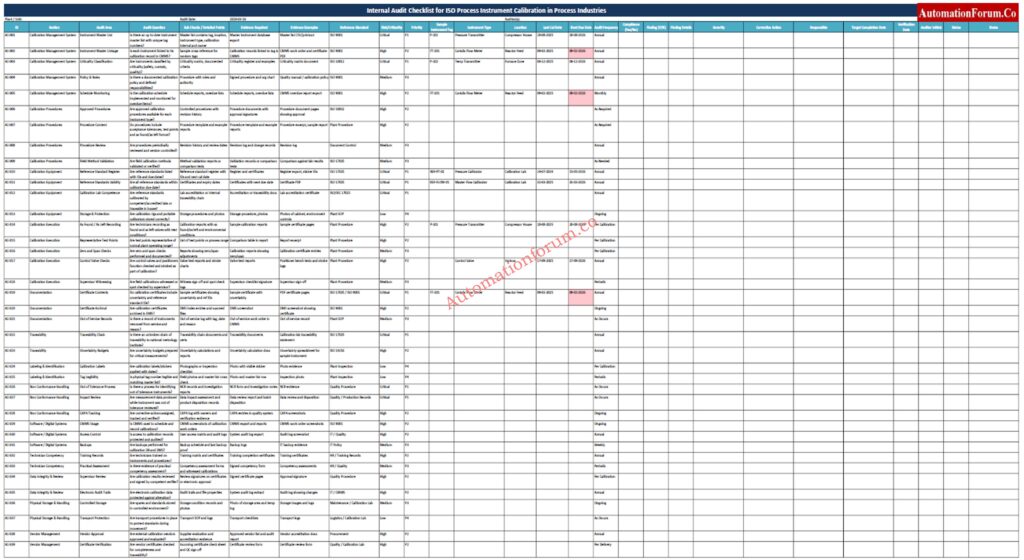
Use the comprehensive Excel checklist below to perform structured internal audits for process instrument calibration systems.
Download the Excel Checklist:
Flow Meter Calibration ISO Way: ISO Standard Calibration Procedures for Flow Measuring Instruments
Calibration Audit Frequently Asked Questions
What is a calibration audit?
A calibration audit is a systematic review of calibration procedures, records, and equipment to verify compliance with quality standards. It confirms that measurement instruments are accurate and properly maintained.
Why is calibration important in process industries?
Calibration ensures that instruments measure process parameters accurately, preventing process deviations and safety risks. Regular calibration also maintains product quality and regulatory compliance.
What is traceability in calibration?
Traceability means measurement results can be linked through an unbroken chain of calibrations to national or international standards. This ensures measurement reliability and consistency.
Which ISO standards apply to instrument calibration?
Common standards include ISO 9001 for quality management, ISO 17025 for calibration laboratories, and ISO 10012 for measurement management systems. These standards define how calibration systems should be managed.
How often should process instruments be calibrated?
Calibration frequency depends on instrument criticality, manufacturer recommendations, and plant risk assessment. Most industries follow annual or semi annual calibration intervals.
Calibrate Absolute Pressure Step by Step: Step-by-Step Procedure to Calibrate an Absolute Pressure Transmitter
What is an instrument calibration audit checklist?
It is a structured list of audit questions used to verify calibration procedures, records, traceability, and compliance with ISO requirements. It helps auditors evaluate the effectiveness of calibration systems.
What documents are reviewed during a calibration audit?
Auditors review calibration certificates, instrument master lists, procedures, traceability records, and technician training documents. These records demonstrate compliance with calibration standards.
What happens if an instrument is found out of calibration?
The instrument must be adjusted or recalibrated, and previous measurement results may need to be evaluated for impact. Corrective actions should be documented in the audit records.
Who performs internal calibration audits?
Trained ISO internal auditors, quality engineers, or instrumentation specialists within the company usually do internal calibration audits.
What instruments require calibration in process plants?
Pressure transmitters, flow meters, temperature sensors, level transmitters, analyzers, and control valves are all common tools. Calibration should be done on any equipment that is used to measure or keep an eye on something.
What is the purpose of calibration records?
Calibration records show that instruments were calibrated appropriately and are still within acceptable tolerance limits. These records help with compliance with ISO and tracking.
What are common findings in calibration audits?
Common problems include missing calibration records, expired calibration certificates, wrong processes, and not being able to trace measurements. When ISO audits happen, these problems can cause things to not be in compliance.
Can calibration be done in house?
Choose Best Calibration Software Now: Best Calibration Management Software
What is the difference between calibration and verification?
Calibration checks an instrument against a reference standard to find out how much it is off. Verification just makes sure that the instrument works within acceptable limitations.
How does calibration support ISO certification?
Regular calibration shows that measuring tools give accurate results and meet ISO quality management standards. This helps with successful ISO audits and getting certified.
Refer the below link for the Free Instruments Calibration Procedures: 60+ Step-by-Step Methods for Pressure, Temperature, Flow & Level
