
- Why Edge AI Based Predictive Calibration Is the Latest Trend in Instrumentation and Control Engineering
- What Is Edge AI Based Predictive Instrumentation Calibration and Health Monitoring
- Why Traditional Instrumentation Calibration Practices are No Longer Sufficient
- Why Edge AI Predictive Instrumentation Is Trending in Modern Process Plants
- Core Elements of Edge AI Based Predictive Instrumentation Systems
- Step-by-Step Edge AI Based Predictive Instrumentation Procedure
- Practical Example: Predictive Calibration of a Pressure Transmitter in a Process Plant
- Key Benefits of Edge AI Based Predictive Instrumentation for Engineers
- Industries Actively Using Predictive Instrumentation and Condition-Based Calibration
- Challenges in Implementing Edge AI Predictive Instrumentation and How to Overcome Them
- Best Practices for Successful Adoption of Predictive Instrumentation in Process Plants
- Future of Instrumentation Engineering with Edge AI and Predictive Maintenance
- Why Edge AI Based Predictive Instrumentation Is the Future of Process Plant Reliability
- FAQ on Edge AI Based Predictive Instrumentation Calibration
Why Edge AI Based Predictive Calibration Is the Latest Trend in Instrumentation and Control Engineering
Instrumentation and control engineering has always been the backbone of safe and efficient process plant operation. Accurate measurement of pressure temperature flow level and analytical parameters directly affects product quality energy efficiency safety and regulatory compliance. For decades instrumentation professionals have relied on periodic calibration preventive maintenance and manual diagnostics to ensure reliable operation of field instruments.
However modern process plants are becoming larger more complex and more automated. Shutdown windows are shrinking and unplanned downtime is increasingly unacceptable. At the same time smart instruments generate vast amounts of diagnostic data that are often underutilized. These challenges have led to the emergence of a new trending procedure in instrumentation and control known as Edge AI based predictive calibration and instrument health monitoring.
This procedure is now being actively adopted across oil and gas chemical power pharmaceutical and fertilizer industries. It represents a major shift from time based maintenance to condition based and data driven decision making. This article explains the concept the procedure the practical implementation and the benefits in a way that is directly useful for instrumentation professionals working in process plants.
Test Your ISO/NIST Calibration Skills: Process Instrument Calibration MCQ Challenge – NIST, ISO 17025, ISA Standards & Calculations
What Is Edge AI Based Predictive Instrumentation Calibration and Health Monitoring
Edge AI based predictive instrumentation is a procedure where intelligent analysis is performed close to the field instruments using edge computing devices. Instead of sending all data to centralized systems raw measurement signals and diagnostic parameters are analyzed locally using artificial intelligence and machine learning techniques.
The objective is to continuously monitor instrument health detect early signs of drift degradation or abnormal behavior and predict when calibration or maintenance is required before the instrument affects the process.
In simple terms the instrument tells you when it needs attention instead of waiting for the next scheduled calibration.
Step-by-Step Transmitter Trim + Diagrams: Smart Pressure Transmitter Sensor Trim Guide with Diagrams & Calibration Steps
Why Traditional Instrumentation Calibration Practices are No Longer Sufficient
Limitations of Periodic Time-Based Calibration
Most process plants still follow fixed calibration intervals such as six months or one year. While this approach ensures compliance it has several weaknesses.
An instrument can drift significantly just weeks after calibration without being detected. Another instrument may remain stable for years yet still be calibrated repeatedly. This leads to unnecessary maintenance effort and cost.
Reactive Instrument Troubleshooting and Its Impact on Process Stability
Many instrument problems are discovered only after operators notice unstable readings alarms or control loop oscillations. At this stage the process is already affected and production losses may occur.
Quick Plant Maintenance Checklist: Maintenance Checklist
Underutilization of Smart Instrument Diagnostics in Process Plants
Modern transmitters provide valuable diagnostic information such as sensor aging impulse line plugging coating buildup and electronics health. In many plants this information is not analyzed systematically.
These gaps are precisely what predictive instrumentation procedures aim to close.
Why Calibration ≠ Re-ranging — Explained: Why Calibration Isn’t the Same as Re-ranging in Process Instrumentation
Why Edge AI Predictive Instrumentation Is Trending in Modern Process Plants
Several industry trends are driving the adoption of predictive instrumentation.
First smart instruments have become standard rather than optional. Second edge computing hardware is now affordable reliable and industrial grade. Third process industries are embracing digital transformation and asset performance management. Finally there is increasing pressure to reduce maintenance cost while improving reliability.
Major automation manufacturers such as Endress+Hauser, ABB, Siemens, Honeywell, and Yokogawa are embedding predictive diagnostics and analytics into their instrumentation and asset management platforms. This confirms that the trend is industry wide and not experimental.
Avoid These Calibration Mistakes: Top 15 Common Calibration Mistakes in Industrial Instruments
Core Elements of Edge AI Based Predictive Instrumentation Systems
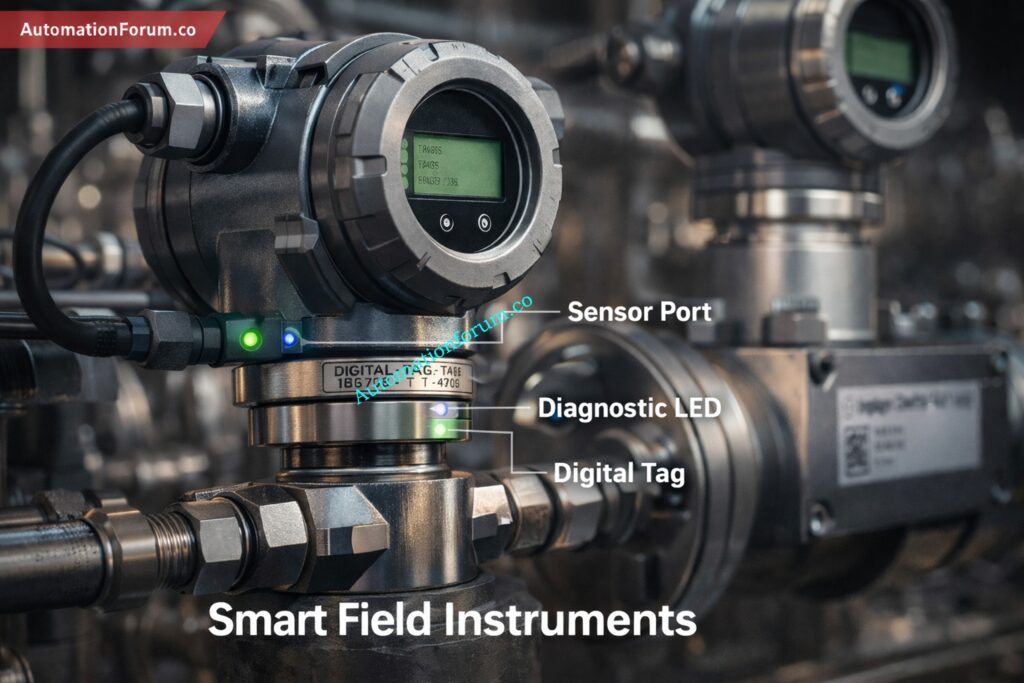
Smart Field Instruments and Embedded Diagnostics
The foundation of predictive instrumentation is smart field devices. These instruments provide not only the measured process variable but also internal diagnostics such as sensor signal strength noise temperature compensation and electronics health.
Examples include smart pressure transmitters flow meters radar level transmitters and analytical sensors.
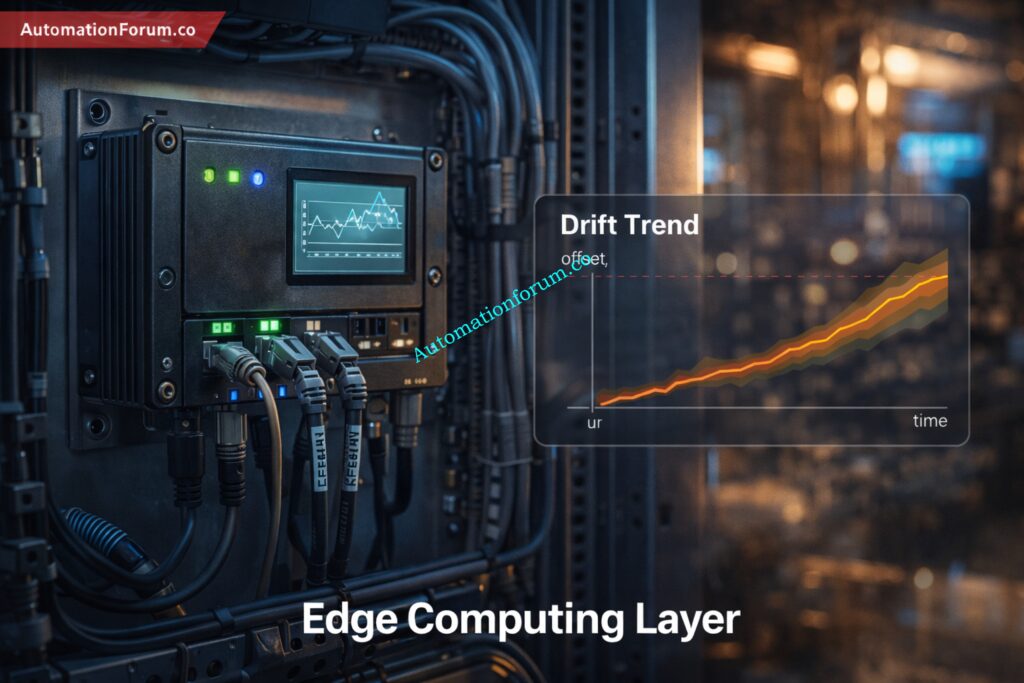
Edge Computing Layer for Local Instrument Analytics
Edge devices are installed near the field or control system. They collect high resolution data from instruments and execute analytics locally. This cuts down on latency, makes things more reliable, and stops data from being sent to higher-level systems when it doesn’t need to be.
Smart Plant: Reliability + Cyber-Secure Maintenance: Advanced Integrated Field Instrument Reliability & Cyber-Secure Maintenance Checklist for Smart Process Plants
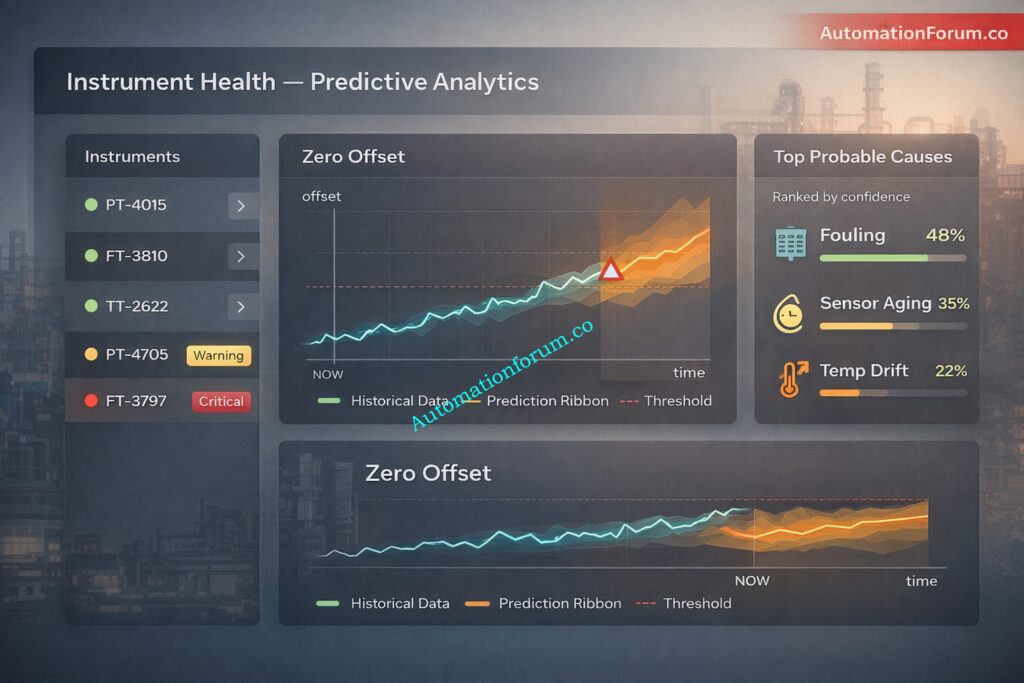
Predictive Analytics and Artificial Intelligence Models
Artificial intelligence models look at trends, patterns, and changes in how instruments behave. These models learn from past data and are always updated as situations change.
The idea is not to replace engineering judgement but to give early warnings and useful information.
Essential Calibration Guidelines: Calibration Guidelines
Step-by-Step Edge AI Based Predictive Instrumentation Procedure
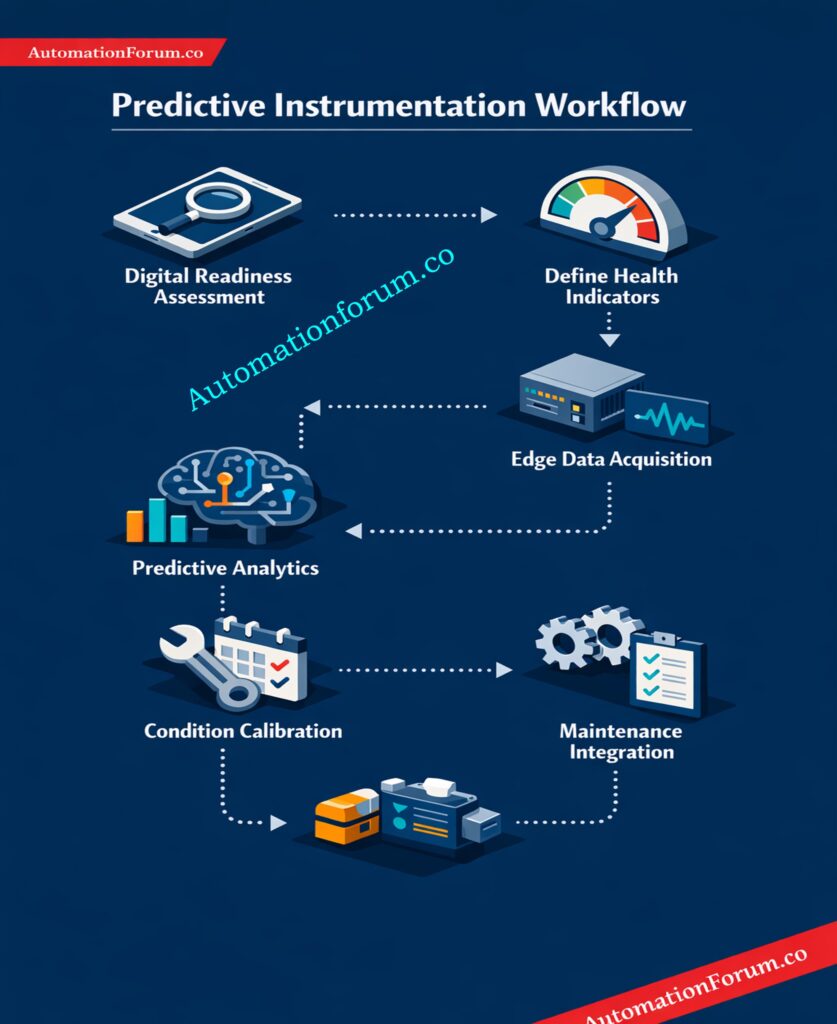
Step 1: Instrument Digital Readiness Assessment
The first thing to do is find the most important tools and see how well they work with digital technology. Instrumentation engineers should make sure that devices can communicate and diagnose problems digitally and that they are linked to an asset management system.
Instruments that affect the quality of safety products or the availability of plants should be given the most attention.
Step 2: Definition of Instrument Health Indicators
Next, engineers set measurable health indicators for each sort of device. For pressure transmitters, this might be the level of noise and the time it takes for the sensor to respond. For flow meters, it might be the strength of the signal and the balance of the sensors. For analytical instruments it may include reference deviation and calibration stability.
These indicators form the baseline for predictive analysis.
Step 3: High-Resolution Data Acquisition at the Edge
At the edge, we get high-frequency data and diagnostics. This method captures raw signal behaviour and small changes, which is different from previous systems that only look at final values.
This level of detail is necessary for early diagnosis of deterioration.
Refer the below link for the Top 10 Essential Maintenance Metrics Every Reliability Engineer Must Track
Step 4: Predictive Analysis and Anomaly Detection
AI models always look at how things are now and how they were in the past. When the system sees strange patterns, it tries to figure out what might be causing them, such sensors being old or stress from the environment.
The system doesn’t just sound alerts; it also gives information and levels of confidence.
Step 5: Condition-Based Calibration Decision Making
Calibration doesn’t happen on a set schedule; instead, it happens when predicted indications go above certain boundaries. This makes sure that calibration is done when it is needed and not done when it is not needed.
Instrumentation teams may plan their work ahead of time instead of having to fix problems when they happen.
Step 6: Integration with Maintenance and Control Systems
The asset management system and the maintenance management system that are part of the distributed control system work together with predictive alerts. This makes a whole process from finding the problem to carrying out the work order and keeping documentation.
How to Calibrate Analytical Instruments: Analytical Instruments Calibration Procedures
Practical Example: Predictive Calibration of a Pressure Transmitter in a Process Plant
Think about a differential pressure transmitter that is used to measure flow over an aperture plate in a chemical plant. This instrument directly influences flow control loop stability and process efficiency.
Traditional Calibration Approach and Its Limitations
In a conventional maintenance strategy the transmitter is calibrated every six months. Any drift caused by impulse line fouling temperature cycling or sensor aging often remains unnoticed between calibration intervals. The issue is usually identified only during routine calibration or after operators observe unstable flow readings and control loop oscillations. By this time the process may already be affected and maintenance becomes reactive.
Safety Bypass & Override – IEC 61511 Guide: IEC 61511 Safety Bypass And Override in Instrumentation and Control System Maintenance
Edge AI Based Predictive Instrumentation Approach
With predictive instrumentation the transmitter continuously provides diagnostic and raw signal data to an edge analytics system. Over time the system detects a gradual increase in signal noise and a slow zero offset trend. Although the measured flow remains within limits the analytics model predicts that calibration tolerance will be exceeded within a few weeks.
Maintenance is then scheduled during normal operation or a planned low load period. The transmitter is inspected and calibrated before it impacts the process.
Operational Results and Performance Improvements
This approach improves measurement reliability stabilizes control performance reduces unplanned downtime and converts calibration from a fixed schedule activity into a condition based maintenance task.
Handy Calculators for Precise Calibration: Collection of Instrument Calibration Activity Calculators for Accurate Adjustments
Key Benefits of Edge AI Based Predictive Instrumentation for Engineers
- Predictive monitoring makes ensuring that equipment stay within acceptable accuracy limits all the time, not only during regular calibration.
- Early identification of instrument degradation prevents control loop oscillations nuisance alarms and unexpected process disturbances.
- Condition based calibration and diagnostic records provide clear technical justification during regulatory audits quality inspections and safety reviews.
- Instrumentation engineers develop valuable expertise in instrument diagnostics data interpretation and digital maintenance systems which are increasingly important in modern process plants.
Practical Control Valve Calibration Guide: Control Valve Calibration Procedures
Industries Actively Using Predictive Instrumentation and Condition-Based Calibration
Predictive instrumentation procedures are already being implemented in oil and gas production refineries petrochemical complexes power plants pharmaceutical manufacturing fertilizer plants and LNG facilities.
These businesses use a lot of important tools, and even tiny improvements in reliability can save them a lot of money.
Accurate Temperature Calibration Procedure: Temperature Calibration Procedure
Challenges in Implementing Edge AI Predictive Instrumentation and How to Overcome Them
Organizational Resistance to Condition-Based Calibration
Some teams don’t want to change their calibration schedules because they’re used to them. Pilot projects on important tools help show how useful they are.
Instrument Data Quality and Reliability Issues
Predictive systems depend on clean reliable data. Proper instrument installation grounding and shielding remain essential.
Skill Gap in Predictive Diagnostics and Analytics
Engineers do not need to become data scientists but they must understand diagnostics and trends. The most important things are training and slowly adopting.
Calibrate Signal Convertors: Quick Guide: Signal Convertors Calibration Procedures
Best Practices for Successful Adoption of Predictive Instrumentation in Process Plants
Begin with a small area of concentration on the most important tools. Set explicit standards for what makes predictive alerts acceptable. Don’t only trust algorithms; keep an eye on engineering. Don’t use predictive insights to automatically control actions; instead, use them to help you make decisions.
Calibrating Level Measurement Instruments: Calibration Procedures for Level Measurement Devices
Future of Instrumentation Engineering with Edge AI and Predictive Maintenance
Instrumentation engineering is changing from keeping track of manual measurements to managing assets intelligently. Future instruments will be self aware capable of self diagnosis and able to communicate their health status automatically.
Engineers who embrace predictive instrumentation will play a central role in smart plant operation reliability engineering and digital transformation initiatives.
Calibrate Pressure Instruments — Methods: Calibration Procedures for Various Pressure Measuring Instruments
Why Edge AI Based Predictive Instrumentation Is the Future of Process Plant Reliability
Edge AI based predictive calibration and instrument health monitoring represents the most important recent advancement in instrumentation and control procedures for process plants. It addresses long standing limitations of traditional maintenance practices and unlocks the full value of smart instrumentation.
For instrumentation professionals this procedure offers improved reliability reduced workload and enhanced professional relevance in an increasingly digital industrial landscape. Using predictive instrumentation now is more than just a technological update; it’s a smart move toward the future of process automation.
ISO Flow Meter Calibration Procedures: ISO Standard Calibration Procedures for Flow Measuring Instruments
FAQ on Edge AI Based Predictive Instrumentation Calibration
What is predictive calibration in instrumentation?
Predictive calibration is a condition-based method that looks at instrument performance and diagnostics all the time to figure out the best time for calibration, rather than sticking to set schedules.
How does edge AI improve instrument calibration accuracy?
Edge AI looks at raw sensor data and diagnostics on the spot, which lets it find drift, degradation, or strange behaviour early on, before measurement accuracy is damaged.
What is the difference between predictive calibration and preventive calibration?
Preventive calibration happens at set times, while predictive calibration only happens when instrument performance indicators go above certain levels, using real-time data and analytics.
PM Procedures for Instruments & Controls: Collection of Preventive Maintenance (PM) Procedures for Instrumentation and Control Systems
Which instruments are suitable for edge AI based health monitoring?
Smart pressure transmitters, flowmeters, level transmitters, temperature sensors, and analytical instruments with digital diagnostics are all good examples of things that can be monitored with edge AI.
What data is required for predictive instrument health monitoring?
To check the health of an instrument, predictive systems look at raw sensor signals, diagnostic parameters, ambient data, historical calibration records, and operating circumstances.
How does predictive calibration reduce unplanned downtime?
Early detection of instrument problems allows for preventive repair to be scheduled before inaccurate measurements lead to control instability, alarms, or process shutdowns.
Refer the below link for the Heartbeat Technology in Process Instrumentation – Complete Working, Diagnostics, Verification & Predictive Maintenance Guide
