
- Understanding Cybersecurity Threat Identification
- What is Cybersecurity Threat Identification?
- Cybersecurity Threat Identification Lifecycle
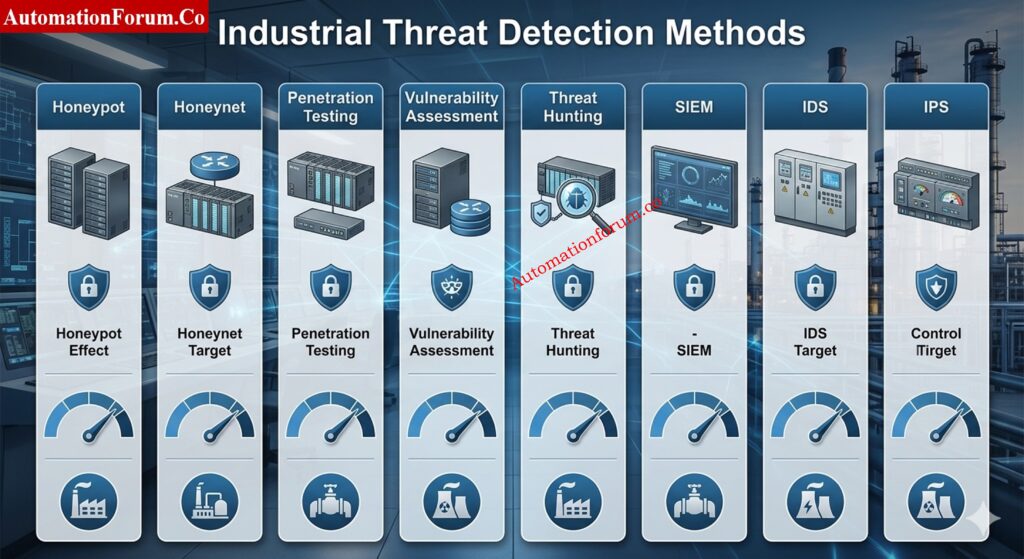
- Top Cybersecurity Threat Identification Methods
- Honeypot
- Honeynet
- Penetration Testing
- Vulnerability Assessment
- Threat Hunting
- Security Information and Event Management (SIEM)
- Intrusion Detection System (IDS)
- Intrusion Prevention System (IPS)
- Cybersecurity Threat Identification in Industrial Control Systems
- Comparison of Cybersecurity Threat Identification Methods
- How to Build an Effective Cybersecurity Threat Identification Strategy
- Common Mistakes Organizations Make During Threat Identification
- Best Practices for Cybersecurity Threat Identification
- Frequently Asked Questions on Cybersecurity Threat Identification
- Key Takeaways: Why Layered Threat Detection is Essential
Understanding Cybersecurity Threat Identification
Why Cybersecurity Threat Identification Matters
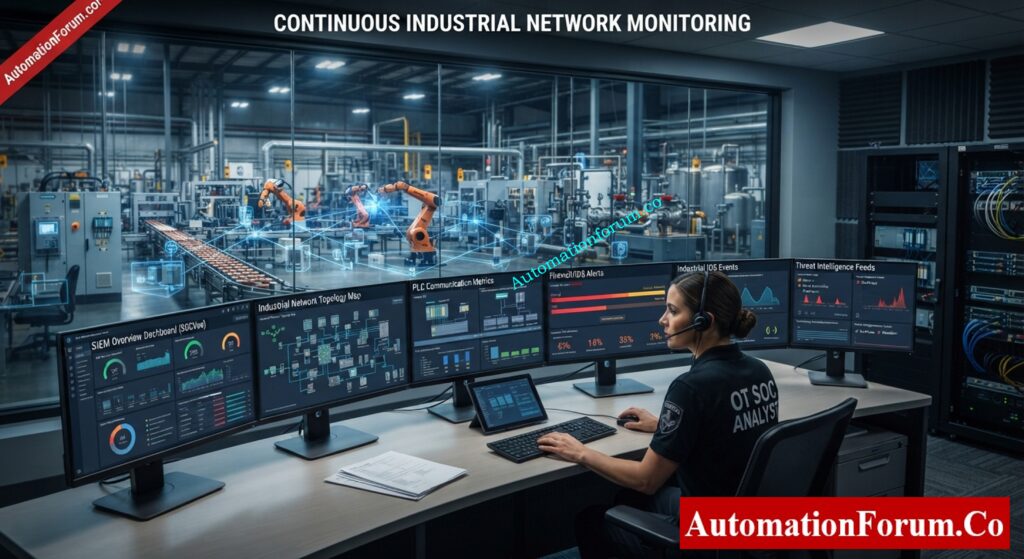
Cybersecurity has become one of the most critical concerns for organizations of every size. Businesses are no longer defending only traditional office networks. They also need to safeguard cloud platforms, remote working environments, industrial automation systems, operational technology networks, mobile devices and Internet of Things devices. Every item connected increases the attack surface and cyber threats are becoming more complex and difficult to detect.
Rising Cybersecurity Threats Across Modern Networks
Today’s cyber criminals are using sophisticated ransomware, phishing tactics, zero day exploits, insider assaults, supply chain compromises, credential theft and AI driven malware. These assaults are engineered to avoid typical security protections and remain stealthy for weeks or even months before causing harm. “Organizations can’t depend on firewalls and antivirus software alone anymore for protection.
Today’s cybersecurity isn’t only about blocking assaults, but also about detecting suspicious behaviors as early as feasible. Early threat detection helps security teams to identify harmful behavior before attackers have deeper access to networks or key systems. Identifying a threat early can often save costly business disruption, financial loss and reputational damage.
Importance for Industrial Control Systems
Threat identification is especially critical in industrial situations, because the physical process might be affected by cyber intrusions. Secure operational technology networks are essential for manufacturing plants, oil and gas facilities, pharmaceutical businesses, power production stations and water treatment plants. A successful attack on these systems might stop production, damage equipment, or even threaten the safety of workers.
Why Organizations Need Multiple Detection Techniques
Today, enterprises do not depend on a single security solution, but use a combination of detection approaches, including honeypots, penetration testing, vulnerability assessments, threat hunting, intrusion detection systems and Security Information and Event Management platforms. Together, these technologies enable ongoing insight into network activity, enhancing an organization’s ability to detect emerging dangers before they escalate into serious incidents.
Refer the below link for How to Safeguard PLCs Against Cyber Attacks in Industrial Networks ?
What is Cybersecurity Threat Identification?
Definition of Cybersecurity Threat Identification
Cybersecurity threat identification is the process of identifying malicious actions, vulnerabilities, suspicious behaviors or prospective cyber attacks that may damage information systems, networks, applications or industrial control systems.
The goal is not just to find malware once it has infected a system. Threat identification, on the other hand, is about finding indicators of compromise as quickly as possible, so security teams may investigate and respond before attackers get what they want.
A good threat identification program always watches network traffic, endpoint activity, user behavior, system logs, and cloud environments for anomalies that could signal an attack.
Objectives of Threat Identification
Typical objectives include:
- Identify malware infections
- Discover insider threats
- Detect privilege escalation
- Monitor suspicious network communications
- Identify vulnerable systems
- Support incident response investigations
- Protect critical business assets
Examples of Threat Identification in Enterprise Networks
For example, if an employee account suddenly logs in from another country during non working hours and immediately begins downloading confidential files, behavior analytics systems may classify this activity as suspicious. The security team can investigate and block the session before sensitive information is stolen.
Threat Identification in Industrial Automation Systems
Cybersecurity Threat Identification Lifecycle
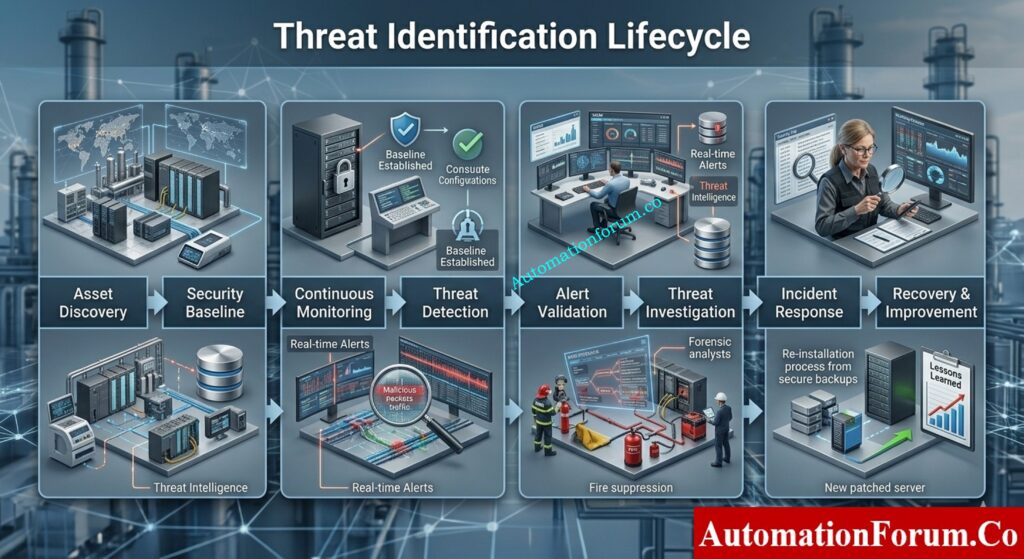
Threat detection is a process, not a one-time event. It’s an ongoing lifecycle to help firms keep awareness on their entire digital estate.
Asset Discovery
The first step is identifying every asset connected to the network. Organizations cannot protect systems they do not know exist.
Assets include:
- Servers
- Desktop computers
- Laptops
- Mobile devices
- Cloud workloads
- Virtual machines
- Databases
- Network equipment
- Industrial controllers
- Human Machine Interfaces
- Engineering workstations
- Sensors
- Remote access gateways
Accurate inventory of assets removes blind spots and improves monitoring coverage.
Establishing a Security Baseline
Before we can start to identify anomalous behaviors, it is necessary to understand normal network activity.
Baseline information typically includes:
- Regular login patterns
- Normal network traffic volumes
- Typical application usage
- Expected communication paths
- Industrial process communication frequencies
- Standard operating schedules
That way, you have a baseline and can more readily see anomalous departures from it.
Continuous Security Monitoring
Continuous monitoring collects security information from different sources across the company.
These sources are:
- Firewalls
- Routers
- Switches
- Endpoints
- Authentication servers
- Cloud platforms
- Security appliances
- Industrial controllers
- Process historians
- Safety systems
Real time monitoring enables rapid detection of suspicious events.
Threat Detection
Detection technologies evaluate the information obtained using a variety of approaches including signature matching, anomaly detection, behavior analytics and artificial intelligence models.
Common indicators include:
- Multiple failed login attempts
- Unexpected privilege changes
- Malware signatures
- Abnormal network traffic
- Data exfiltration attempts
Alert Validation
Not every alert represents a genuine attack.
Security analysts verify alerts by reviewing supporting evidence, checking historical activity, and determining whether the detected behavior represents legitimate business activity or malicious intent.
Reducing false alarms allows security teams to focus on real threats.
Threat Investigation
Once an alert has been validated, analysts perform detailed investigations.
Typical investigation activities include:
- Reviewing system logs
- Examining network traffic
- Analyzing endpoint behavior
- Identifying affected systems
- Determining attacker techniques
- Mapping activities to known attack frameworks
The goal is understanding the full scope of the incident.
Incident Response
If malicious activity is confirmed, incident response procedures begin immediately.
Response actions may include:
- Isolating infected systems
- Blocking malicious addresses
- Disabling compromised accounts
- Removing malware
- Applying security patches
- Restoring affected services
Rapid response limits business impact.
Recovery Process
After containment, organizations restore systems safely while verifying that attackers have been completely removed.
Recovery includes:
- System validation
- Backup restoration
- Security verification
- Continuous monitoring for recurring activity
Lessons Learned and Continuous Improvement
Every incident provides valuable information that improves future detection capabilities.
Organizations should review:
- Detection effectiveness
- Response times
- Root causes
- Security gaps
- Process improvements
- Staff training requirements
Continuous improvement strengthens overall cyber resilience.
Master Essential Cyber Defense Skills Before Hackers Strike First: Cybersecurity Basics: Types, Threats, and Protection Tips
Top Cybersecurity Threat Identification Methods
Honeypot

What is a Honeypot?
A honeypot is a deliberately deployed decoy system designed to attract cyber attackers. Unlike production systems that provide business services, a honeypot exists solely to observe malicious activities and gather intelligence about attacker techniques.
Because legitimate users have no reason to access a honeypot, any interaction with it is considered suspicious and deserves investigation.
Types of Honeypots
Low interaction honeypots
These simulate limited services and collect basic information about attacker activities. They are easier to deploy and present lower operational risk.
High interaction honeypots
These provide realistic operating systems and applications, allowing attackers to interact more extensively. They produce valuable intelligence but require stronger isolation and monitoring.
Production honeypots
Research honeypots
Universities, security vendors, and research organizations deploy these systems to study new attack techniques and malware behavior.
How Honeypots Work
A honeypot appears to attackers as a valuable server, database, industrial controller, or web application.
Once an attacker connects to the honeypot, every action is monitored and recorded, including:
- Login attempts
- Commands executed
- Malware uploaded
- Exploitation techniques
- Network scanning activities
- Lateral movement attempts
This information helps security teams improve defenses against future attacks.
Advantages of Honeypots
- Detects previously unknown attack techniques
- Produces valuable threat intelligence
- Generates very few false alerts
- Supports forensic investigations
- Improves incident response planning
Limitations of Honeypots
- Cannot protect production systems directly
- Requires careful isolation
- May not detect attacks that avoid the honeypot
- Skilled attackers may recognize poorly configured honeypots
Industrial Applications
Industrial organizations deploy honeypots that imitate programmable logic controllers, Human Machine Interfaces, engineering workstations, or industrial communication protocols.
These systems help security teams study attacks targeting operational technology without exposing actual production equipment.
Popular Honeypot Tools
Popular solutions include:
- Cowrie
- Honeyd
- Dionaea
- Conpot for industrial control systems
- Modern cloud based deception platforms
Real World Example
An industrial honeypot mimicking a programmable logic controller connected to a manufacturing company’s operational technology network was established. During normal surveillance, several illegal login attempts were detected from an outside source. Investigations found attackers were seeking for weak industrial devices. No production systems were hacked, but the business was able to tighten firewall rules and remote access controls before a genuine attack could take place.
Best Practices
Deploy honeypots outside of your production systems, monitor the activity collected constantly, change honeypot configurations frequently, correlate the intelligence obtained with SIEM platforms, and never use honeypots as the sole detection tool.
Critical PLC Security Rules Every Automation Engineer Should Follow: Cybersecurity Standards for PLCs
Honeynet
What is a Honeynet?
A honeypot is a single decoy device, whereas a honeynet is a collection of honeypots coupled together to mimic a complete corporate or industrial network.
How Honeynets Work
A honeynet gives attackers a realistic environment with servers, databases, user accounts, network devices, applications and industrial assets. This provides researchers and security experts the capability to see complicated attack sequences such as reconnaissance, privilege escalation, lateral movement, persistence, and data exfiltration.
Benefits of Honeynets
Honeynets are especially useful for learning about advanced persistent threats, because attackers will often expose techniques that would never be seen on isolated systems.
Organizations utilize honeynets to learn attacker behavior, refine detection criteria, improve employee training, validate security monitoring solutions, and bolster incident response protocols .
Honeynets in Industrial Control Systems
In an industrial setting a honeynet can mimic full production networks with programmable logic controllers, Human Machine Interfaces, supervisory control systems, historians and engineers workstations. This enables operational technology security teams to safely study attacks against industrial processes without risking actual production assets.
Test Your OT Security Readiness Before Attackers Find Weaknesses: ICS/SCADA OT Cybersecurity Self-Assessment: NIST-Based Procedure for Critical Infrastructure
Penetration Testing
What is Penetration Testing?
Penetration testing is one of the best ways to find cyber security threats before they are exploited by attackers. This is a controlled security exercise where ethical hackers replicate real-world cyber attacks to test how strong an organization’s security defenses are.
Unlike automated vulnerability scans , penetration testing tries to exploit detected holes to identify their true business impact . This gives enterprises with a realistic view of how attackers could breach their systems.
Types of Penetration Testing
Black Box Testing
The security professionals have no prior knowledge about the target environment. This is very similar to an external attacker trying to break into an organization.
White Box Testing
Testers are given all knowledge about the infrastructure, including network diagrams, source code and system configurations. This provides for an overall assessment.
Gray Box Testing
The tester has little understanding of the environment . It is a balanced approach reflecting many insider threat scenarios .
Common Penetration Testing Areas
- Network infrastructure
- Web applications
- Cloud environments
- Wireless networks
- Mobile applications
- Active Directory
- Industrial control systems
Penetration Testing Process
A structured penetration test normally includes:
- Planning
- Information gathering
- Network scanning
- Vulnerability identification
- Controlled exploitation
- Privilege escalation testing
- Documentation
- Risk assessment
- Final reporting
Advantages
- Identifies exploitable weaknesses
- Validates existing security controls
- Improves compliance
- Enhances incident response readiness
- Prioritizes remediation efforts
Limitations
- Represents security at one point in time
- Requires skilled professionals
- Cannot detect every possible attack
- May temporarily affect production systems if not properly planned
Industrial Considerations
Operational technology environments need additional care, because vigorous testing can break production or damage equipment. Generally , passive evaluations and tightly restricted testing windows are advised .
Discover Industrial Security Frameworks That Prevent Devastating Cyber Incidents: Protocols and Standards in Industrial Automation: A Guide to OT Cybersecurity
Vulnerability Assessment
What is Vulnerability Assessment?
A vulnerability assessment finds security holes before attackers do. Vulnerability assessments do not aim to exploit every flaw as does penetration testing. They don’t do that . They identify, classify and prioritize security concerns .
Organizations will often schedule vulnerability assessments to retain visibility into their security posture.
Vulnerability Assessment Process
The assessment process includes:
- Asset discovery
- Automated scanning
- Manual verification
- Risk scoring
- Report generation
- Remediation planning
Risk Prioritization: Security teams typically use Common Vulnerabilities and Exposures and Common Vulnerability Scoring System ratings to prioritize vulnerabilities.
Popular Vulnerability Assessment Tools: Some popular vulnerability scanners are Nessus, Qualys, OpenVAS, Rapid7 InsightVM and Microsoft Defender Vulnerability Management.
Benefits: Integrating vulnerability assessments into patch management procedures reduces the organization’s overall attack surface.
Understand Modern Cyber Threats Before They Cripple Critical Operations: Cyber Attack and its types
Threat Hunting
What is Threat Hunting?
They don’t wait for alerts, but look for suspicious activity through experience, intelligence and adversary behavior.
Threat Hunting Process
The typical steps in threat hunting are:
- Develop a hunting hypothesis
- Collect relevant data
- Analyze endpoint and network activity
- Search for Indicators of Compromise
- Validate findings
- Document results
- Improve detection rules
MITRE ATT&CK Framework: The MITRE ATT and CK framework is often used by threat hunters to map attacker strategies and find gaps in existing monitoring capabilities.
Benefits: Threat hunting is very good at finding advanced persistent threats, insider threats and stealthy malware.
Strengthen Plant Security Against Rising Industrial Cyber Threats Today: Industrial control system Security
Security Information and Event Management (SIEM)

What is SIEM?
Security Information and Event Management (SIEM) technologies gather, process and analyze logs throughout the company to provide centralized visibility into security occurrences.
Analysts may now analyze security issues from a single platform instead of sifting through thousands of separate logs.
How SIEM Works
A typical Security Information and Event Management solution gathers information from:
- Firewalls
- Servers
- Cloud services
- Endpoint security software
- Identity providers
- Network devices
- Industrial control systems
Core Features
Core capabilities include:
- Centralized log collection
- Event correlation
- Automated alert generation
- Dashboards
- Compliance reporting
- Threat intelligence integration
Benefits: Many modern platforms now use machine learning to limit false positives and detect anomalous behavior.
Popular SIEM Platforms: Popular platforms include Microsoft Sentinel, Splunk Enterprise Security, IBM QRadar, Google Security Operations, and Elastic Security.
Avoid Dangerous Shutdown Confusion During Critical Plant Emergencies: ESD vs PSD: Difference Between Emergency Shutdown System and Process Shutdown System
Intrusion Detection System (IDS)
What is an Intrusion Detection System?
Intrusion Detection System A software tool that monitors computers and networks for malicious activity.
Firewalls control what traffic can enter the monitored environment . Intrusion detection systems examine the traffic after it has already reached the monitored environment and detect malicious behavior .
There are two general types.
Host Based Intrusion Detection
These monitor activities occurring on individual computers, including:
- File modifications
- Registry changes
- User activity
- Process execution
- System logs
Network Intrusion Detection
These inspect network traffic flowing across communication links.
Detection methods include:
- Signature based detection
- Anomaly based detection
- Protocol analysis
- Behavior analysis
Intrusion detection systems provide valuable visibility but generally do not stop attacks automatically.
Ensure Full Functional Safety Compliance With This Expert Checklist: Advanced Safety Instrumented System (SIS) Inspection Checklist for IEC 61511 Compliance
Intrusion Prevention System (IPS)
What is an Intrusion Prevention System?
An Intrusion Prevention System (IPS) is an extension of intrusion detection that takes proactive measures to inhibit harmful activities.
How IPS Works
These systems can do more than just provide you alerts:
- Block malicious connections
- Drop suspicious packets
- Prevent exploitation attempts
- Restrict attacker communications
Benefits: Intrusion Prevention Systems are often implemented behind firewalls for added protection in addition to enterprise firewalls.
Industrial Applications: Industrial environments often need finely adjusted prevention strategies to prevent interference with legitimate process communications.
Avoid Expensive Safety Design Errors Before Project Commissioning Begins: Top Critical Mistakes in Safety Instrumented System Design as per ISA 84 Standard and How to Avoid Them
Cybersecurity Threat Identification in Industrial Control Systems
Challenges in Operational Technology Security
Industrial contexts have particular cybersecurity issues as operational continuity and safety are sometimes prioritized over secrecy.
Threat detection in operational technology contexts relies on the constant monitoring of industrial assets without interfering with operations.
Critical Assets That Should Be Monitored
Important monitoring areas include:
- Programmable Logic Controllers
- Distributed Control Systems
- Supervisory Control and Data Acquisition systems
- Human Machine Interfaces
- Engineering workstations
- Industrial Ethernet networks
- Modbus communications
- PROFINET communications
- EtherNet IP communications
- OPC Unified Architecture servers
- Industrial historians
- Safety Instrumented Systems
- Remote maintenance gateways
- Industrial Demilitarized Zones
Passive Asset Discovery: It is better to use passive asset discovery as it finds industrial equipment without creating a lot of network traffic..
Best Practices for OT Threat Monitoring: Organizations should also monitor for the use of removable media, illegal activity on engineering workstations, unusual modifications to controller code and remote vendor connections.
Choose the Right Shutdown Strategy for Maximum Plant Safety: ESD vs SIS Difference When to Use Each and Practical Engineering Guide
Comparison of Cybersecurity Threat Identification Methods
Comparison Table of Detection Methods
| Method | Detects Threats | Preventive Capability | Best Environment | Suitable for Operational Technology |
| Honeypot | High | Low | Enterprise | Yes |
| Honeynet | High | Low | Research | Yes |
| Penetration Testing | Medium | High | Enterprise | Limited |
| Vulnerability Assessment | Medium | Medium | All organizations | Yes |
| Threat Hunting | Very High | Medium | Security Operations Centers | Yes |
| Security Information and Event Management | Very High | Medium | Medium and Large Enterprises | Yes |
| Intrusion Detection System | High | Low | Enterprise Networks | Yes |
| Intrusion Prevention System | High | High | Enterprise Networks | Yes |
Master Functional Safety Concepts Every Instrumentation Engineer Must Know: What is SIS, SIF and SIL? An In-Depth Guide to Functional Safety in Process Industries
How to Build an Effective Cybersecurity Threat Identification Strategy
Small Business Security Strategy:
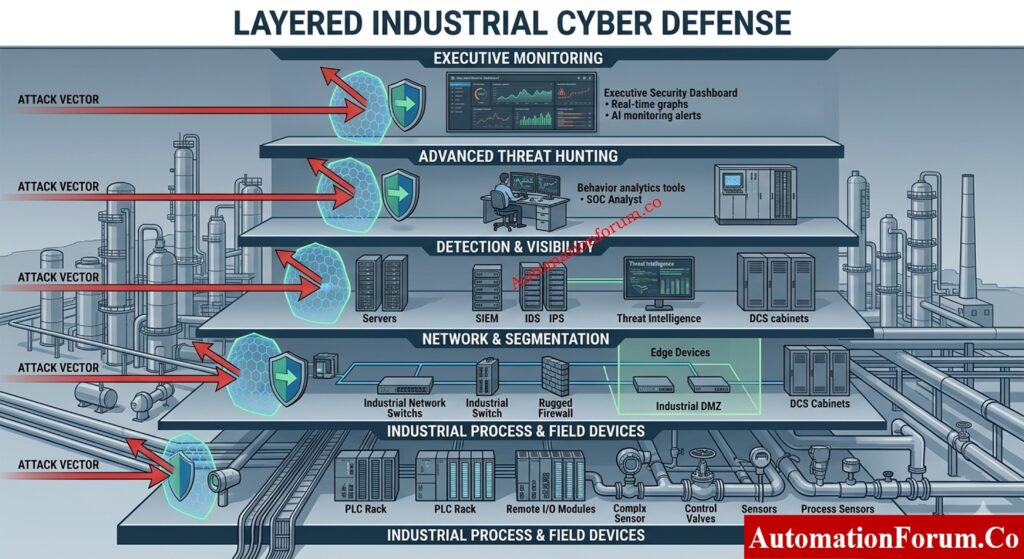
No single technology can identify every cyber threat. A mature cybersecurity program combines multiple detection techniques to provide layered visibility across the organization.
For a small organization, vulnerability assessments, endpoint protection and centralized log monitoring may be all that is needed to provide protection.
Medium Enterprise Security Strategy
Medium-sized enterprises can benefit from adding Security Information and Event Management platforms, intrusion detection systems, and periodic penetration testing.
Large Enterprise Security Strategy
Big companies need to combine threat intelligence, behavior analytics, threat hunting, endpoint detection and continuous monitoring.
Critical Infrastructure Security Strategy
Critical infrastructure operators should deploy passive industrial monitoring, network segmentation, engineering workstation monitoring, industrial intrusion detection, vendor access monitoring, and continuous operational technology visibility.
Layered detection significantly improves the ability to identify sophisticated attacks before they cause serious business disruption.
Reduce Safety Risks With Proven Testing and Deferral Practices: Testing and Repair Deferral – IEC Guidelines, Procedure, and Best Practices
Common Mistakes Organizations Make During Threat Identification
Many organizations reduce their ability to identify threats because of avoidable mistakes.
Some of the most common include:
- Depending on antivirus software alone
- Ignoring operational technology environments
- Not monitoring privileged accounts
- Failing to review security logs
- Delaying software updates
- Ignoring false positive tuning
- Poor asset inventory management
- Weak password policies
- Lack of network segmentation
- Infrequent penetration testing
Avoiding these mistakes greatly strengthens an organization’s overall detection capability.
Improve Alarm Performance Before Operators Miss Critical Process Events: Guide to Industrial Process Alarms in Control Systems: Types, Classifications, and Management Methods
Best Practices for Cybersecurity Threat Identification
Organizations should adopt the following practices to improve threat detection.
- Maintain a complete asset inventory.
- Monitor networks continuously.
- Centralize security logs.
- Perform regular vulnerability assessments.
- Conduct annual penetration testing.
- Integrate threat intelligence feeds.
- Use behavior analytics.
- Deploy endpoint detection solutions.
- Segment operational technology networks.
- Monitor remote vendor access.
- Regularly review privileged accounts.
- Implement Zero Trust principles.
- Automate alert correlation.
- Develop an incident response plan.
- Conduct regular cybersecurity awareness training.
- Test backup recovery procedures.
- Monitor cloud workloads.
- Protect industrial engineering workstations.
- Continuously improve detection rules.
- Review security metrics regularly.
Frequently Asked Questions on Cybersecurity Threat Identification
What is threat identification in cyber security?
Threat identification is the process of recognizing suspicious activity, vulnerabilities, or threats that can compromise an organization’s networks, systems, or data. It lets security teams detect risks early and act before serious damage may occur.
What are the 4 types of Cyber Threat Intelligence (CTI)?
There are four forms of Cyber Threat Intelligence: strategic, tactical, operational, and technical intelligence. Each category offers diverse insights, from executive-level risk analysis to precise technical indicators of compromise.
What are the 7 types of cyber security threats?
These are the 7 most frequent cyber security threats which include malware, ransomware, phishing, insider threats, denial of service attacks, man in the middle attacks, and zero day exploits. Knowledge of these dangers allows firms to deploy better security controls.
What are the 5 types of IDS?
The five main forms of IDS are: Network Based IDS, Host Based IDS, Protocol Based IDS, Application Protocol Based IDS and Hybrid IDS. They each monitor different areas of the infrastructure for anything suspicious-looking.
What are the 4 types of security?
Security can be categorized into four primary types: network security, application security, information security and operational security. They work together to secure digital assets, systems and company processes from cyber attacks.
What are the two main types of IDS?
There are two main types of Intrusion Detection Systems: Network Based IDS and Host Based IDS. Network Based IDS (Intrusion Detection System ) monitors traffic on the network. Host Based IDS (Intrusion Detection System ) monitors activities on the device.
Why is cybersecurity threat identification important?
Identifying cybersecurity threats helps firms detect assaults before they cause major damage or data loss. Early detection mitigates business impact and enhances incident response effectiveness.
What is the difference between threat identification and threat prevention?
Threat detection is the process of identifying harmful activity, whereas threat prevention is the process of stopping attacks from happening. Both are critical parts of a tiered cybersecurity approach.
Which tools are commonly used for cybersecurity threat identification?
Typical tools are: Security Information and Event Management (SIEM) platforms, Intrusion Detection Systems (IDS), Endpoint Detection and Response (EDR) solutions, vulnerability scanners, honeypots and threat intelligence platforms. These technologies enable ongoing visibility into security occurrences.
How often should organizations perform threat identification activities?
The identification of threats must be an ongoing process supported by real time monitoring, periodic vulnerability assessments, periodic penetration testing and proactive threat hunting. Continuous monitoring helps to identify emerging dangers as early as feasible.
Unlock Smarter Process Control for Higher Production and Efficiency: Advanced Process Control (APC): Working Principle, Components, Benefits, Applications and DCS Integration
Key Takeaways: Why Layered Threat Detection is Essential
Good cybersecurity is about finding threats before the attackers have their way. No organization should depend on a single detection technology because each technology handles distinct attack strategies.
Combining Multiple Threat Identification Techniques
And that layered defense dramatically enhances cyber resilience when you combine honeypots with penetration testing, vulnerability assessments, threat hunting, intrusion detection systems, Security Information and Event Management platforms and continuous monitoring.
Cybersecurity Threat Identification for Industrial Organizations
By combining operational technology monitoring with traditional information technology security, industrial enterprises can achieve complete security for their digital assets and crucial physical operations.
Future Trends in Cybersecurity Threat Detection
As cyber threats continue to grow, firms must respond by updating detection strategies, hiring competent security personnel, and leveraging automation and artificial intelligence to improve visibility and minimize response times.
Early threat identification is one of the most effective strategies to reduce cyber risk, protect key infrastructure and enable business continuity in an ever more connected world.
Refer the below link for PLC vs DCS – Which One Should you Choose for your Automation System?
