
- What is IEC 60079-14 and Why it is Critical For Hazardous Area Instrumentation
- Relationship With Instrument Certification And Design Standards
- Hazardous Area Classification: Zone 0, Zone 1 And Zone 2 Explained
- Explosion Protection Techniques Used In Instrumentation
- Instrument Cabling and Routing Requirements
- Earthing and Bonding Requirements for Hazardous Area Instrumentation
- Intrinsic Safety Wiring Rules Under Iec 60079-14
- Documentation and Loop Identification Requirements
- Instrument Enclosures and Field Mounting Best Practices
- Temperature Class Selection and Surface Temperature Control
- Good Installation Practices For Control System Reliability
- Inspection and Initial Verification Under IEC 60079-14
- Competency Requirements for Hazardous Area Installation Personnel
- Practical Example: Pressure Transmitter Installation In a Zone 1 Hazardous Area
- Integration of IEC 60079-14 With Control System Architecture
- Practical Hazardous Area Installation Checklist For Instrumentation Engineers
- Ensuring Safe and Compliant Hazardous Area Instrumentation Installations
- FAQ on IEC 60079-14
What is IEC 60079-14 and Why it is Critical For Hazardous Area Instrumentation
Overview of IEC 60079-14 for Process Industries
- Process industries such as oil and gas refineries petrochemical complexes chemical plants fertilizer units and pharmaceutical facilities rely heavily on instrumentation and control systems to maintain safe and efficient operation.
- These facilities frequently handle flammable gases vapors and combustible dusts which create hazardous atmospheres where even a small electrical spark or hot surface can trigger an explosion.
Difference Between Equipment Certification and Installation Compliance
- Instrumentation devices such as pressure transmitters temperature sensors flow meters gas analyzers control valves and field junction boxes are often installed directly in these hazardous zones. If these devices or their associated wiring are improperly installed they can become unintended ignition sources.
- IEC 60079-14 is the international standard that defines how electrical installations must be carried out in hazardous areas.
This article explains IEC 60079-14 from the perspective of instrumentation and control engineering in process industries focusing on field installations control system integration and long term operational reliability.
Are You Bypassing Safeties the Right Way?: IEC 61511 Safety Bypass And Override in Instrumentation and Control System Maintenance
Scope Of IEC 60079-14 In Oil, Gas and Chemical Process Plants
Electrical Installations Covered Under IEC 60079-14
- IEC 60079-14 specifies requirements for the selection and installation of electrical equipment in areas where explosive atmospheres may be present. The standard ensures that equipment certified for hazardous areas continues to remain safe after installation.
- For instrumentation and control systems the scope includes field instruments analytical systems solenoid valves positioners remote I O panels marshalling cabinets instrument power supplies and associated cabling and earthing systems.
What IEC 60079-14 Does Not Cover
- The standard covers the complete installation lifecycle including design selection erection and initial inspection.
- It does not cover maintenance activities which are addressed by other standards but it establishes the baseline condition that maintenance teams must preserve.
Stop Using the Wrong Cables in Hazardous Areas: What Cables to Use in Ex Zones: Complete Guide for Instrumentation & Control Engineers
Relationship With Instrument Certification And Design Standards
- Instrumentation equipment installed in hazardous areas is certified according to specific protection techniques. These certifications define constructional requirements and testing methods to ensure the equipment cannot ignite an explosive atmosphere.
- IEC 60079-14 complements these certifications by defining how certified equipment must be installed so that its protection method remains effective. If the cable entry are wrong or the earthing is done wrong, even a completely approved transmitter can become dangerous.
- Instrumentation engineers must comprehend both equipment labelling and installation specifications to guarantee the overall safety of the system.
The Standards That Can Make or Break Your Project: Key Instrumentation & Control (I&C) Standards Every Engineer Should Know
Hazardous Area Classification: Zone 0, Zone 1 And Zone 2 Explained
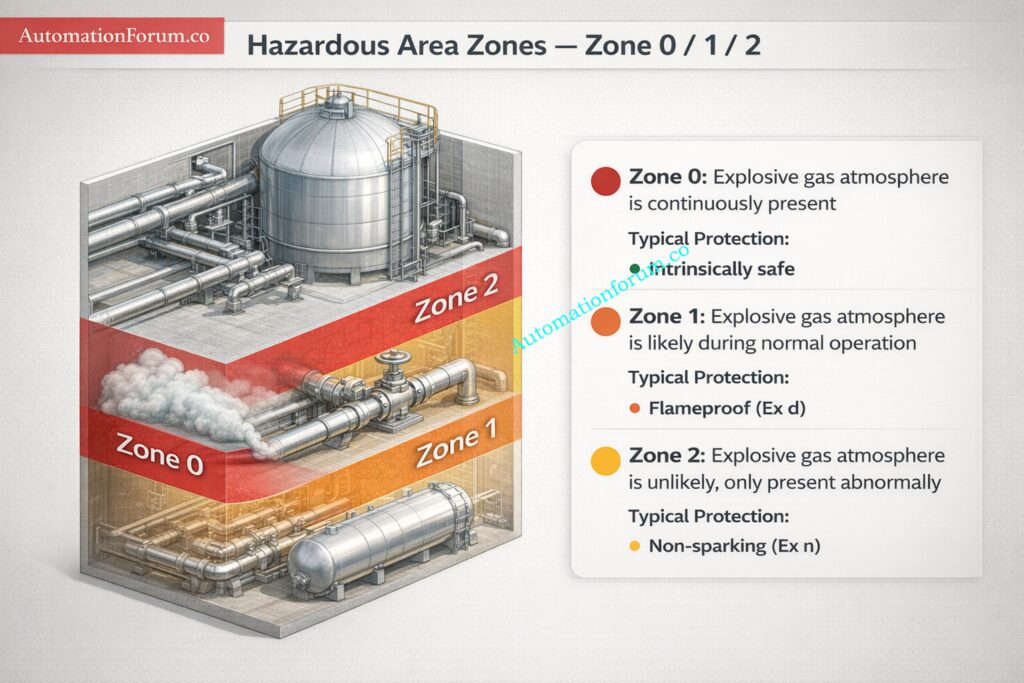
- Hazardous area categorisation sorts plant locations into zones based on how likely it is that there will be explosive atmospheres.
- Zone 0 is where explosive atmospheres are always or for lengthy periods of time.
- Zone 1 represents areas where explosive atmospheres are likely during normal operation. Zone 2 represents areas where explosive atmospheres occur infrequently and for short durations.
How Zone Classification Impacts Transmitter And Analyzer Selection
- The zone classification directly determines what type of instrumentation can be installed. For example intrinsically safe instruments are commonly used in zone 0 and zone 1 while non sparking equipment may be acceptable in zone 2.
- Instrumentation engineers must always verify zone classification drawings before finalizing instrument specifications or installation plans.
Choosing the Wrong Certification Could Cost You: ATEX vs IECEx Certification: Complete Guide for Hazardous Area Instrumentation
Explosion Protection Techniques Used In Instrumentation
Intrinsic Safety Installation Requirements
- Several explosion protection techniques are used in instrumentation systems.
- Intrinsic safety limits electrical energy so that ignition is impossible even under fault conditions. This method is widely used for transmitters sensors and communication loops.
Flameproof Enclosure Installation Requirements
- Flameproof protection allows an internal explosion to occur but prevents flame propagation to the surrounding atmosphere. This method is common for solenoid valves analyzers and certain types of transmitters.
Increased Safety Equipment In Junction Boxes
- Increased safety prevents arcs sparks and excessive temperatures during normal operation and is often applied to junction boxes and terminal enclosures.
Non Sparking Equipment In Zone 2 Areas
- Non sparking protection is typically used in zone 2 applications where explosive atmospheres are rare.
- IEC 60079-14 ensures that the chosen protection technique is installed correctly and not compromised during field installation.
The Safety Standard Every SIS Engineer Must Master: S84 / IEC 61511 Standard for Safety Instrumented Systems – Complete Guide
Instrument Cabling and Routing Requirements
- Instrument cabling plays a critical role in hazardous area safety. IEC 60079-14 defines requirements for cable type routing mechanical protection and termination practices.
- Cables need to be able to handle the temperature, chemical exposure, and mechanical stress of the environment. Routing should keep damage to a minimum and keep vibration and heat exposure to a minimum.
- To stop electromagnetic interference and lower the chance of fault propagation, instrument cables must also be kept separate from power connections.
- Poor cabling practices can lead to signal instability false alarms and non compliance with hazardous area requirements.
Refer the below link for the 30+ International Standards for Control Systems: The Complete Guide for Automation & Instrumentation Engineer
Cable Glands and Enclosure Entry Compliance
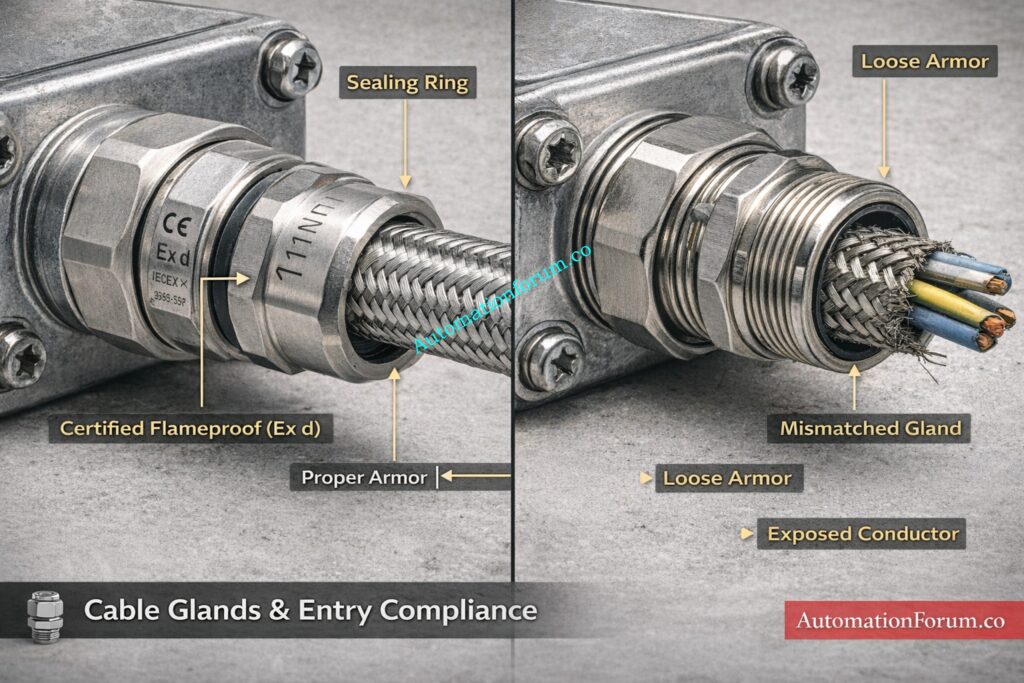
- Cable glands are one of the most common sources of non compliance in hazardous area installations. The standard places strong emphasis on correct gland selection and installation.
- Cable glands must be compatible with the cable construction and the enclosure protection method. Improper gland installation can create a flame path or reduce ingress protection.
- Unused enclosure entries must be sealed with certified stopping plugs. Temporary or improvised sealing methods are not acceptable.
- During commissioning, instrumentation personnel need to make sure that the installation of glands is checked and recorded.
Why Engineers Prefer NAMUR in Explosive Zones: Why NAMUR Sensors are Essential in Explosive and Hazardous Areas ?
Earthing and Bonding Requirements for Hazardous Area Instrumentation
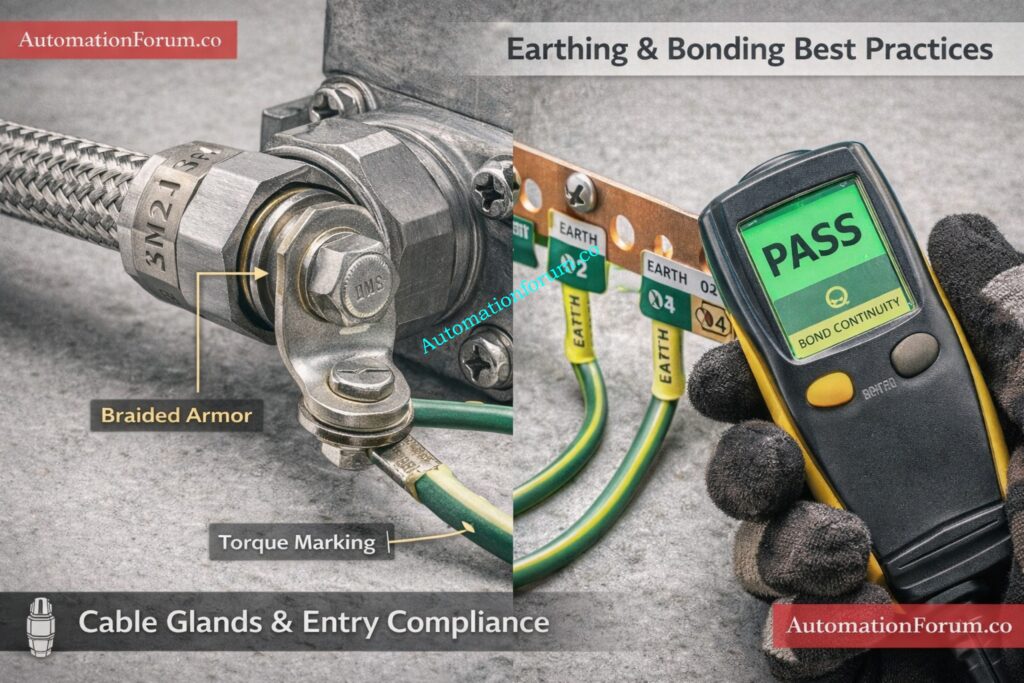
- Earthing and bonding stop static charge from building up and harmful potential differences from forming between conducting parts.
- IEC 60079-14 requires that all exposed metallic parts of instrumentation systems are bonded to a common earthing network. This includes instrument bodies cable armours and junction boxes.
- For intrinsically safe systems earthing is particularly critical because it forms part of the safety concept. Improper earthing can invalidate intrinsic safety calculations.
- Good earthing practices also improve measurement accuracy and reduce noise in control signals.
Confused About IEC Standards? Start Here: IEC Standards for Instrumentation and Control: Complete Guide
Intrinsic Safety Wiring Rules Under Iec 60079-14
- Intrinsic safety is widely used in process instrumentation because it allows live maintenance and simplifies installation in high risk zones.
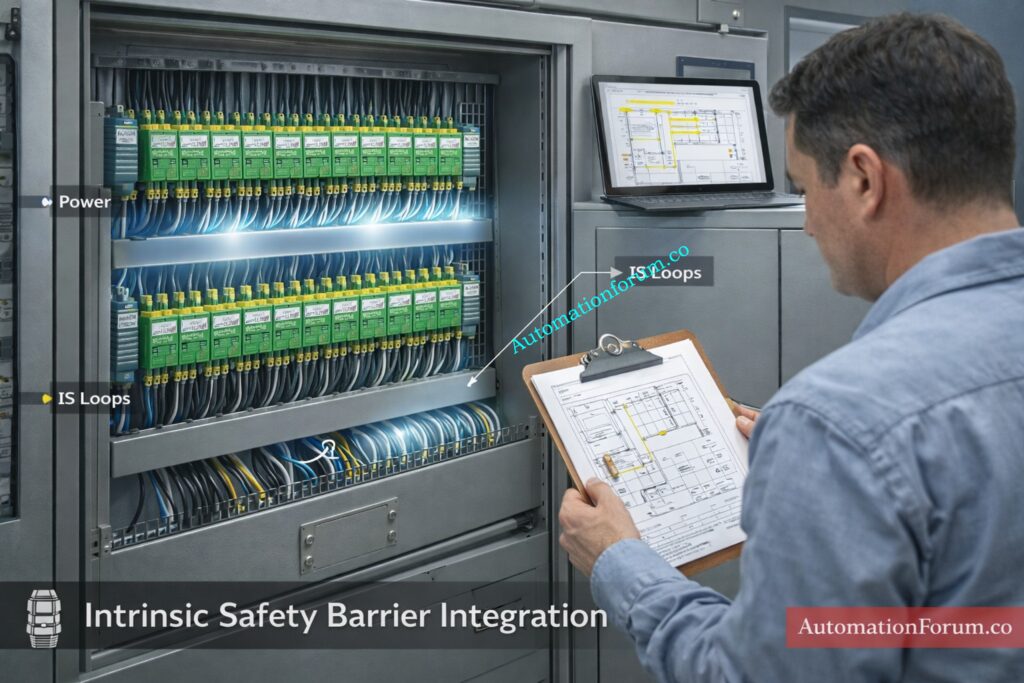
- IEC 60079-14 defines strict rules for intrinsically safe wiring including segregation from non intrinsically safe circuits minimum separation distances and labeling requirements.
- Barriers or galvanic isolators must be put in place and in the right panels according to the manufacturer’s specifications. The wire in the field must provide the same level of protection all the way around the loop.
- For maintenance and troubleshooting, it is important to have clear records of fundamentally safe loops.
Selecting Control Valves? Read This First: Codes and Standards for Control Valve Selection in Industrial Applications
Documentation and Loop Identification Requirements
- IEC 60079-14 requires clear and accurate documentation for instrumentation and control systems, although this standard is commonly overlooked. Proper documentation makes sure that the explosion protection idea used during design stays in place during installation, commissioning, operation, and any changes that need to be made in the future.
- Each instrument loop installed in a hazardous area must be clearly identified with reference to its protection technique zone classification and temperature class. Intrinsically safe loops require distinct identification so that maintenance personnel can immediately recognize circuits that are permitted for live working and those that are not.
- Loop drawings termination schedules cable routing layouts and earthing diagrams must reflect the as installed condition rather than design intent alone. Any deviation during construction must be updated in the final documentation package.
- Proper documentation reduces the risk of incorrect modifications prevents accidental interconnection of incompatible circuits and supports faster fault diagnosis. During audits and inspections documentation provides evidence that the installation complies with IEC 60079-14 and that hazardous area integrity has been maintained.
- Well managed documentation is therefore an essential safety barrier and an operational asset in process industry instrumentation systems.
Many Engineers Get This Difference Wrong: Difference between IEC 61508 & IEC 61511 SLC Version
Instrument Enclosures and Field Mounting Best Practices
- Enclosures must be selected and installed so that their protection method remains intact throughout the equipment life cycle.
- Flameproof enclosures must not be modified and all cable entries must use certified accessories. Increased safety enclosures must maintain ingress protection ratings.
- Instrument mounting must consider vibration thermal expansion and accessibility for maintenance while preserving hazardous area compliance.
Avoid Loop Testing Mistakes with This SOP: Live Signal Verification 4 to 20 mA Loop Standard Operating Procedure (SOP)
Temperature Class Selection and Surface Temperature Control
- The maximum surface temperature of instrumentation must remain below the ignition temperature of the surrounding atmosphere.
- Process instruments can be heated by ambient conditions solar radiation or process media. IEC 60079-14 requires assessment of these factors during installation.
- Proper mounting insulation and ventilation may be required to ensure compliance with the temperature class marking.
Is Your PLC Safe Enough?: Difference Between Standard and Safety PLCs: Features, Applications & Future Trends
Good Installation Practices For Control System Reliability
- Good installation methods for dangerous areas also make control systems work better.
- Proper cable routing, separation, and termination lower noise and false alarms in signals. Proper sealing prevents moisture ingress which can cause corrosion and drift.
- Instrumentation installed according to IEC 60079-14 is generally more reliable easier to maintain and less prone to unexpected failures.
Think You Know Control Standards? Prove It: Advanced Quiz on Control System Standards (IEC, ISA, ANSI) for Process Industries
Inspection and Initial Verification Under IEC 60079-14
- Before commissioning IEC 60079-14 requires an initial inspection to verify compliance.
- For instrumentation this includes checking equipment markings wiring practices cable glands earthing continuity and electrical test results.
- It is important to keep records of inspection results as part of plant records. This paperwork helps with audits and maintenance work in the future.
Can You Pass This Calibration Challenge?: Process Instrument Calibration MCQ Challenge – NIST, ISO 17025, ISA Standards & Calculations
Competency Requirements for Hazardous Area Installation Personnel
- People who inspect and set up dangerous areas must know what they’re doing.
- Competence is knowing how to prevent against explosions, how to designate equipment, how to install it, and what the inspection criteria are.
- Process facilities need to make sure that the people who work on instrumentation teams have the right training and expertise to do hazardous area work safely.
ISO Flow Calibration Made Practical: ISO Standard Calibration Procedures for Flow Measuring Instruments
Practical Example: Pressure Transmitter Installation In a Zone 1 Hazardous Area
Think about a pressure transmitter that is set up on a hydrocarbon process line in an area that is classed as zone 1.
Step By Step Installation Process
- The line runs at a high temperature and the process fluid can catch fire. The area classification drawing identifies the location as zone 1.
- The instrumentation engineer choose a pressure transmitter that is fundamentally safe, has the right temperature class, and protects equipment for zone 1.
Intrinsic Safety Barrier Integration In Control Room
- There is an intrinsically safe barrier in the control room’s marshalling panel. The cabling for the instrument loop goes through separate cable trays to keep it separate from the power circuits.
- A certified cable gland that is safe for intrinsic safety is chosen and put in the right place at the transmitter enclosure. The cable armour is attached to the junction box and linked to the plant’s earthing network.
- The transmitter is mounted with sufficient clearance from hot surfaces to ensure its surface temperature remains within limits.
- During commissioning the loop is tested for continuity insulation resistance and barrier function.
Testing And Documentation Verification
- The intrinsic safety documentation including loop drawings and inspection records is completed and approved.
- This example demonstrates how IEC 60079-14 influences every step from equipment selection to installation and commissioning.
Your PLC Might Be Vulnerable — Check This: Cybersecurity Standards for PLCs
Integration of IEC 60079-14 With Control System Architecture
- The configuration of control system parts including marshalling cabinets, remote I/O panels, and intrinsic safety barriers is affected by hazardous area standards.
- Correct integration keeps circuits separate, makes maintenance easier, and makes sure that installation regulations are followed.
- Early cooperation between engineers who work on instrumentation and control systems cuts down on rework and makes the system more reliable.
7 Cable Tray Mistakes That Cause Future Failures: Avoiding Mistakes in Instrumentation Cable Tray Installation: A Guide for EPC Projects
Practical Hazardous Area Installation Checklist For Instrumentation Engineers
- Confirm hazardous area classification
- Verify instrument certification and temperature class
- Select suitable protection technique
- Ensure compatible cables and glands
- Maintain intrinsic safety segregation
- Verify earthing and bonding
- Inspect enclosure integrity
- Perform electrical testing
- Complete documentation and inspection records
Ex ia, ib, ic – What Most Engineers Overlook: Intrinsic Safety Protection Systems: Understanding Ex ia, Ex ib, and Ex ic
Ensuring Safe and Compliant Hazardous Area Instrumentation Installations
IEC 60079-14 is a fundamental standard for instrumentation and control engineers working in hazardous process environments. It defines how safety is achieved not only through equipment selection but through disciplined installation practices.
By applying the requirements of IEC 60079-14 instrumentation teams can ensure safe reliable and compliant systems that protect personnel assets and production continuity throughout the plant lifecycle.
Before You Install IS Cables, Check This List:Intrinsically Safe Cables for ATEX Zones – Complete Checklist for EPC Engineers
FAQ on IEC 60079-14
What is IEC 60079 Part 14 2013?
- IEC 60079 Part 14 2013 is the international standard that defines the selection and installation requirements for electrical equipment in explosive atmospheres.
- It ensures hazardous area instruments and wiring are installed safely without compromising explosion protection.
What is the annex C of IEC 60079 14?
- Annexe C gives more information on how to check and inspect installations in dangerous areas.
- It helps engineers make sure that the wiring and equipment they install meet the requirements for explosion protection.
What is DIN 60079 14 2014?
- DIN 60079 14 2014 is Germany’s version of IEC 60079 14. It makes sure that national installation guidelines are in line with international hazardous area standards.
- It applies the same explosion protection installation principles within Germany and European industrial facilities.
What is the IEC standard for cable glands?
- Cable glands used in hazardous areas must comply with IEC 60079 0 and relevant protection specific standards within the IEC 60079 series.
- They must maintain enclosure integrity and prevent flame transmission in explosion protected installations.
What is the difference between IEC 60079 13 and 14?
- IEC 60079 13 covers the design and construction of pressurized rooms or protective enclosures in hazardous areas.
- IEC 60079 14 focuses on the selection and installation of electrical equipment and wiring in explosive atmospheres.
Refer the below link for the Difference Between Intrinsically Safe (IS) and Non-IS Cables
