
- Practical EPC Engineering Method for Instrumentation Design Engineers
- Why Solenoid Valve Selection Is Critical in EPC Projects
- Who Should Use this Solenoid Valve Selection Checklist
- Step-by-Step Procedure for Selecting the Right Solenoid Valve
- Step 1: Establish the Functional Purpose of the Solenoid Valve
- Step 2: Identify and Define the Medium Being Controlled
- Step 3: Define the Required Fail-Safe Action
- Step 4: Select the Solenoid Valve Operating Principle
- Step 5: Define the Complete Pressure Range
- Step 6: Calculate Required Flow Rate and Valve Capacity
- Step 7: Select Valve Configuration and Port Arrangement
- Step 8: Select Valve Body Material
- Step 9: Select Seal Material
- Step 10: Define Electrical Characteristics of the Solenoid Coil
- Step 11: Evaluate Environmental Conditions
- Step 12: Verify Safety, Certification and Compliance Requirements
- Step 13: Evaluate Maintenance and Lifecycle Requirements
- Step 14: Review Installation and Commissioning Requirements
- Step 15: Finalize Documentation and Engineering Approval
- Common Solenoid Valve Selection Mistakes in EPC Projects
- Download: Solenoid Valve Engineering Selection Checklist (Excel)
Practical EPC Engineering Method for Instrumentation Design Engineers
When choosing solenoid valves for EPC projects, you can’t just look at vendor catalogs or old drawings. You have to follow a methodical engineering process. Solenoid valves have a direct effect on the reaction of actuators, the performance of safety shutdowns, the dependability of interlocks, and the availability of plants. A organized, step-by-step method makes sure that the chosen solenoid valve meets all of the process, safety, electrical, environmental, and lifespan needs.
This method is for instrumentation and control design engineers who work on FEED, detailed engineering, procurement support, and the start-up of process facilities.
This article has a full, engineering-level list of things to think about when choosing the proper solenoid valve. It is created primarily for EPC instrumentation design engineers, system integrators, and commissioning specialists who are in charge of turning control theory into dependable hardware choices.
PLC Digital Output Solenoid Valve Troubleshooting – Step-by-Step Field Guide: Step-by-Step Procedure to Troubleshooting Solenoid Valves in PLC Digital Output Loops
Why Solenoid Valve Selection Is Critical in EPC Projects
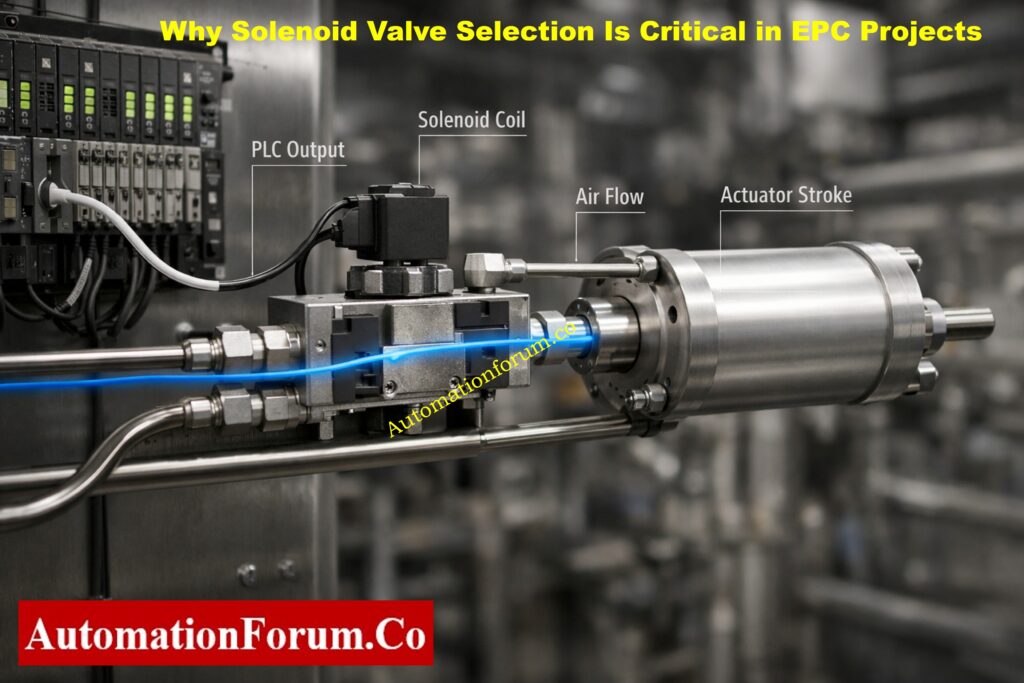
Solenoid valves are very important in EPC projects because they turn control logic into real-world action. Choosing the wrong thing might directly affect the safety of the plant, the commissioning timetable, and the long-term reliability.
From an engineering point of view, choosing the right solenoid valve affects:
- Process safety and shutdown performance by making sure that pneumatic actuators move to the right fail-safe position when power or signal is lost.
- Commissioning and startup by stopping problems like valves that don’t actuate, slow stroking, and repeated loop test failures
- Operational dependability by preventing sticking valves, coil failures, and false trips caused by choosing the wrong materials or duty cycles
- Lowering the cost of the lifecycle by cutting down on unscheduled maintenance, spare parts use, and production downtime
A organized checklist for choosing solenoid valves helps EPC teams avoid these problems early on in the design process.
Solenoid Valve vs Motorized Valve – Selection Guide for Process Automation: Solenoid Valve versus Motorized Valve
Who Should Use this Solenoid Valve Selection Checklist
This checklist is for the engineering and execution teams that work on the EPC project from start to finish. It includes:
- Engineers who design EPC instruments are in charge of valve specifications, datasheets, and design evaluations.
- FEED and detailed engineering teams are working on control philosophies, pneumatic schematics, and cause-and-effect diagrams.
- During FAT, SAT, and plant starting, system integrators and commissioning engineers check if the valve works.
Using the same checklist for all of these teams makes sure that solenoid valves are chosen in a consistent, safe, and reliable way in EPC projects.
Top Solenoid Valve Problems and Proven Field Solutions: Common problems in Solenoid Valve & its Solutions
Step-by-Step Procedure for Selecting the Right Solenoid Valve
Step 1: Establish the Functional Purpose of the Solenoid Valve
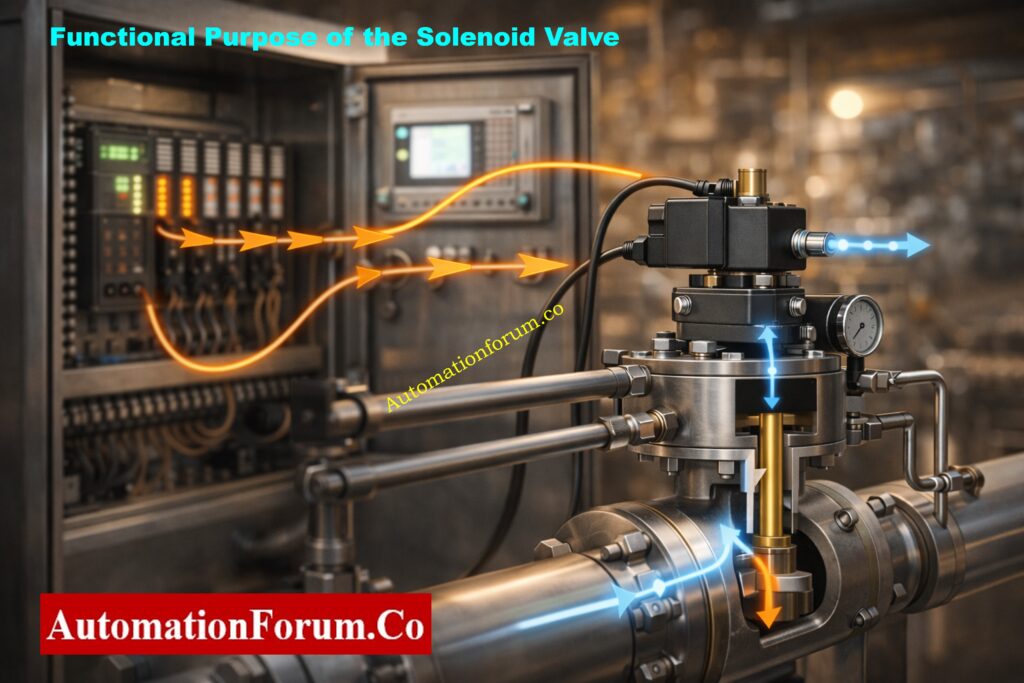
- Find out if the solenoid valve is meant for process control, sequencing, enforcing interlocks, shutting down in an emergency, or isolating utilities.
- Check to see if the solenoid valve directly controls a pneumatic actuator, controls another control valve, or cuts off a pneumatic supply.
- Find out if the solenoid valve works all the time, only some of the time, or only when anything goes wrong or trips.
- Find out if the solenoid valve is part of a safety system or an automation function that doesn’t have anything to do with safety.
- Determine how important the valve is for the operation, safety, and productivity of the plant.
- Write down the functional requirement explicitly in the loop description, the pneumatic schematic, and the cause-and-effect documentation.
- Make sure that the solenoid valve function is in line with the process design intent and safety philosophy.
How a Solenoid Valve Works – Operating Principle Explained Simply: Solenoid Valve Working
Step 2: Identify and Define the Medium Being Controlled
- Check that the solenoid valve is letting through the right medium, like instrument air, utility air, nitrogen, water, oil, or process gas.
- Describe the characteristics of the medium, such as how much moisture it has, how much oil it carries over, and how many solid particles it contains.
- Find out if there are any upstream air preparation systems, including filters, dryers, or regulators.
- Find out what the medium’s minimum, normal, and maximum working temperatures are.
- Find out what chemicals are in the medium and if they are corrosive or reactive.
- Check to see if the valve is likely to get contaminated if it is not used for a long time.
- Check that the medium works with the materials used to make the valve body and seal.
- Set any cleaning, flushing, or purging needs for maintenance or commissioning.
Emergency Shutdown Using Solenoid Valves – SIS & ESD Implementation Guide: Implementing a Solenoid Operated Valve for Emergency Shutdown
Step 3: Define the Required Fail-Safe Action
- Find out where the valve has to be when the power goes out, the control signal goes off, or the system fails.
- Choose whether the solenoid valve should be open or closed most of the time.
- Check that the solenoid valve’s fail position allows for the necessary actuator fail action.
- Check that the fail-safe action meets the requirements for process safety and hazard analysis.
- Think about how bad fail-safe conduct can affect the safety of workers and the protection of equipment.
- Check the fail-safe standards against cause-and-effect charts and shutdown stories.
- Make sure that the fail-safe concept is the same for all identical services so that there is no confusion in operations.
Types of Solenoid Valves with Schematics – Complete Engineering Guide: Various types of Solenoid valves and their schematics
Step 4: Select the Solenoid Valve Operating Principle
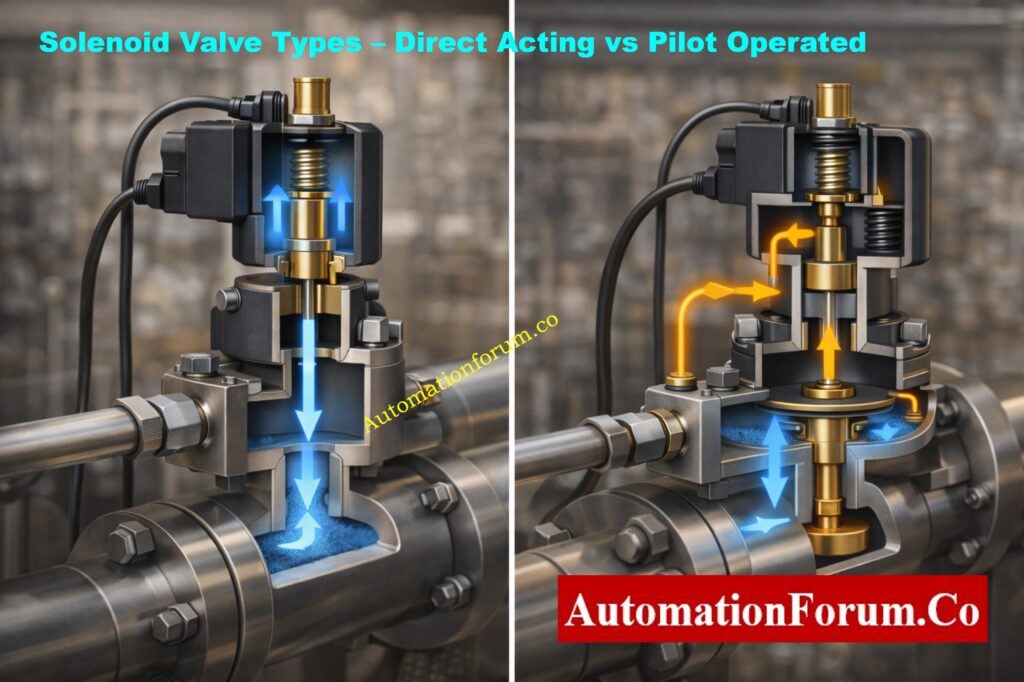
- Find out if the application needs a solenoid valve that works directly or one that is controlled by a pilot.
- Choose direct-acting valves for situations with low pressure, no pressure, or very low flow rates.
- Choose pilot-operated valves for jobs that need larger flow rates and better energy efficiency.
- Check the minimal differential pressure needed for the pilot-operated valve to work.
- Check to see if there is enough pressure at startup, shutdown, and emergency situations.
- Think about how pressure loss during journeys affects how valves work.
- If you expect the pressure to drop during shutdown, don’t use pilot-operated valves.
- Make sure that the valve’s working principle supports the needed reaction time.
AC vs DC Solenoid Valves – Which One Should You Use and Why?: Solenoid Valve: Which is better DC or AC Solenoid valve?
Step 5: Define the Complete Pressure Range
- Find the highest design pressure depending on the class of piping and the design of the system.
- Check the usual operating pressure when the system is in steady state.
- Find out the lowest pressure that can be used during startup, shutdown, and unusual operation.
- Think about transient pressures that happen when a regulator fails, a compressor surges, or a valve closes quickly.
- Look at how the pressure changes and pulses in pneumatic systems.
- Make sure the solenoid valve’s pressure rating is higher than the highest design pressure by a wide margin.
- Check the pressure limits of internal parts like seals and diaphragms.
- Clearly write down the pressure limitations on the valve datasheet
What Is a Solenoid Valve? Types, Working & Applications Explained:What is a solenoid valve and what are its types
Step 6: Calculate Required Flow Rate and Valve Capacity
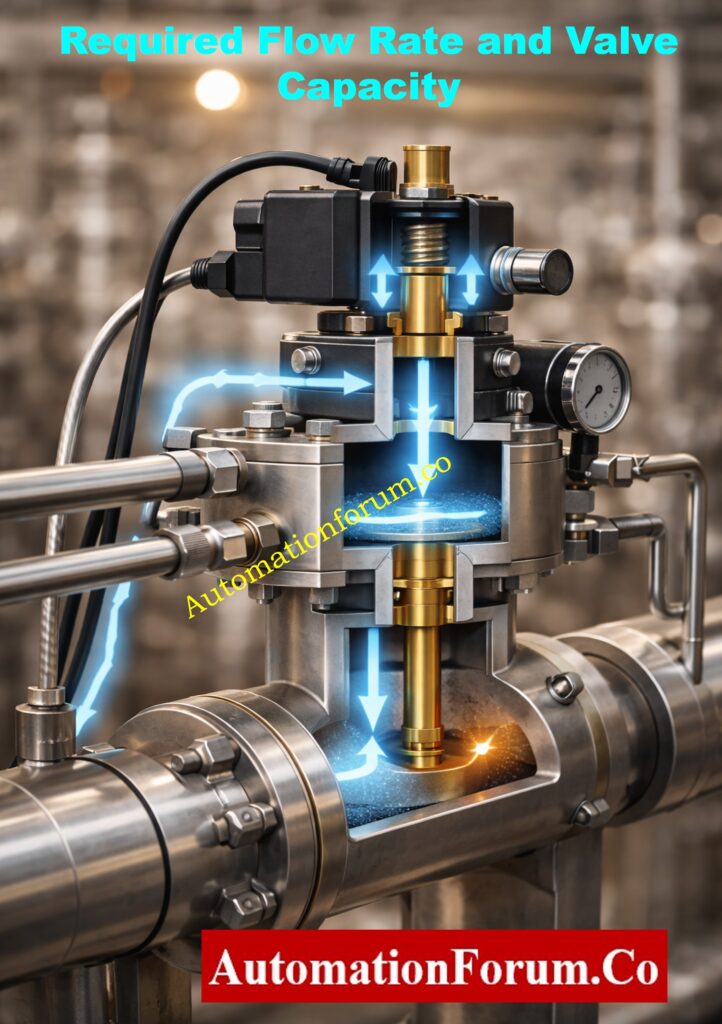
- Find out how much air the actuator uses by multiplying its volume by its stroke length.
- Set the minimum time it takes for the actuator to open and close, and the maximum pressure drop across the solenoid valve.
- Find the flow rate that is needed in the worst-case scenario
- Choose a valve with a Cv or Kv rating that is high enough to meet performance needs.
- Check how well the flow works when the pressure is low.
- Don’t make the actuator too small, or it will move slowly or not at all.
- Don’t make anything too big, because that will use too much air and make too much noise.
- Check the direction of the flow and the size of the exhaust for venting uses.
Why Control Valve Characteristics Are Critical in EPC Instrumentation Design: Why Control Valve Characteristics Matter in EPC Instrumentation and Control Engineering
Step 7: Select Valve Configuration and Port Arrangement
- Use pneumatic logic to figure out how many ports and switching positions you need.
- Choose two-port valves for simple isolation or on/off tasks.
- If you need supply and exhaust for a single-acting actuator, choose three-port valves.
- Choose five-port valves for double-acting actuators that need to control direction.
- Check the port numbers and functions against the pneumatic drawings.
- Make sure that the exhaust ports are pointing in the right direction and are safe from dirt getting in.
- Make sure that there is no pressure trapped in fail-safe conditions.
- Check to see if you need to mount the manifold or install it separately.
Control Valve Not Responding? Practical Field Troubleshooting Guide: Field Troubleshooting Guide: Control Valve Not Responding in Process Area
Step 8: Select Valve Body Material
- Choose the body material based on how well it works with the medium and how well it can handle the surroundings.
- Use aluminum for clean pneumatic service in controlled interior spaces.
- Brass is good for water, neutral liquids, and moderate temperatures.
- Use stainless steel for places where there will be corrosive materials, outside, or in extreme conditions.
- Check for corrosion threats from chemicals, humidity, or the marine environment on the outside.
- Make sure that the materials you choose meet the project’s standards and the client’s needs.
- Think on how strong and resistant to vibration the machine is.
Step 9: Select Seal Material
- Check to see if the seal material works with the process medium.
- Make sure that the seal’s temperature limitations are higher than the highest operating temperature.
- Check how well it resists oil, water, chemicals, and cleaning products.
- Think about how well it resists wear for applications that cycle a lot.
- Over time, look at the dangers of swelling, hardening, or becoming brittle.
- Choose seals that will last a long time and leak very little.
- Choose seals that fit with your maintenance philosophy and spare parts plan.
Control Valve Hunting Quiz – Test Your Advanced Loop Troubleshooting Skills: Advanced Control Valve Hunting Troubleshooting Quiz – Test Your Control Loop Expertise
Step 10: Define Electrical Characteristics of the Solenoid Coil
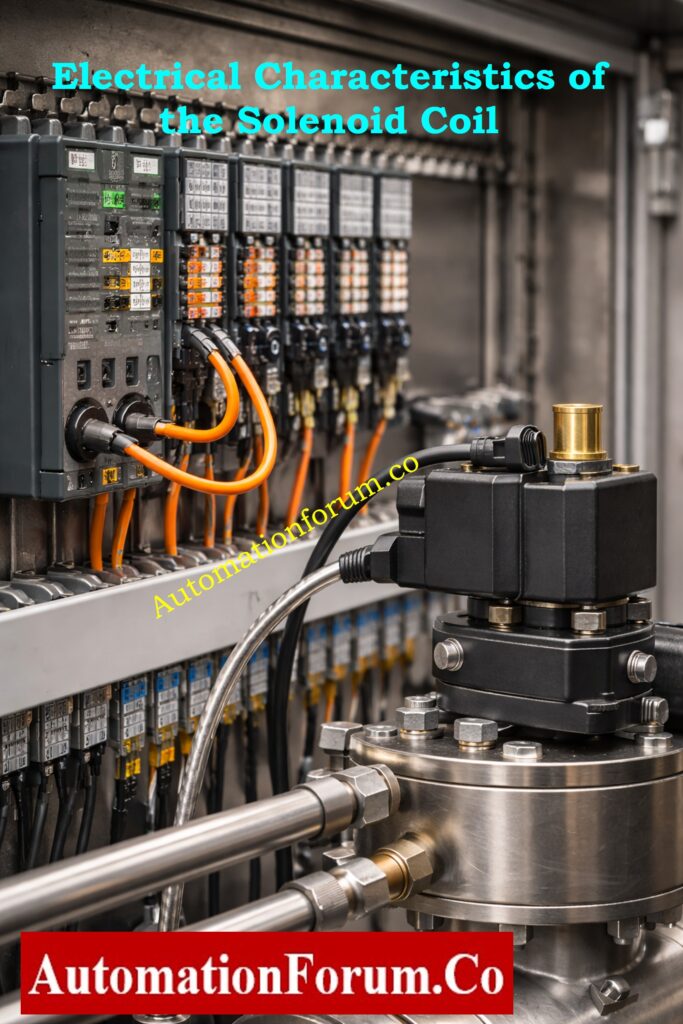
- Tell us the rated coil voltage and if it is AC or DC.
- Set the range of allowable voltage tolerance
- Check the thermal and power consumption characteristics
- Check the criteria for inrush current and holding current.
- Choose continuous-duty coils for valves that are powered for long periods of time.
- Check to see if the ratings of the PLC or DCS output module are compatible.
- Think about whether you need surge protection or flyback protection.
- Check how well heat dissipates in the worst-case scenario.
Advanced Control Valve Troubleshooting Quiz for Process Engineers: Advanced Control Valve Troubleshooting Quiz for Process Control Engineers
Step 11: Evaluate Environmental Conditions
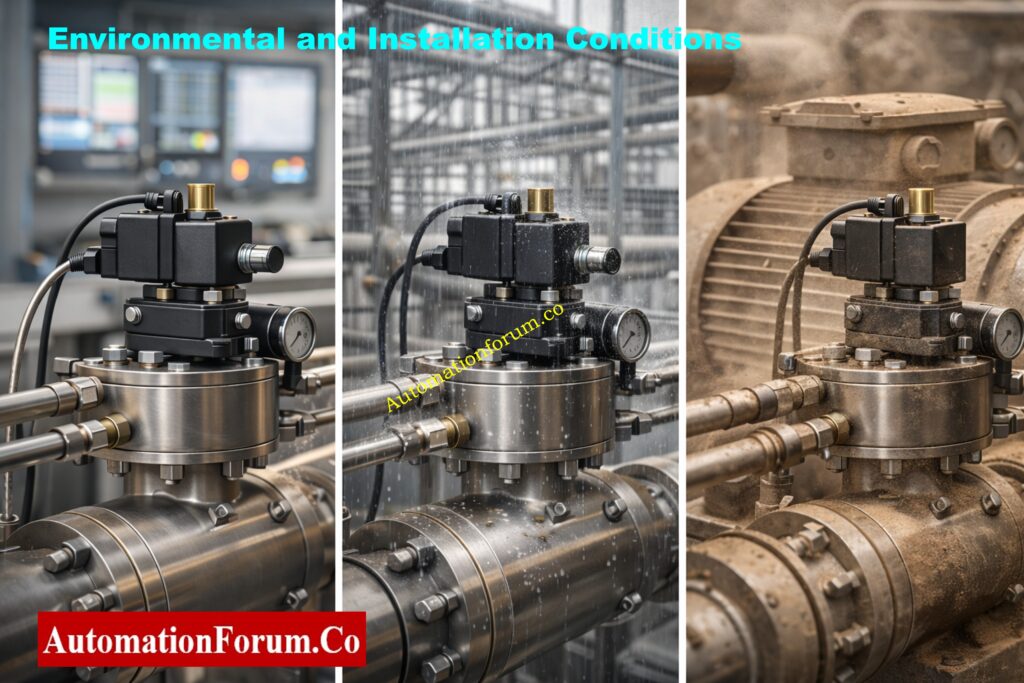
- Find the installation site, whether it’s indoors, outside, or in a dangerous environment.
- Check the temperature extremes and seasonal changes of the environment
- Check for exposure to chemicals, dust, moisture, or washdown.
- Check how much vibration is caused by rotating equipment close
- Choose the right enclosure design and ingress protection grade.
- Make sure the way the cable enters keeps water from building up.
- Check if the valve’s construction can handle long-term exposure to the environment.
Step 12: Verify Safety, Certification and Compliance Requirements
- Find the right hazardous area classification for the installation. If necessary, check the explosion protection concept criteria.
- Check that it is appropriate for functional safety or shutdown uses
- Make ensuring that all project, client, and regulatory standards are met.
- Check the limits and scope of the certification
- Put all compliance criteria in datasheets and specs.
- Make sure that certification can be traced when buying and inspecting.
Partial Stroke Test (PST) Explained – Shutdown & Control Valve Safety Guide: What is Partial Stroke Test (PST)? A Complete Guide for Shutdown and Control Valves
Step 13: Evaluate Maintenance and Lifecycle Requirements
- Check how easy it is to change the coil without moving the pipes.
- Check that spare parts are available throughout the whole project life cycle.
- Check the vendor’s capacity to provide technical support and respond.
- Look at statistics on past reliability and performance in the field
- Think about the overall cost of ownership, including spare parts and downtime.
- Standardized valve models should be used throughout the plant. Maintenance procedures should be clearly written down.
Step 14: Review Installation and Commissioning Requirements
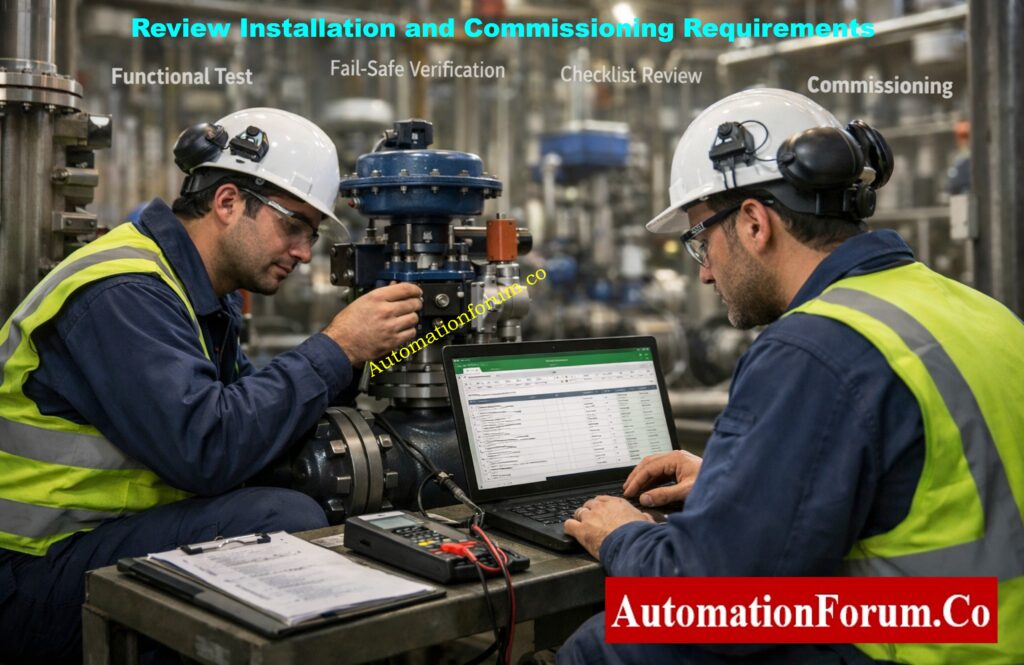
- Check that the installation direction is proper according to the manufacturer’s instructions.
- Make sure there is enough space for operation and maintenance.
- Check that the tube is going the right way and that the flow is going the right way.
- Check how easy it is to get to the electrical termination and testing area.
- Plan tests for commissioning that check for functional operation and fail-safe action.
- Check that the leak is tight under pressure when the machine is running.
- Write down the criteria for accepting the commissioning.
Step 15: Finalize Documentation and Engineering Approval
- Make a full datasheet for the solenoid valve with all of its settings.
- Check your choice against loop diagrams and pneumatic schematics.
- Check to see if everything is in line with the cause-and-effect and safety documents.
- Do a multidisciplinary engineering evaluation
- Fix any problems and write down approvals
- Give the final specifications for buying things
- Keep records for future changes and audits.
A completely defined, bullet-point-driven solenoid valve selection approach gives EPC instrumentation design engineers a strategy for choosing valves that they can use again and over again, check, and trust. This disciplined method reduces problems during commissioning, makes plants safer, and guarantees long-term operational reliability on all EPC projects.
Common Solenoid Valve Selection Mistakes in EPC Projects
In EPC projects, solenoid valve problems often happen because of wrong assumptions or using old standards again. Some of the most typical mistakes are:
- Choosing solenoid valves based on the size of the port instead of the flow capacity they need
- Not paying attention to the minimum differential pressure requirements for pilot-operated valves
- Choosing the improper fail-safe action can cause the actuator to respond in a dangerous way when the power goes out.
- Using coils that only work part-time for applications that need to be powered all the time
- The voltage of the solenoid coil does not match the outputs of the PLC or DCS.
- Not enough thought given to how materials and the environment work together
- Copying the requirements from a previous project without checking them again
Using a structured selection criteria to avoid these mistakes makes EPC projects safer, more reliable in the long run, and better at getting things done.
Control Valve Passing After Overhaul? Complete Root Cause Analysis Guide: How to Troubleshoot a Control Valve Passing Problem after Overhauling: Complete Root Cause Analysis
Download: Solenoid Valve Engineering Selection Checklist (Excel)
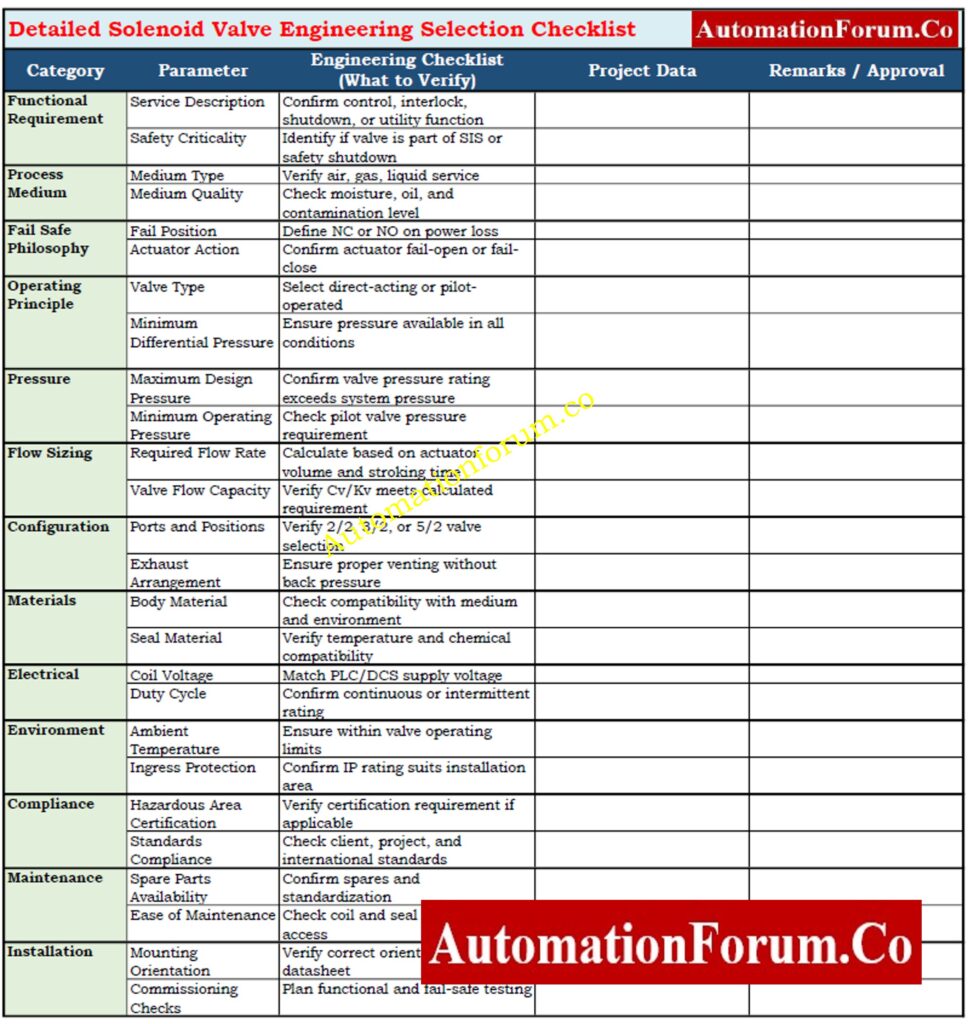
You may use our professionally prepared Excel checklist right now for EPC projects, datasheet reviews, and vendor technical bid evaluations.
Download here:
Download the Solenoid Valve Engineering Selection Checklist – Excel
This Excel file includes:
Categorized engineering parameters
Space for project specific data
Verification and remarks columns
Ready for EPC documentation and audits
