
- Conductivity Probe Resistance Calculator for Liquid Analyzers – Instrumentation Tool
- What is Conductivity Measurement?
- How Conductivity Sensors Work
- Why Temperature Compensation is Required
- What is Cell Constant in Conductivity Measurement?
- Why Probe Resistance Calculation is Important
- Conductivity Analyzer Resistance Formula
- Parameters Used in the Conductivity Calculator
- Outputs Generated by the Calculator
- Example Conductivity Calculation
- Where Conductivity Measurement is Used
- Common Conductivity Measurement Errors
- Tips for Accurate Conductivity Measurement
- Advantages of Using the Conductivity Probe Calculator
- Frequently Asked Questions (FAQ) on Conductivity Calculator
One of the most crucial analytical measurements utilized in process industries like power plants, water treatment facilities, pharmaceutical plants, chemical industries, and food processing facilities is liquid conductivity measurement. To ascertain the purity, concentration, and degree of contamination of liquids, conductivity analyzers are frequently utilized.
It can be difficult to comprehend the electrical properties of conductivity probes, though. When choosing, setting up, or debugging conductivity analyzers, instrument engineers frequently have to compute probe resistance, total circuit impedance, and temperature-corrected conductivity values.
We have created a Conductivity Liquid Analyzer Probe Resistance Calculator to make this procedure easier. It uses your input parameters to automatically determine the values of resistivity, temperature-compensated conductivity, circuit impedance, probe resistance, and TDS.
Engineers can rapidly assess conductivity probe performance without doing calculations by using the calculator that is integrated into this page. It is intended especially for automation specialists, process engineers, calibration technicians, and instrumentation engineers who work with liquid analysis systems.
Conductivity Probe Resistance Calculator for Liquid Analyzers – Instrumentation Tool
Refer the below link for the Ultimate Guide to Conductivity Transmitter Calibration Using a Decade Resistance Box:
What is Conductivity Measurement?
Conductivity tells you how well a liquid can carry an electric current. The amount of ions in a liquid affects how well it conducts electricity.
In simple terms:
- More ions means better conductivity.
- Less ion concentration means less conductivity.
People often use conductivity measurement for:
- Water purity monitoring
- Chemical concentration control
- Boiler feedwater monitoring
- Cooling tower water analysis
- Pharmaceutical process monitoring
- Wastewater treatment
- Reverse osmosis system monitoring
Conductivity is typically measured in:
- µS/cm (microsiemens per centimeter)
- mS/cm (millisiemens per centimeter)
For ultrapure water systems, conductivity values can be extremely low, requiring high precision sensors.
Conductivity Transmitter Troubleshooting: Find and Fix Problems Fast: Troubleshooting of Conductivity Transmitter
How Conductivity Sensors Work
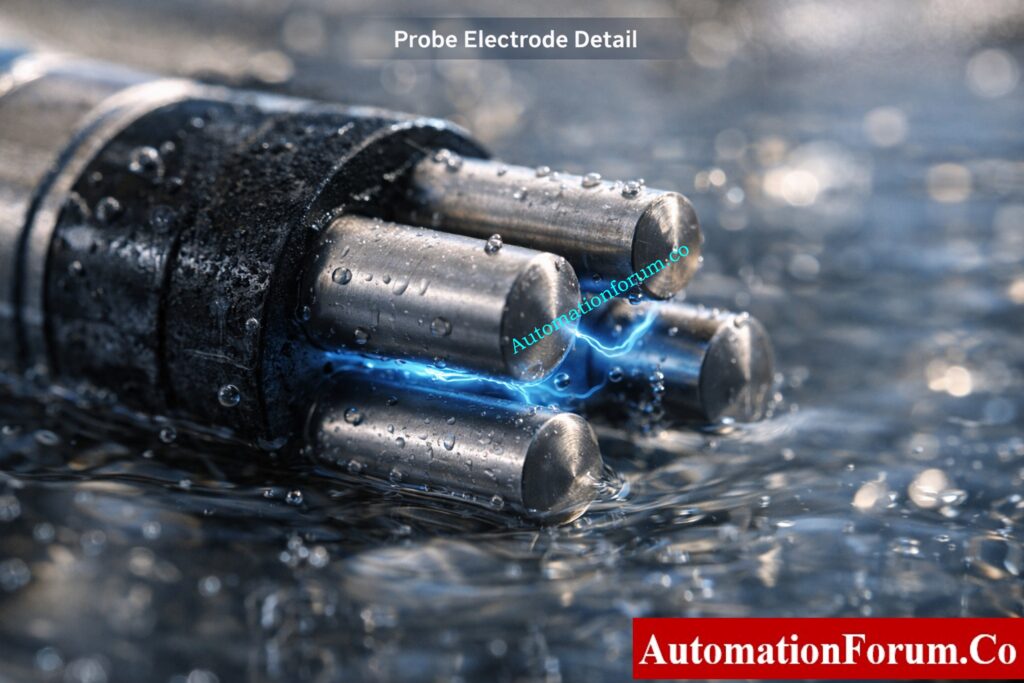
Conductivity sensors check how well a solution can carry electrical current between two electrodes.
A standard conductivity probe is made up of:
- Two or four electrodes
- Insulating body
- Temperature sensor (RTD or thermistor)
When an AC voltage is put between the electrodes, ions in the solution conduct the current. The analyzer figures out the conductivity by measuring this current.
Conductance is the opposite of resistance, and it is the electrical property of the liquid that was measured.
Conductivity is calculated using the formula:
Conductivity = Cell Constant / Resistance
Where:
- Cell Constant (K) represents electrode geometry
- Resistance (R) is measured across electrodes
Top 25 Liquid Analyzer Interview MCQs Every Instrument Technician Must Know: Top 25 Essential MCQ for Liquid Analyzer Instrument Technician Interview in Process Industries
Why Temperature Compensation is Required
Temperature has a big effect on how well conductivity is measured.
When the temperature goes up:
- Ion mobility increases
- Electrical conductivity increases
Because of this, conductivity measurements are set to 25°C.
Most conductivity analyzers apply automatic temperature compensation using the formula:
σ(T) = σ25 × [1 + α (T − 25)]
Where:
- σ(T) = conductivity at process temperature
- σ25 = conductivity at 25°C
- α = temperature coefficient
- T = process temperature
Typical temperature coefficient values range from:
- 1.5% to 2.5% per °C
For good conductivity measurement, it is important to accurately compensate for temperature.
10 Proven Steps to Calibrate a Paramagnetic Oxygen Analyzer Correctly: 10 Step Oxygen Analyzer Calibration Procedure: Paramagnetic Type
What is Cell Constant in Conductivity Measurement?
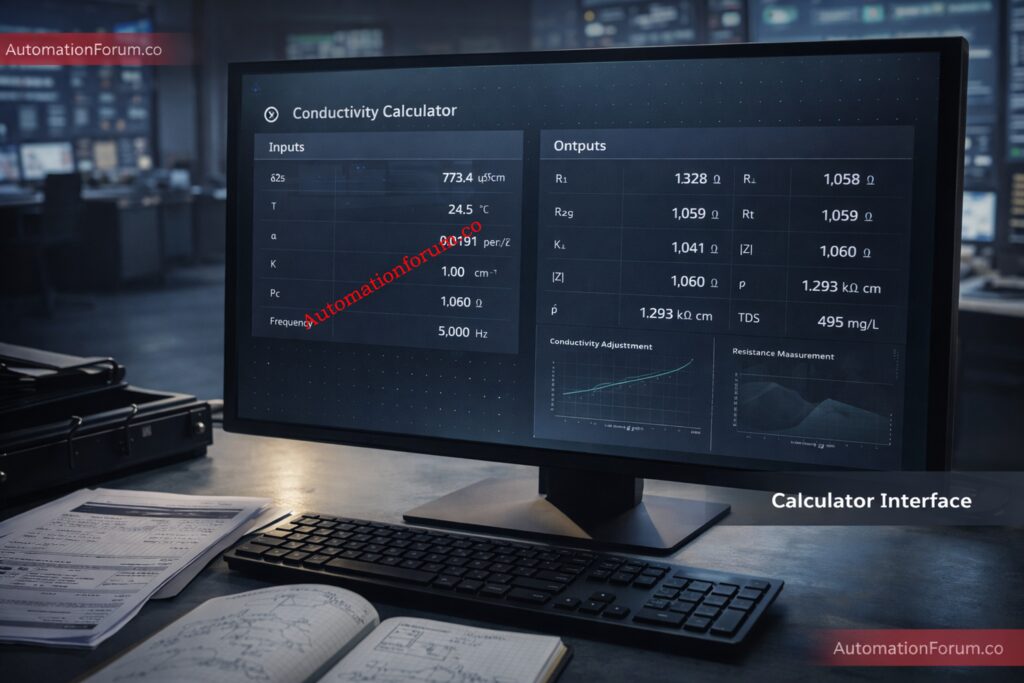
Choosing the correct cell constant
The cell constant (K) shows how the electrodes of the conductivity probe are shaped.
It is defined as:
K = Distance between electrodes / Electrode area
Different cell constants are employed based on the range of conductivity.
Refer the below link for the Understanding Cell Constant in Conductivity Analyzers and its Significance
Typical K values and applications
Typical cell constants include:
| Cell Constant | Application |
| 0.01 cm⁻¹ | Ultrapure water |
| 0.1 cm⁻¹ | Pure water / pharmaceutical |
| 1.0 cm⁻¹ | General industrial measurement |
| 10 cm⁻¹ | High conductivity liquids |
| 50 cm⁻¹ | Concentrated chemicals |
Choosing the correct cell constant ensures measurement accuracy.
Complete Preventive Maintenance Guide for pH Transmitters (Avoid Costly Failures): How to do Preventive maintenance of pH transmitter?
Why Probe Resistance Calculation is Important
In a lot of circumstances, engineers have to guess how much probe resistance there is for:
- Instrument selection
- Cable length calculation
- Analyzer input impedance evaluation
- Troubleshooting conductivity loops
- Determining signal loading effects
Probe resistance depends on:
- Conductivity of liquid
- Cell constant
- Temperature
- Cable resistance
If the resistance is too high, the measurement circuit can get signal loading errors.
The calculator provided on this page automatically determines:
- Probe resistance
- Total circuit resistance
- Conductivity at process temperature
- Electrical impedance
- Resistivity
- Estimated TDS
This lets engineers quickly check if their analyzer setup is good.
pH Transmitter Not Working? Follow This Expert Troubleshooting Guide: Troubleshooting Procedure for pH Transmitter Problems
Conductivity Analyzer Resistance Formula
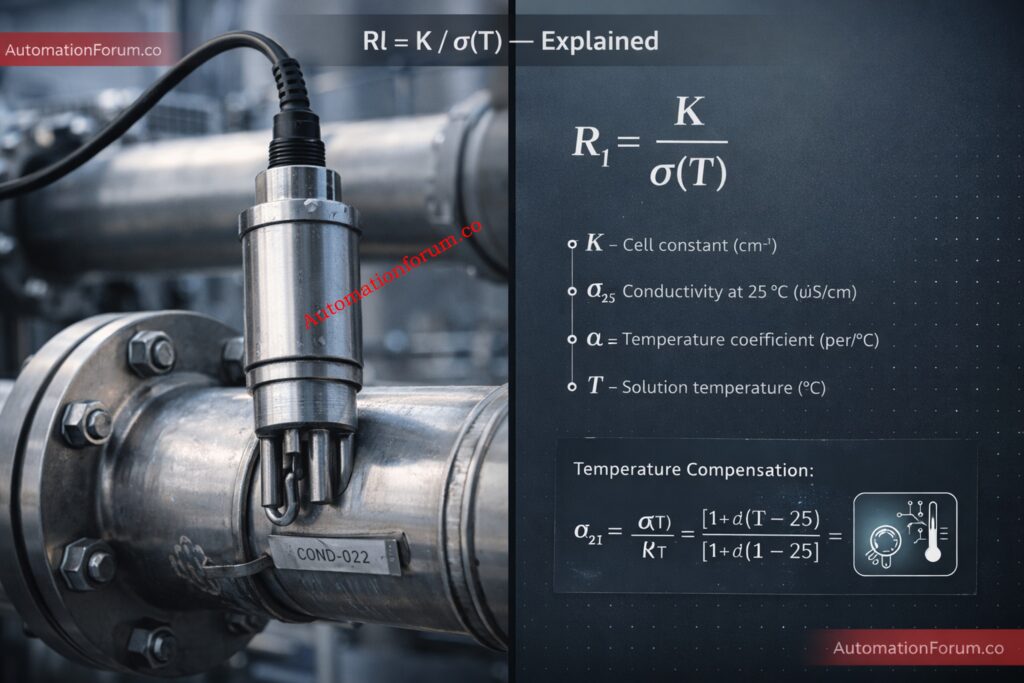
The probe resistance is calculated using the following equation:
Rl = K / σ(T)
Where:
- Rl = probe resistance
- K = cell constant
- σ(T) = conductivity at temperature T
Since conductivity is usually expressed in µS/cm, the equation becomes:
Rl = K / (σ(T) × 10⁻⁶)
Where conductivity is converted into Siemens.
The conductivity at process temperature is calculated using temperature compensation.
σ(T) = σ25 × [1 + α (T − 25)]
This formula is implemented automatically in the calculator tool.
Refer the below link for the Step-by-Step Conductivity Transmitter Calibration Using Standard Solutions
Parameters Used in the Conductivity Calculator
To get the right values for probe resistance, conductivity at process temperature, and other electrical properties of the measurement loop, the calculator needs the following inputs. These characteristics are the most important ones that affect how conductivity is measured in industrial liquid analysis equipment.
Conductivity at 25°C
This is the conductivity value of the solution at the standard temperature of 25°C. To keep results consistent across diverse conditions, conductivity values are usually compared to this temperature.
Typical ranges:
- Ultrapure water: 0.055 µS/cm
- Drinking water: 200–800 µS/cm
- Seawater: ~50,000 µS/cm
Process Temperature
The temperature of the liquid that is being measured. Temperature has a big effect on conductivity because as the temperature goes up, ions move more easily, which makes it easier for electricity to flow through the solution.
Temperature Coefficient (α)
This number tells you how much conductivity changes for every degree Celsius. It shows how fast conductivity changes when the temperature changes.
Typical values:
- Natural water: ~2% / °C
- Chemical solutions: 1–3% / °C
Cell Constant (K)
This shows how the electrodes of the conductivity probe are shaped and sets the sensor's measurement range. Choosing the right cell constant makes ensuring that measurements are accurate for varied conductivity ranges.
Cable Resistance
Long cables between the conductivity probe and the analyzer add more electrical resistance to the measuring circuit. Adding cable resistance helps engineers figure out the total resistance of the circuit and any possible signal losses.
Excitation Frequency
To keep the measurement stable, conductivity analyzers use AC excitation signals to stop electrode polarization.
Typical excitation frequencies include:
- 60 Hz
- 1 kHz
- 3 kHz
- 10 kHz
With these inputs, the calculator can figure out how a probe would behave in the real world and calculate temperature-compensated conductivity, probe resistance, circuit impedance, and other electrical properties. This allows instrumentation engineers check the analyzer's settings, figure out how accurate the measurements are, and fix problems with conductivity measurement loops more easily.
The Right Way to Calibrate a pH Electrode (Technician’s Practical Guide): pH electrode Calibration Procedure
Outputs Generated by the Calculator
The conductivity probe calculator gives instrumentation engineers a lot of important information that helps them better understand how to measure conductivity and how probes work electrically.
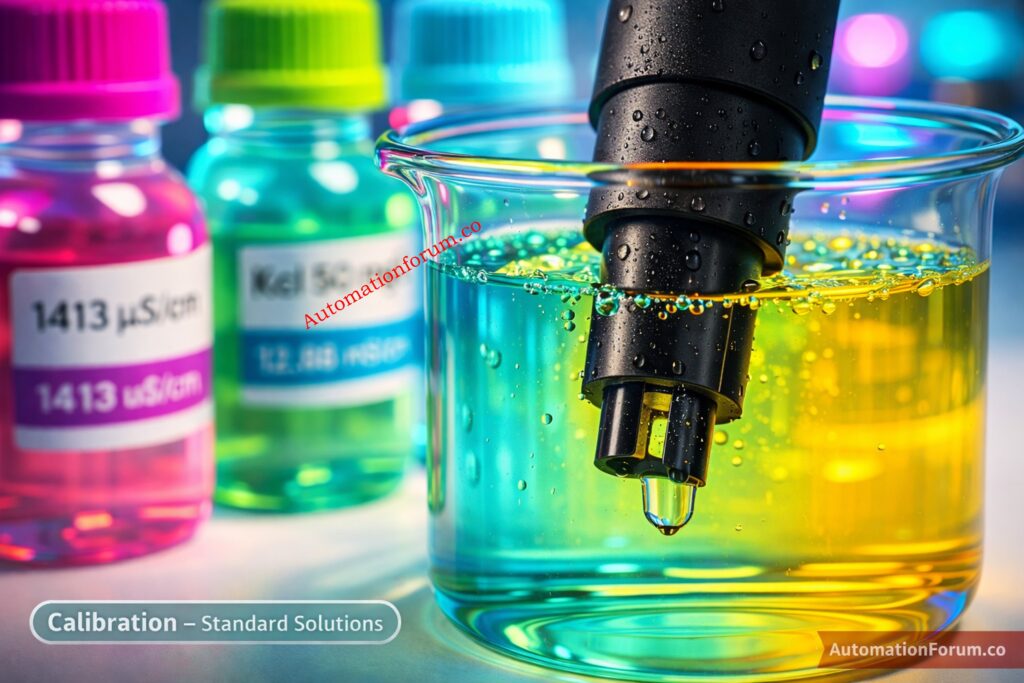
Probe resistance (process temperature)
The liquid's resistance between the probe electrodes at the process temperature. This number shows how much electrical resistance the conductive solution between the sensor electrodes has.
Resistance at 25°C
The temperature-compensated resistance value is based on the standard temperature of 25°C, which is often used as a reference point for measuring conductivity.
Total Circuit Resistance
It includes the resistance of the probe and the cable. This number helps engineers figure out the total resistance that the analyzer input sees and whether signal loading problems might happen.
How a Dissolved Oxygen Analyzer Works in Industrial Water Systems: Dissolved Oxygen Analyser Working Principle
Conductivity at Process Temperature
Calculated automatically with temperature compensation. The calculator updates the conductivity value based on the temperature coefficient because conductivity changes with temperature.
Impedance (|Z|)
Takes into account both resistance and capacitive reactance. In systems that assess conductivity using AC excitation impulses, impedance is the total resistance to electrical current.
Resistivity
Resistivity is the opposite of conductivity. It is often used to measure ultrapure water, when very low conductivity levels are checked.
Total Dissolved Solids (TDS)
TDS is a rough estimate based on conductivity that shows how much dissolved material is in water.
Typical conversion:
TDS ≈ Conductivity × 0.64
The calculator gives these values right away, which lets engineers check the behavior of the probe, make sure the analyzer is set up correctly, and learn more about the electrical properties of conductivity measuring loops.
How to Calibrate a Zirconia Oxygen Analyzer for Accurate Measurements: Zirconia Oxygen Analyzer Calibration Procedure
Example Conductivity Calculation
Consider the following example:
Conductivity at 25°C = 500 µS/cm
Temperature = 40°C
Temperature coefficient = 2% / °C
Cell constant = 1 cm⁻¹
Step 1: Calculate Temperature Corrected Conductivity
σ(40) = 500 × [1 + 0.02 × (40 − 25)]
σ(40) = 500 × 1.3
σ(40) = 650 µS/cm
Step 2: Calculate Probe Resistance
Rl = 1 / (650 × 10⁻⁶)
Rl ≈ 1538 Ω
The conductivity calculator tool does this kind of math automatically, so engineers can rapidly find out the probe resistance and check the conductivity analyzer's performance without having to do the math themselves.
Paramagnetic Oxygen Analyzer Calibration Explained for Technicians: Oxygen Analyzer Calibration Procedure: Paramagnetic Type
Where Conductivity Measurement is Used
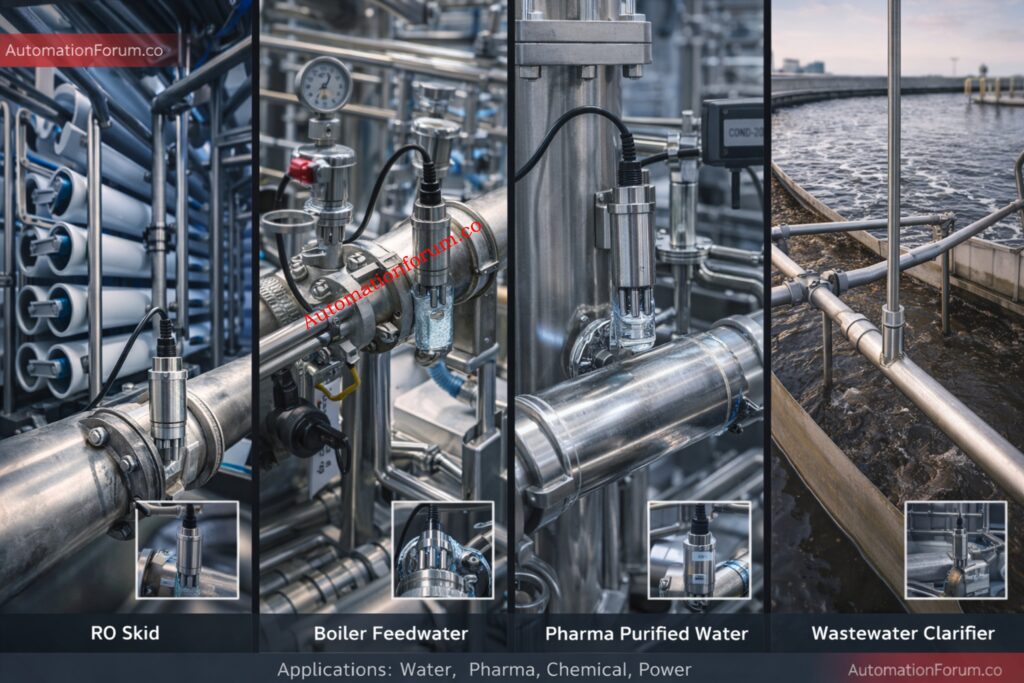
Many businesses use conductivity analyzers.
- Power Plants: Checking the quality of the boiler feedwater and the condensate.
- Pharmaceutical Industry: Making sure that the water used to make drugs is very pure.
- Water Treatment Plants: Keeping an eye on how well drinking water conducts electricity.
- Chemical Industry: Keeping the concentration of chemicals stable during procedures.
- Food and Drink: Making sure that cleaning is done correctly during CIP systems.
- Wastewater Treatment: Keeping an eye on how dirty it is.
Reliable conductivity measurement is critical for process safety and product quality.
Conductivity Analyzer Preventive Maintenance Checklist Every Technician Should Follow: Conductivity Transmitter / Analyzer Preventive Maintenance Guide & Checklist
Common Conductivity Measurement Errors
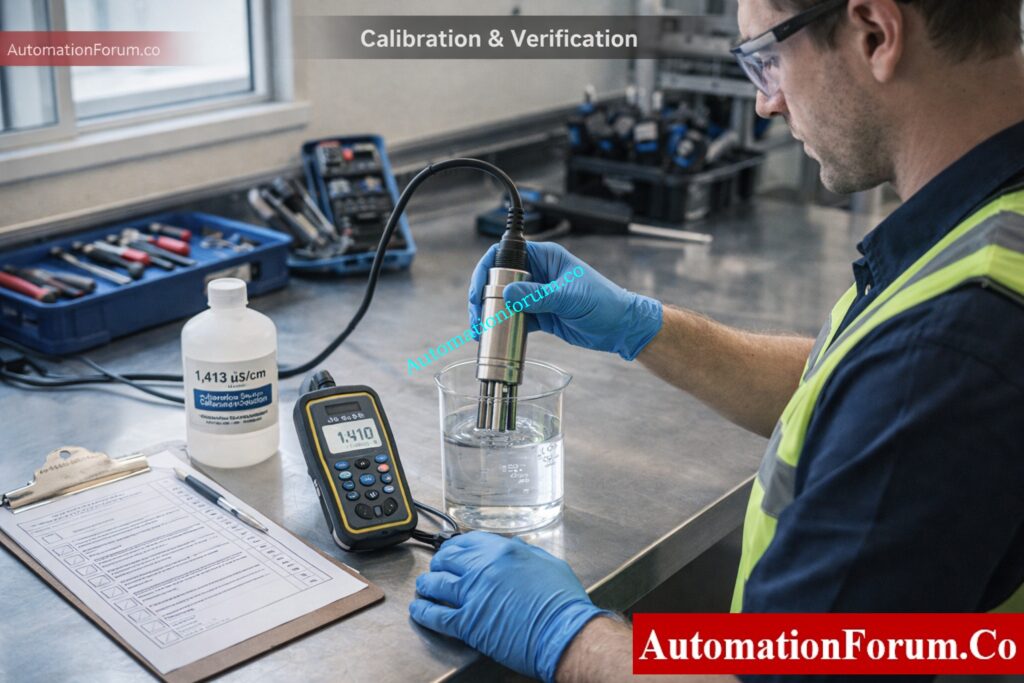
There are a number of things that can make conductivity measurements less accurate.
- Errors in temperature compensation: If the temperature coefficient is wrong, the readings will be wrong.
- Wrong Cell Constant: Using the wrong type of probe might lead to measurement mistakes.
- Cable Resistance: Longer cables make signals less likely to get through.
- Electrode fouling: Deposits on electrodes change how well they conduct electricity.
- Effects of polarization: Excitation impulses with low frequencies can generate electrode polarization.
Engineers can use the calculator to look at these things while they are designing a system.
Gas Analyzer Sampling Systems: Design, Components, and Best Practices: Gas Analyzer Sampling System
Tips for Accurate Conductivity Measurement
To get accurate measurements of conductivity:
- Use the correct probe cell constant.
- Install sensors in proper flow conditions.
- Avoid air bubbles near electrodes.
- Ensure proper temperature compensation.
- Keep electrodes clean.
- Use shielded cables for long distances.
- Calibrate sensors regularly.
These methods make sure that conductivity monitoring in industrial processes is correct.
Process Analyzers Explained: Installation, Calibration & Troubleshooting Guide: Exploring Process Analyzers: Principles, Installation, Calibration & Troubleshooting
Advantages of Using the Conductivity Probe Calculator
There are a number of advantages to using this calculator:
- Fast engineering calculations
- Reduced manual calculation errors
- Improved analyzer selection
- Better troubleshooting capability
- Optimized conductivity measurement design
The calculator makes it easy for both new and experienced instrumentation engineers to swiftly evaluate systems for measuring conductivity.
Master pH Transmitter Calibration Using Standard Solutions (Step-by-Step Guide): Calibration procedure for pH Transmitter with standard solutions
Frequently Asked Questions (FAQ) on Conductivity Calculator
Why is conductivity measured at 25°C?
To make conductivity data more consistent, 25°C is employed as a worldwide reference temperature.
What is a typical conductivity value for drinking water?
The conductivity of drinking water usually falls between 200 µS/cm and 800 µS/cm.
Why do conductivity analyzers use AC voltage?
AC voltage stops electrode polarization and makes measurements more accurate.
ORP Analyzer Explained: Working Principle, Measurement & Industrial Uses: Understanding ORP Analyzer: Principles, Measurement, and Applications in Industry
What is TDS in water measurement?
TDS stands for "total dissolved solids," which tells you how much dissolved material is in water.
How to test a conductivity probe?
Check the electrodes with your eyes and clean them. Then, dip the probe into approved conductivity standards (known µS/cm) and compare the reading to the standard. Also, check for stable readings at different concentrations and make sure that temperature correction is working.
What is the 4-probe method for measuring conductivity?
A four-electrode arrangement has two outer electrodes that send AC current and two interior electrodes that measure voltage. This gets rid of electrode polarization and contact resistance. Using the measured voltage and known current, you can find conductance. Then, using the cell constant, you can find conductivity.
What is the principle of a conductivity probe?
A conductivity probe sends an AC signal across electrodes. Ions in the solution carry the current, and the analyzer detects the current (or conductance). Using the probe's cell constant and temperature adjustment, conductivity is calculated from conductance.
What is the range of a conductivity probe?
The range depends on the cell constant and the design of the sensor. It can be as low as sub-µS/cm (for ultrapure water) to as high as tens of S/cm (for concentrated solutions). Depending on the probe you choose, the typical practical coverage is between 0.01 µS/cm and 50,000 µS/cm.
Is conductivity 1 resistance?
No, conductivity is not "one resistance." The opposite of resistivity is conductivity. Resistance depends on the shape and material. The cell constant connects conductivity (S/cm) and resistance (Ω) for probes: σ = K / R.
How to check temperature probe resistance?
Use a calibrated ohmmeter to check the sensor's resistance and see if it matches the expected resistance-vs-temperature curve (for example, PT100 = 100 Ω at 0°C). To be sure, measure at a known temperature (such in an ice bath or calibration bath) and check that the wiring and connectors are still working.
For keeping an eye on the quality of liquids in industrial operations, measuring conductivity is an important factor. For accurate conductivity analysis, you need to take into account things like the probe's shape, temperature correction, cable resistance, and analyzer input impedance.
Instrumentation experts can make dependable measurement systems and fix problems with conductivity analyzers better when they know these parameters.
The Conductivity Liquid Analyzer Probe Resistance Calculator makes these hard calculations easier and gives you fast results for probe resistance, impedance, resistivity, and temperature-compensated conductivity.
Engineers can easily check how conductivity probes work and make sure they work correctly in real-world situations with this tool.
pH Transmitter Maintenance Guide to Improve Accuracy and Sensor Life: How to do Preventive maintenance of pH transmitter?
