
- What Is a Siphon Tube in a Pressure Gauge?
- Why a Siphon Tube Is Essential in Steam and High-Temperature Applications
- How a Siphon Tube Works in Pressure Measurement
- Key Benefits of Using a Siphon Tube
- Types of Siphon Tubes Used in Steam and High-Temperature Services
- Material Selection for Siphon Tubes in Pressure Gauges
- Industrial Applications of Siphon Tubes in High-Temperature Systems
- How to Select the Right Siphon Tube for Your Application
- Installation Guidelines for Siphon Tubes on Pressure Gauges
- Maintenance Checklist for Siphon Tubes in Steam Pressure Measurement
- What Happens If a Siphon Tube is Not Used in Steam Service?
- Why Siphon Tubes Are Critical for Reliable Pressure Measurement in Steam Systems
- Frequently Asked Questions (FAQ) About Siphon Tubes
Pressure gauges used in steam lines, boilers, high-pressure heaters, thermal fluid systems, and high-temperature process lines are often subjected to intense working conditions. Steam and superheated vapors can reach temperatures that surpass the maximum limits of gauge components, especially the Bourdon tube. In addition to high temperatures, these systems often endure quick changes in pressure and pulsations. These combined factors can lead to incorrect measurements, early equipment failures, and unsafe working conditions.
What Is a Siphon Tube in a Pressure Gauge?
A siphon tube is a key component in many pressure gauges. It’s essentially a tube, often U-shaped, that connects the pressure source to the gauge itself. The purpose of this tube is to protect the gauge from high temperatures and potentially damaging fluids. When the pressure is applied, the liquid inside the siphon tube absorbs the heat, preventing it from reaching the gauge mechanism. This helps ensure the gauge provides accurate readings and extends its lifespan.
A siphon tube is a fundamental, straightforward, and inexpensive tool for safeguarding pressure gauges in these situations. This comprehensive book offers a straightforward, in-depth, and exceptionally useful explanation, designed for instrumentation engineers, plant specialists, maintenance crews, and EPC project professionals.
Role of Condensate Seal in Steam Pressure Measurement
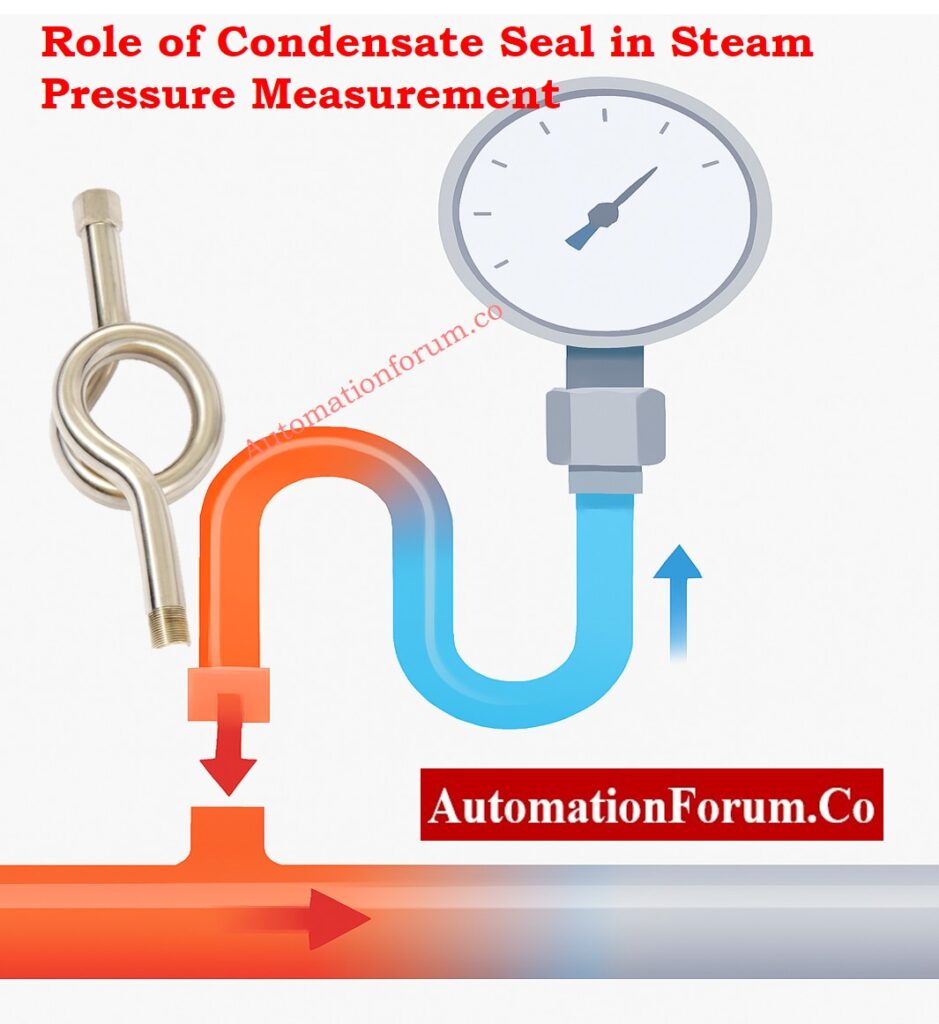
A siphon tube, a metal tube bent into a certain shape, connects the pressure gauge to the steam or high-temperature process line. It typically appears in U-shaped, pigtail, straight, or coil forms. The main job of a siphon tube is to create a barrier of condensed liquid, specifically water, within the tube. This barrier prevents hot steam from reaching the gauge, yet it allows the actual line pressure to be measured.
The siphon tube’s design, which keeps steam from directly touching the gauge’s inner workings, is key to its reliable operation, steady performance, and long-lasting nature.
Why Pressure Gauges Fail – Top Causes & Fixes: Pressure Gauge Failure: Causes, Solutions & Troubleshooting Guide
Why a Siphon Tube Is Essential in Steam and High-Temperature Applications
When a pressure gauge is directly exposed to steam, the Bourdon tube quickly heats up because of the high temperatures. This results in:
- The Bourdon tube is substantially more likely to experience metal fatigue due to the continual expansion and contraction caused by temperature changes.
- The Bourdon tube is likely to permanently deform and lose its elasticity, which leads to drift and inaccuracies.
- Unreliable and variable readings are caused by a rapid loss of gauge calibration.
- The process line is likely to experience constant pointer vibration, which is produced by both pulsation and thermal shock.
- In extreme situations, there’s a chance of the pressure gauge failing completely, possibly leading to a rupture or explosion.
- The pressure gauge’s lifespan is generally shortened, which leads to frequent replacements and increased maintenance expenses for the facility.
A siphon tube helps to prevent these problems by acting as a heat barrier and reducing pressure changes.
Absolute Pressure Transmitter Calibration Steps: Step-by-Step Procedure to Calibrate an Absolute Pressure Transmitter
How a Siphon Tube Works in Pressure Measurement
A siphon tube works by using two protective features: thermal isolation and the reduction of pressure changes.
1. Thermal Protection Through Condensate Barrier

When steam enters the siphon tube:
- As steam moves through the siphon tube, it cools down since the tube’s surface temperature is the same as the surrounding environment.
- As the steam cools, it turns back into water inside the U-bend or coil.
- The water stays in the siphon tube’s lower section, where it stays there.
- The water seal works as a thermal barrier, preventing hot steam from reaching the pressure gauge.
- The pressure energy moves upward toward the gauge, and there’s no considerable heat transfer.
- This design keeps the gauge functioning within its safe temperature range, which is crucial for both precision and its continued performance over time.
The need for siphon tubes is mainly due to this particular process, which is why they are required in systems that handle steam or gasses at high temperatures.
Pressure Instrument Calibration – Complete Guide: Calibration Procedures for Various Pressure Measuring Instruments
2. Pulsation and Shock Dampening
Steam lines, boiler outlets, and heat-exchanger return lines sometimes experience significant pulsations.
The siphon tube helps by:
- The siphon tube has a purpose: it mitigates sudden pressure spikes before they impact the gauge.
- Mechanical shocks, which can be caused by things like steam flashing or rapid valve movements, are absorbed.
- Reducing the size of the pulsation waves that induce pointer flutter is a key goal.
- To make the gauge readings easier to understand, the pointer’s movement needs to be stabilized, resulting in smoother and more consistent readings.
- To prevent the Bourdon tube from experiencing early fatigue due to repeated cycles of stress.
Once the siphon tube is correctly positioned, the gauge’s readings become more consistent, and its lifespan is considerably extended.
Pressure & Leak Testing Method Statement: Method Statement for Pressure Test and leak Test for Instrument Tubing and Impulse line
Key Benefits of Using a Siphon Tube
- The pressure gauge is protected from heat by a permanent condensate barrier, which prevents high-temperature steam from reaching it.
- Preventing the Bourdon tube from overheating minimizes the chance of distortion, drift, and unexpected failure.
- Maintains reliable and precise pressure readings, even under the rigors of steam service.
- Reduces the effects of pulsation and vibration, which in turn enables the pointer to traverse smoothly, hence enhancing readability.
- Significantly prolongs the operational lifespan of pressure gauges, hence reducing both upkeep and replacement expenses.
- This method improves plant safety by reducing failures in gauges that are caused by thermal shock or pressure fluctuations.
- Provides dependable separation between the process line and delicate instrumentation elements.
How to Select the Right Impulse Tube Size: Choosing the Right Impulse Tube Size for Reliable Pressure Measurement & System Efficiency
Types of Siphon Tubes Used in Steam and High-Temperature Services
Siphon tube designs vary, depending on the application, temperature, and how they are installed.
Comparison of Siphon Tube Types for Industrial Steam Systems
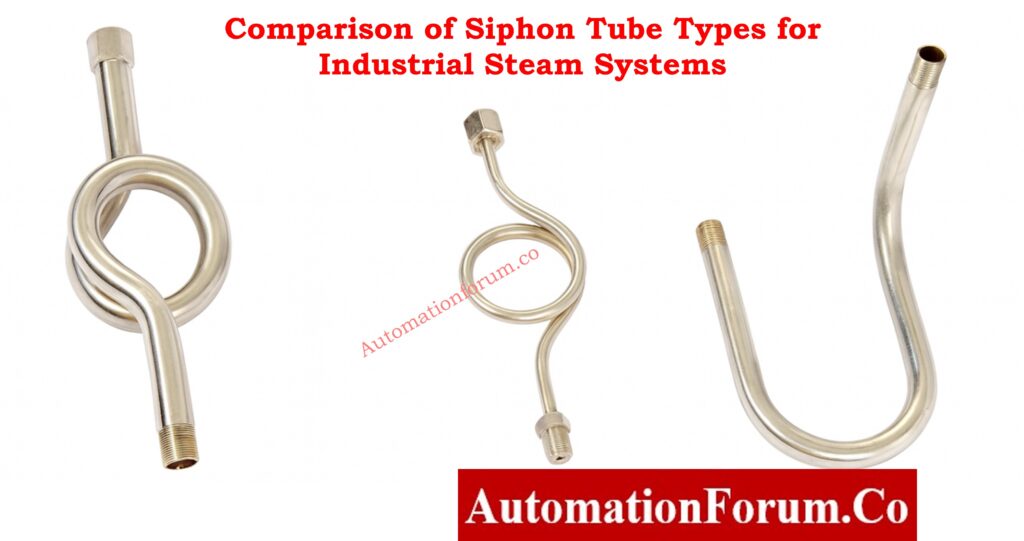
| Type of Siphon Tube | Shape | Best Use Case | Advantages |
| U-Type (Pigtail) | U-shaped loop | Vertical steam lines | Good condensate retention, common type |
| Coil-Type | Spiral/Helical | High temp steam, pulsation-heavy systems | Superior cooling, excellent dampening |
| Straight Type | Straight pipe | Horizontal or compact spaces | Simple installation, space-saving |
Common Pressure Gauge Errors You Must Avoid: Errors Involved in Pressure Gauge Measurement
Material Selection for Siphon Tubes in Pressure Gauges
The material used for a siphon tube must be able to withstand temperature changes and corrosion. This depends on the fluid being moved, the pressure it’s under, and the location where the siphon is installed.
| Material | Temperature Range | Corrosion Resistance | Typical Application |
| Carbon Steel | Medium | Low | Standard steam service |
| SS304 | High | Medium | Industrial steam, mild chemicals |
| SS316 | Very High | High | Corrosive environments, refineries |
| Chrome-Moly Steel | Extremely High | Medium | High-pressure boilers |
| Copper Alloys | Low | Medium | Low temp fluids |
How to Select the Right Pressure Gauge: Selection of a pressure gauge
Industrial Applications of Siphon Tubes in High-Temperature Systems
Siphon tubes are often used in industrial settings, especially in systems that operate at high temperatures.
- Siphon tubes are widely utilized in many industries that handle steam or gasses at high temperatures.
- In power plants, the constant monitoring of high-temperature vapor is crucial for the safe operation of boiler systems, steam drums, and steam headers.
- Steam distribution networks in refineries are crucial for supplying thermal energy to various crude oil and product processing units.
- Chemical and petrochemical plants use steam to heat reactors, distillation columns, and other process equipment.
- Industries that use steam for sterilization and pasteurization in food and beverage production.
- Desalination plants that use steam to power multiple-effect evaporators.
- Heat exchangers and reboilers that use steam circulation for energy transfer.
- Steam jackets, dryers, and industrial heaters require careful control of pressure.
- HVAC systems, district heating networks, and industrial utility steam supply lines.
For any steam-powered application, a siphon tube is essential. It keeps the pressure gauge functioning correctly and safely.
Refer the below link for the Commissioning Procedure for Differential Pressure Transmitters in Pressurized Boiler Steam Drums
How to Select the Right Siphon Tube for Your Application
| Selection Factor | What to Check | Best Choice / When to Use | Notes for EPC & Instrumentation Engineers |
| Temperature Rating and Material Compatibility | Maximum steam temperature, corrosion level, and process fluid type | CS for standard steam; SS304/SS316 for corrosive or high-temp lines; Chrome-Moly for high-pressure boilers | Material must match both temperature and corrosion severity to prevent tube thinning and failure |
| Pressure Rating and Steam Line Conditions | Operating pressure, pressure surges, pulsation severity | Use coil-type for high pressure and heavy pulsations; U-type for normal steam pressure | Higher pressure requires stronger tubing and better pulsation absorption |
| Orientation, Space, and Installation Constraints | Vertical vs horizontal mounting, available space, accessibility | U-type for vertical lines; straight type for tight spaces; coil-type where long cooling path is needed | Check if the siphon can retain condensate properly based on orientation |
| Choosing Between Pigtail vs Coil vs Straight Siphon | Cooling requirement, pulsation level, installation layout | Pigtail (U-type): general steam service; Coil: high temp + pulsation; Straight: compact areas | Selection must ensure both thermal isolation and stable pressure transmission |
How to Calibrate a Pressure Gauge (Step-by-Step): Pressure Gauge Calibration – Step-by-Step Procedure and Standards
Installation Guidelines for Siphon Tubes on Pressure Gauges
To ensure the siphon tube works properly, correct installation is essential.
- Before you start, always fill the siphon tube with clean water. This creates an immediate condensate barrier, which is essential.
- U-type siphons are preferable for vertical applications because they are better at retaining condensate in upright systems.
- Coil-type siphons are the better choice for high-temperature steam lines, especially when you need improved cooling and to minimize pulsations. To prevent leaks, always use PTFE tape or a compatible sealing compound on threaded connections.
- To facilitate safe gauge removal and isolation, install a gauge cock or needle valve between the siphon and the gauge.
- Don’t put the siphon at low points where scale, sludge, or debris could build up inside it.
- Mount the pressure gauge upright. This ensures it responds accurately and functions correctly.
- Ensure unobstructed movement within the tube, allowing condensate to form as intended, without any hindrance.
If the siphon tube is installed incorrectly, it might lead to false readings and impair its ability to safeguard the system.
Refer the below link for the Gauge vs Transmitter – Which Reading Is Right? When Readings Don’t Match, Who Should You Trust?
Maintenance Checklist for Siphon Tubes in Steam Pressure Measurement
Consistent checks and proactive upkeep are key to sustained performance.
- Regularly check siphon tubes for any indications of exterior corrosion, pitting, or thinning of the walls.
- Verify that the condensate is at the right level to keep the thermal barrier working.
- Inspect for any obstructions caused by scale, sludge, or rust that could impede the movement of fluids.
- Ensure that every fitting, union, and seal is properly tightened and secure.
- Replace any siphon tube exhibiting distortion, dents, or any type of mechanical damage.
- Regular calibration of the attached pressure gauge is essential to ensure it remains accurate.
- If deposits are suspected, clean the internal passageways during shutdowns.
- A properly cared-for siphon tube boosts dependability and cuts down on interruptions.
What Happens If a Siphon Tube is Not Used in Steam Service?
Without a siphon tube, the pressure gauge will be directly exposed to steam, which might cause several issues:
- Immediate heating of the Bourdon tube causes the metal to weaken and fail more quickly.
- The continuous vibrating of the pointer, caused by pulsations, makes it difficult to get stable and clear readings from the gauge.
- Thermal expansion can generate significant calibration drift, which leads to incorrect pressure readings.
- The Bourdon tube is likely to deform or burst when exposed to heat.
- The shorter lifespan of the instruments led to frequent replacements, which therefore caused operational inefficiencies.
- Safety issues are increasing, notably in boilers and equipment that uses high-pressure steam.
For any steam service, a siphon tube is required for precision and safety.
Best Damping Techniques for Stable Gauge Readings: Damping methods of pressure gauge
Why Siphon Tubes Are Critical for Reliable Pressure Measurement in Steam Systems
A siphon tube, a basic but crucial safety device, is used in steam and high-temperature systems. Its main job is to protect pressure gauges from heat, pressure changes, and physical stress. By creating a lasting condensate barrier and buffering pressure surges, it provides:
- Accurate and reliable pressure measurement is essential.
- Extended lifespan for pressure gauges.
- Improving the safety of process systems is a crucial goal in many industries.
- Ensuring the dependable functioning of instrumentation networks.
Instrumentation specialists bear a critical responsibility: the correct selection, installation, and ongoing maintenance of siphon tubes.
Pressure Switch Troubleshooting Made Easy: Pressure Switch Troubleshooting and Maintenance in Industrial Process Areas
Frequently Asked Questions (FAQ) About Siphon Tubes
Why is a siphon tube used in a pressure gauge?
A siphon tube’s design retains condensate within its loop. This prevents high-temperature steam from reaching the pressure gauge. This method protects the Bourdon tube from heat, which lessens the impact of pressure fluctuations.
What is the purpose of a siphon tube?
The goal is to protect the pressure gauge from heat, which will stabilize its readings and avoid both overheating and mechanical damage.
How does a gauge siphon work?
The siphon tube, with its bent design, has a dual purpose: it cools the steam as it arrives and creates a water seal. The water seal has a dual purpose: it blocks hot steam from contacting the Bourdon tube, yet still permits pressure to be communicated.
How does a siphon work in pressure measurement?
It cools the steam, creating a condensate seal, and guarantees that only pressure energy gets to the gauge. This design protects the gauge and guarantees precise pressure readings in steam systems.
How does a siphon tube protect the Bourdon tube?
A layer of water circulates within the loop, soaking up heat. This setup stops steam from hitting the Bourdon tube directly, which in turn lessens the chances of thermal shock and metal fatigue.
What is the working principle of a pigtail siphon?
The steam moves into the curved loop, where it cools and then changes into water. This water seal transmits pressure while also protecting the gauge from heat and vibrations.
Which type of siphon tube is best for steam lines?
U-type siphons, often known as pigtail siphons, are suitable for most steam lines. Coil-type siphons are better suited for situations with very high temperatures or strong, repeating pressure changes. Straight kinds are used exclusively when space is limited.
Do all steam applications require a siphon tube?
Yes. A siphon tube is essential for any steam service. It stops the gauge from overheating, keeps the pointer steady, and helps prevent early breakdowns. Accurate and safe measuring is a need.
