Home Blog Page 226

Basics of Relays

0

INTRODUCTION

A relay is an electrically operated switch. Relays are a remote control electrical switch that can be switched using low current to control a high current load.in this session we are going to discuss about basics of relays.

PRINCIPLE OF OPERATION

Current flowing through the coil of the relay creates a magnetic field which attracts a lever and changes the switch contacts. The coil current can be on or off so relays have two switch positions and they are double throw (changeover) switches.

THEORY

Relays allow one circuit to switch a second circuit which can be completely separate from the first. For example a low voltage battery circuit can use a relay to switch a 230V AC mains circuit. There is no electrical connection inside the relay between the two circuits; the link is magnetic and mechanical.


The coil of a relay passes a relatively large current, typically 30mA for a 12V relay, but it can be as much as 100mA for relays designed to operate from lower voltages. Most ICs (chips) cannot provide this current and a transistor is usually used to amplify the small IC current to the larger value required for the relay coil.

The relay’s switch connections are usually labeled COM, NC and NO:

  • COM = Common, always connect to this; it is the moving part of the switch.
  • NC = Normally Closed, COM is connected to this when the relay coil is off 
  • NO = Normally Open, COM is connected to this when the relay coil is on
  • Connect to COM and NO if you want the switched circuit to be on when the relay coil is on
  • Connect to COM and NC if you want the switched circuit to be on when the relay coil is off 


Choosing a relay

You need to consider several features when choosing a relay:

  1. Physical size and pin arrangement

If you are choosing a relay for an existing PCB you will need to ensure that its dimensions and pin arrangement are suitable.  You should find this information in the supplier’s catalogue.

  1. Coil voltage

The relay’s coil voltage rating and resistance must suit the circuit powering the relay coil. Many relays have a coil rated for a 12V supply but 5V and 24V relays are also readily available. Some relays operate perfectly well with a supply voltage which is a little lower than their rated value.

  1. Coil resistance

The circuit must be able to supply the current required by the relay coil. You can use Ohm’s law to calculate the current: Relay coil current =supply voltage coil resistance

For example: A 12V supply relay with a coil resistance of 400 passes a current of 30mA. This is OK for a 555timer IC (maximum output current 200mA), but it is too much for most ICs and they will require a transistor to amplify the current.


Advantages of relays:

  • Relays can switch AC and DC, transistors can only switch DC.
  • Relays can switch high voltages, transistors cannot.
  • Relays are a better choice for switching large currents (> 5A).
  • Relays can switch many contacts at once.

Disadvantages of relays:

  • Relays are bulkier than transistors for switching small currents.
  • Relays cannot switch rapidly (Except reed relays), transistors can switch many times per second.
  • Relays use more power due to the current flowing through their coil.
  • Relays require more current than many chips can provide, so a low power transistor may be needed to switch the current for the relay’s coil

calibration of pressure switch

BASIC CONTROL PRINCIPLES

0

 INTRODUCTION

Control of the processes in the plant is an essential part of the plant operation.The level of the boiler must be kept within a certain range. The heat transport pressure is another critical parameter that must be controlled. If it is too high the system will burst, if it is too low the water will boil. Either condition impairs the ability of the heat transport system to cool the fuel.These are some of the examples that to remind you that plant must be properly monitored and controlled.In this section we will look at the very basics of control.


Theory

Consider a typical process control system. For a particular example let us look at an open tank, which supplies a process, say, a pump, at its output. The tank will require a supply to maintain its level at a fixed predetermined point. This predetermined level is referred to as the set point (SP) and it is also the controlled quantity of the system.

If the inflow and outflow are in mass balance, the level willremain constant. Any difference in the relative flows will cause the levelto vary. For a control system there must be variables.

The two in which we are most interested are:

  • The controlled variable – in our example this will be level.
  • The manipulated variable -the inflow or outflow from the system.


If we look more closely at our sample system in Figure, assuming the level is at the setpoint, the inflow to the system and outflow are balanced. Obviously no control action is required whilst this status quoexists. Control action is only necessary when a difference or error exists between the setpoint and the measured level. Depending on whether this error is a positive or negative quantity, the appropriate control correction will be made in an attempt to restore the process to the setpoint.


Henceforth, the error will always take the form of:

Error = Setpoint- Measured Quantity

OR

e = SP – M 

The control action will be either to vary the inflow or outflow from the system in order to keep the level at the setpoint. Let us consider the general format for achieving these objectives.

As can be seen from Figure, the process can be represented by a closed loop. The system output (level) is monitored by a process sensor and the measurement signal is feedback to a comparator at the input of the system.

The second input to the comparator is the setpoint signal; the comparator’s output being the difference or error signal. The amplifier will provide the appropriate correction to maintain the process at its setpoint despite disturbances that may occur.

It can be seenthat if the system were being operated in manual controlthe feedback path would not be present. The operator would provide thisfeedback and apply the necessary correction to the system whilstobserving the effect on the controlled variable. This is termed open loopoperation.


Feedback Control

This concept justifies the use of the word negative in three ways:

  • The negative aspect of feeding the measured signal backwards from the output to the input of the system. (Actual definition of negative feedback control).
  • The control correction must be negative in that a correction rather than a compounding of error must occur.
  • The fact that an error must occur before a correction can take place, i.e., retrospective or negative control action.

Feedforward Control

If we wish to control our process without an error first occurring, we must base our control on correction of the disturbances, which will eventually, cause a process error. This is termed feedforward control. Feedforward control is rarely if ever used on its own but is used in conjunction with feedback control to improve the response of control to process disturbances.

BASIC CONTROL SYSTEM INTERVIEW QUESTIONS

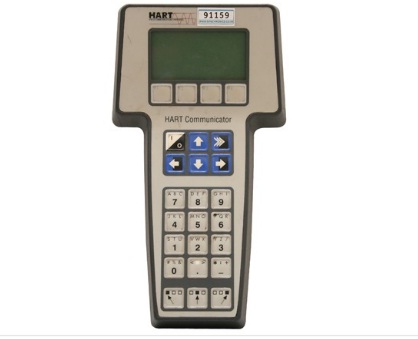
Basics of Hart Communicator

0

Introduction

HART is a master-slave communication protocol  , which means that during normal operation, each  slave
(field device) communication is initiated by a master  communication device. Two masters can connect to each HART loop. The primary master is generally a distributed control system (DCS), programmable logic controller (PLC), or a personal computer (PC). The secondary master can be a handheld terminal or another PC. Slave devices include transmitters, actuators, and controllers that respond to commands from the primary or secondary master.in this session we are going to discuss about  Basics of Hart Communicator
 

THEORY

  • The HART Communicator is a menu driven system. Each screen provides a menu of options that can be selected as outlined above, or provides direction for input of data, warnings, messages, or other instructions.
  • When the HART Communicator is turned on, one of two menus will appear.
  • If the HART Communicator is connected to an operating loop, the communicator will find the device and display the Online Menu (see below).
  • If it is not connected to a loop, the communicator will indicate that no device was found. When you press OK (F4), it will display the Main menu.
  • The Main Menu provides the following options:
  • Offlinesaves or retrieves transmitter configuration information.
  • Onlineconnects the communicator to a compatible device
  • Frequency DeviceThe Frequency Device option displays the frequency output and corresponding pressure output of current-to-pressure transmitters.
  • UtilityThe Utility option provides access to the contrast control for the HART Communicator LCD screen and to the auto poll setting used in multidrop applications.
  • Once selecting a main menu option, the HART Communicator provides the information you need to complete the operation.
  • The Online Menu can be selected from the main menu as outlined above, or it may appear automatically if the HART Communicator is connected to an active loop and can detect an operating transmitter.
  • On-line mode is used for direct evaluation of a particular meter, reconfiguration, changing parameters, maintenance, and other functions.
  • The keys of the HART Communicator include action, function, and alphanumeric and shift keys.

Action Keys

  • ON/OFF Key Use this key to power the HART Communicator.
  • When the communicator is turned on, it searches for a transmitter on the 4–20 mA loop.
  • If a device is not found, the communicator displays the message, “No Device Found. Press OK.”

If a HART-compatible device is found, the communicator displays the Online Menu with device ID and tag

Directional Keys

  • Use these keys to move the cursor up, down, left, or right.
  • The right arrow key also selects menu options, and the left arrow key returns to the previous menu.

HOT Key

  • Use this key to quickly access important, user-selectable options when connected to a HART-compatible device.
  • Pressing the Hot Key turns the HART Communicator on and displays the Hot Key Menu.

See Customizing the Hot Key Menu  in the HART Communicator manual for more information

  • Use the four software-defined function keys, located below the LCD, to perform software functions. On any given menu, the label appearing above a function key indicates the function of that key for the current menu. As you move among menus, different function key labels appear over the four keys.
  • For example, In menus providing access to on-line help, the label may appear above the F1 key. Simply press the key to activate the function.
  • In menus providing access to the On-line Menu, the label may appear above the F3 key. Simply press the key to activate the function.

Alphanumeric and Shift Keys

  • The alphanumeric keys perform two functions: the fast selection of menu options and data entry.

Data Entry

  • Some menus require data entry. Use the alphanumeric and shift keys to enter all alphanumeric information into the HART Communicator. If we press an alphanumeric key alone from within an edit menu, the bold character in the center of the key appears. These large characters include the numbers 0 through 9, the decimal point (.), and the dash symbol (—).
  • To enter an alphabetic character, first press the shift key that  corresponds to the position of the  letter you want on the alphanumeric  Then  press the alphanumeric key.
  • For example, to enter the letter  R, first press the right shift key,  then the “6” key (see Figure). Do  not press  these keys simultaneously, but one after the other.

Hart Communicator Connections


  • The HART Communicator Model 275 / 375 can interface with a transmitter from the control room, the instrument site, or any wiring termination point in the loop through the rear connection panel as shown in Figure
  • To communicate, connect the HART Communicator in parallel with the instrument or load resistor. The connections are non-polarized.
  • Avoid contact with leads and terminals.
  • The HART Communicator needs a minimum of 250 ohms resistance in the loop to function properly. The HART Communicator does not measure loop current directly.

Benefits outlined in this section include:

Improved plant operations
Operational flexibility
Instrumentation investment protection
Digital communication
for know more about how to calibrate transmitters with hart communicator click the link belowCalibration procedure of DPT transmitter

Basics of Vortex flowmeter

0

Vortex flowmeter is a differential pressure measuring flowmeter which can measure both liquid and gas flow measurement. Vortexes are used for continuous flow measurement.


Principle:

When flow stream passes a stationary object or a bluff body and causes the formation of swirls, called vortices, downstream from the body. Each vortex will form, then detach from the object and continue to move with the flowing gas or liquid, one side at a time in alternating fashion. Differential pressure changes occur as the vortices are formed and shed. This pressure variation is used to actuate the sealed sensor at a frequency proportional to the vortex shedding

The principle of vortice measurement is based on the Theodore von Karman’s theory. The Karman’s frequency is f is proportional to the velocity V, Therefore it is possible to obtain the flow rate by measuring the Karman vortex frequency:

f=StV/d

f = vortex frequency

St = Strouhal’s number dimensionless

V = medium flow rate

d = the width of triangle prim


Construction and Working:

The bluff body is fixed at the centre of the flow stream, fluid gets passed aside the bluff body. Differential pressure changes occur as the vortices are formed and shed. This pressure variation is used to actuate the sealed sensor at a frequency proportional to the vortex shedding. The vortex flowmeter is available with a sensor attached to it.

The pressure sensors used in vortex flowmeters are not standard differential pressure transmitters since the vortex frequency is too high to be successfully detected by such bulky instruments. Instead, the sensors are typically piezoelectric crystals.

This is the metallic bar installed in the vortex instrument, otherwise the transducer part. The shedder bar is installed perpendicular to the flow. If the differential pressure sensor is installed immediately downstream of the stationary object in such an orientation that it detects the passing vortices as pressure variations, an alternating signal
will be detected:

The frequency of the alternate signal generated is proportional to the flow velocity of the fluid passing through the shedder bar. These pressure sensors need not be calibrated since the amplitude of the pressure waves detected is irrelevant. Only the frequency of the waves matter for measuring flow rate.

There are bluff bodies available in different shapes cylindrical, triangular, rectangular, swirl type etc.,

Applications:

  • Transformation of natural gas metering
  • Steam measurement
  • General water metering
  • In pharmaceutical & chemical industries


Advantages:

  • Suitable for liquid, gas or steam.
  • Used with non-conductive fluids.
  •  No moving parts, they do not suffer the problems of wear and lubrication facing turbine meters.
  • Sensors available to measure both gas and liquid.
  • Not affected by viscosity, density, pressure or temperature.
  • Low installation cost.
  • Good accuracy.
  • Linear response

Disadvantages:

  • low flow cutoff, where the flowmeter simply stops working below a certain flow rate.
  • Uni-directional measurement only.
  • Clean fluids only.
  • Not suitable for partial phase change.
  • Not suitable for viscous liquids.
  •  Large unrecoverable pressure drop.
  •  Straight pipe runs required for installation


VALVE STEM PACKING REPLACEMENT METHOD

0

VALVE STEM PACKING

The purpose of valve packing is to prevent leakage.  In a typical valve, the gland follower is tightened until there is no leakage.  The valve is then test-operated to make sure that the packing is not compressed so tightly that the valve does not turn easily.

Types of Packing

Packing comes in two types; in pre-shaped rings or in rope form which is cut to size.  The common pre-shaped ring packing material is Teflon.This plastic material which is self lubricating.  Normally the Teflon rings are held in place with a spring below the gland follower.

Another form of this type of packing is called “Chevron” packing.  Teflon or rubber packing rings are shaped like a “V” (Chevron) and placed in the stuffing box as shown in Figure.The process pressure forces the edges of the chevrons outwards against the shaft and stuffing box wall to produce a good seal.  Chevron packing is very common in hydraulic and pneumatic systems.

Packing replacement

Removing Old Packing

The most common sign of packing damage is too much leakage from the gland.  If you can’t control this leakage by adjusting the gland follower, then the packing should be replaced.

Before the packing in a valve can be replaced, the valve must be locked off using the platform’s usual procedures.  Next you must check manufacturer’s specifications to make sure that the old packing is replaced with packing of the right size and type.  Then you must carry out the following procedures.

  1. Loosen the gland follower nuts.
  2. Swing open the gland follower dog bolts.
  3. Open (or remove for a split type) the gland follower.
  4. Remove the first few packing rings. The easy way is to use a packing tool.  This works exactly like a corkscrew.
  5. Take care not to scratch the shaft with the packing tool.
  6. If there is a lantern ring, remove this with a piece of wire bent into a hook.
  7. Remove the remaining packing rings.
  8. Make sure all packing scraps have been removed.
  9.  Check the old packing and the shaft to see if it is only worn, or if there is a more serious reason for the leakage

Installing New Packing

  1. Make sure that the exposed portion of the shaft is completely clean. It is important to get rid of all the grit particles so that they do not get pushed into the stuffing box with the new packing.
  2. Clean the shaft and stuffing box with a non-flammable, non-toxic solvent.
  3. Brush down and then wipe the area with a clean rag.
  4. If no manufacturer’s information is available, measure the gap between the shaft and the stuffing box.
  5. Similarly, measure the depth of the stuffing box.
  6. Measure the thickness of the lantern ring.
  7. Calculate how many rings will be required.
  8. Find a suitable mandrel (the same diameter as the shaft).
  9. Wind the packing material round the mandrel as many times as the number of rings required.
  10. Cut the rings with a sharp knife.
  11. Check how many rings you need to put below the lantern ring. The correct number must be replaced; otherwise the lantern ring will not be in line with the lubricator.
  12. Lubricate the rings with an anti-seize compound, so they will go in more easily.
  13. Insert the packing rings and lantern ring one by one, pushing them into the stuffing box as far as they can go.
  14. The joints of the rings should be staggered and cut on a slant as shown below.

To know about control valve check this link Working of control valve

Working of control valve

0

Introduction

The control valve is a controlled device that regulates the flow of a liquid or gas in a system. This regulation is accomplished by the varying resistance that the valve introduces into the system as the valve is stroked. As the valve modulates to the closed position the system pressure drop shifts to the valve and reduces the flow in the system.

Principles of Operation

A control valve is comprised of an actuator mounted to a valve. The valve modulates flow through movement of a valve plug in relation to the port(s) located within the valve body. The valve plug is attached to a valve stem, which, in turn, is connected to the actuator. The actuator, which can be pneumatically or electrically operated, directs the movement of the stem as dictated by the external control device.

1.Pneumatic/Diaphragm Actuated

Pneumatic Actuators are direct acting and utilize an air signal from an external control device to create a modulating control action. The force of the air signal is received into the actuator through a top port and distributed across the full area of the actuator’s diaphragm. The diaphragm presses down on the diaphragm plate and spring return assembly, which then moves the valve stem and plug assembly downward to stroke the valve.

2.Electric Actuated

Electric Actuators are motor driven devices that utilize an electrical input signal to generate a motor shaft rotation. This rotation is, in turn, translated by the unit’s linkage into a linear motion, which drives the valve stem and plug assembly for flow modulation.

The valve is very important to the operation of the system. Without a properly sized valve the system will never operate at an efficient level.


Control valves contain four basic sections;

  • Body

The Body contains the orifice and is the main housing through which the controlled fluid flows.

  • Trim

The Trim is the part of the valve excluding the body that comes in contact with the fluid. It is composed of the valve seat, plug, disc and disc holder, and stem.

  • Bonnet

The Bonnet is an assembly that provides a mounting for the actuator and a guide through which the stem must pass. It is composed of the centerpiece, packing, packing guide, and packing nut. The packing provides a seal between the stem and bonnet to prevent leakage.

(4) Actuator.

The Actuator consists of either pneumatic or electric means to provide the force to stroke the valve.

The control valve is the most widely used type of final element. Other types of final control elements are dampers or louvers, and variable pitch fan blades.


 Different types of valves

  • Globe Valves
  • Gate Valves
  • Butterfly Valves
  • Ball Valves
  • Cage Trim Valves

Valve characteristics

The cage of a valve can have different shapes of holes.  The different shapes can control the flow in different characteristics.  There are three main types of control characteristics.  They are:

  • Linear
  • Equal percentage
  • Quick opening

check this link to know more about Control valve characteristics/trim

Control valve flow coefficient (Cv)

Cv is the number of gallons per min of water passes through a control valve with a pressure drop of 1 psi

Control valve accessories

  • positioner
  • I/P converter
  • solenoid
  • volume booster
  • air lock relay
  • air filter

to know more about  Control valve accessories check the links below Control valve accessories

Calibration of control valve positioner

I/P converter calibration

Flow Measurement Errors

0

Introduction

While measuring flow, errors can be obtained some of the errors are due to flow transmitters that can be nullified by calibration there are common areas where the flow readings can be inaccurate or invalid.

Erosion

Particulate, suspended solids or debris in the piping will not only plug up the sensing lines, it will erode the sensing device. The orifice, by its design with a thin, sharp edge is most affected, but the flow nozzle and even venturi can also be damaged. As the material wears away, the differential pressure between the high and low sides of the sensor will drop and the flow reading will decrease

Over ranging Damage to the D/P Cell

 The system pressures are usually much greater than the differential pressure and three valve manifolds must be correctly used.otherwise the D/P cell in the transmitter will be damaged. To know more about manifold valves click the link below.Three way Manifold valve.

Vapour Formation in the Throat

D/P flow sensors operate on the relation between velocity and pressure. As gas requires less pressure to compress, there is a greater pressure differential across the D/P cell when the gas expands on the LP side of the sensor. The flow sensor will indicate a higher flow rate than there actually is. The turbulence created at the LP side of the sensor will also make the reading somewhat unstable. A small amount of gas or vapour will make a large difference in the indicated flow rate.

The opposite can occur if the vapour forms in the HP side of the sensor due to cavitation or gas pockets when the fluid approaches the boiling point. In such an instance there will be a fluctuating pressure drop across the D/P cell that will give an erroneously low (or even negative) D/P reading.

Clogging of Throat

Particulate or suspended solids can damage the flow sensor by the high velocities wearing at the flow sensor surfaces. Also, the build-up of material in the throat of the sensor increases the differential pressure across the cell.

The error in flow measurement will increase as the flow increases.

Plugged or Leaking Sensing Lines

Periodic maintenance and bleeding ofthe sensing lines is a must. The instrument error will depend on where the

If the plug/leak is:

1.On the HP side a plugged or leaking sensing line will cause a lower reading. The reading will become irrational if the LP pressure equals or exceeds the HP sensing pressure.

2.On the LP side a plugged or leaking sensing line will cause a higher reading.

Calibration procedure of DPT transmitter

Thermal mass flowmeter

0

What are Mass flowmeters?

A Mass flowmeter measures the amount of fluid pass through the pipe. Mass flow measurement gives a more accurate account of fluids and is not affected by density, pressure and temperature (unlike volumetric measurements).
Although most meters can infer mass flow rate from volumetric flow measurements, there are a number of ways to measure mass flow directly.


Thermal Mass Flowmeters:

Thermal mass flowmeter work on the principle of loss of temperature when a fluid stream passes across it.

The two main types of thermal mass flow measuring devices are:

  • Thermal Anemometer
  • Temperature rise flowmeter

Thermal anemometer:

The thermal anemometer works by measuring the heat dissipation from a probe inserted in the line. The amount of heat taken from the probe is dependent on the fluid velocity and density but is also a direct measure of the mass flow rate. The temperature is also measured by the calculation. They are also referred to as ‘Hot wire probes’.

The probe can either be constant current or constant temperature.

In the constant current type, a fixed current is passed through the probe which causes heating in the probe. As the flow rate varies, so does the amount of heat taken from the probe and hence the temperature changes. The temperature is measured to derive the flow.

For the constant temperature type, a feedback loop is required to maintain a constant temperature. As the change of flow affects the temperature, the current needs to be regulated to maintain probe temperature. The flow rate is determined by the power required to heat the probe. The constant temperature devices have a faster response to flow changes.

The temperature probe must protrude into the flow stream, and therefore may be easily damaged by corrosion and erosion. In addition, the robustness of the system is compromised by the protrusions into the fluid stream, increasing the chances of leakage.

However thermal anemometer has fast response times, < 0.5milliseconds.


Temperature rise flowmeter:

Temperature rise flowmeters work on the principle of heating the flow stream. By heating the flow stream at one point, the temperature can be measured both upstream and downstream of the heating point. Calculating the difference between the temperatures gives information about the flow rate.

This method requires the measurement of actually heating the process fluid. It is therefore limited to gas applications at low flow rates.

As with the hot wire probe, the temperature sensors and the heater must protrude into the flow stream, and therefore may be easily damaged by corrosion and erosion. Also, the robustness of the system is compromised by the protrusions into the fluid stream, increasing the chances of leakage.

There are external fixing types of temperature rise flowmeter for large pipelines:

External fixing provides Non-contact, non-intrusive sensing No obstruction to flow and Reduced maintenance.

Advantages:

  • Thermal flowmeters are used to measure gas with low pressure
  • Used measure low flow
  • These flowmeters are frequently employed for monitoring and controlling of mass-related processes like chemical reactions.
  • They offer good rangeability

Disadvantages:

  • Practically for gas only.
  • Power requirement execessive in large pipelines.
  • Accurate field calibration is difficult.

BASIC CONTROL SYSTEM INTERVIEW QUESTIONS

0
  1. Define System.

A system is a combination or an arrangement of different physical components which act together as an entire unit to achieve certain objective.

  1. Define Control system.

To control means to regulate, to direct or to command. Hence a control system is an arrangement of different physical elements connected in such a manner so as to regulate, direct or command itself or some other system.

  1. Define Plant.

The portion of a system which is to be controlled or regulated is called the plant or the process.

  1. Define Controller.

The element of the system itself or external to the system which controls the plant or the process is called controller.

  1. Define Input.

It is an applied signal or an excitation signal applied to a control system from an external energy source in order to produce a specified output.

  1. Define Output.

It is the particular signal of interest or the actual response obtained from a control system when input is applied to it.

  1. Define disturbance.

Disturbance is a signal which tends to adversely affect the value of the output of a system.

  1. Define internal disturbance.

If such a disturbance is generated within the system itself, it is an internal disturbance.

  1. Define external disturbance.

The disturbance generated outside the system acting as an input to the system in addition to its normal input, affecting the output adversely is an external disturbance.

  1. Write any four major classification of control system.

Open loop and closed loop control system.

Time varying and time-invariant system.

Linear and nonlinear system.

Lumped parameter and distributed parameter control system. 

  1. What is mean by Principle of superposition?

Principle of superposition means the response to several inputs can be obtained by considering one input at a system and the algebraically adding the individual results.

  1. What is mean by Deterministic control system?

A control system is said to be deterministic when its response to input as well as behavior to external disturbance is predictable and repeatable.

  1. Write short notes about SISO and MIMO.

A system having only one input and one output is called single input and single output system. Some systems may have multiple input and multiple outputs, these are called multiple input and multiple output systems.

  1. Define Open loop system.

A system in which output is dependent on input but controlling action is totally independent of the output or changes in input of the system, is called an open loop system.

  1. Define closed loop system.

A system in which controlling action or input is somehow dependent on the output or changes in output is called closed loop system.

  1. Write any four advantages of open loop system.

Such systems are simple in construction.

Very much convenient when output is difficult to measure.

Such systems are easy when maintenance point is view.

Such systems are economical.

17.Write any four disadvantages of open loop system.

Such systems are inaccurate and unreliable because accuracy of such system is totally dependent on the accurate precalibration of the controller.

Such systems give inaccurate results if there are variations in the external environment.

Similarly they cannot sense internal disturbances in the system, after the controller stage.

To maintain the quality and accuracy, recalibration of the controller is necessary, time to Time.

18.Give any four real time application of open loop system.

Sprinkler used to water a lawn.

Stepper motor positioning system.


What is cascade control loop? Advantages of the cascade control loop 

Pressure Detectors

0

Introduction

There are different kinds of pressure sensing elements that are used in the industries.we are going to discuss about such pressure detectors in this session.

Bourdon Tubes

Bourdon tubes are circular-shaped tubes with oval cross sections. The pressure of the medium acts on the inside of the tube. The outward pressure on the oval cross section forces it to become rounded. Because of the curvature of the tube ring, the bourdon tube then bends as indicated in the direction of the arrow.

Due to their robust construction, bourdon are often used in harsh environments and high pressures, but can also be used for very low pressures; the response time however, is slower than the bellows or diaphragm.      

Bellows

Bellows type elements are constructed of tubular membranes that are convoluted around the circumference.The membrane is attached at one end to the source and at the other end to an indicating device or instrument. The bellows element can provide a long range of motion (stroke) in the direction of the arrow when input pressure is applied


Diaphragms

A diaphragm is a circular-shaped convoluted membrane that is attached to the pressure fixture around the circumference . The pressure medium is on one side and the indication medium is on the other.

The deflection that is created by pressure in the vessel would be in the direction of the arrow indicated.

Diaphragms provide fast acting and accurate pressure indication. However, the movement or stroke is not as large as the bellows

Capsules

There are two different devices that are referred to as capsule. The pressure is applied to the inside of the capsule and if it is fixed only at the air inlet it can expand like a balloon. This arrangement is not much different from the diaphragm except that it expands both ways.

The capsule consists of two circular shaped, convoluted membranes (usually stainless steel) sealed tight around the circumference. The pressure acts on the inside of the capsule and the generated stroke movement is shown by the direction of the arrow. The second type of capsule is like the one shown in the differential pressure transmitter (DP transmitter). The capsule in the bottom is constructed with two diaphragms forming an outer case and the interspace is filled with viscous oil. Pressure is applied to both side of the diaphragm and it will deflect towards the lower pressure.

Pressure transmitter Calibration