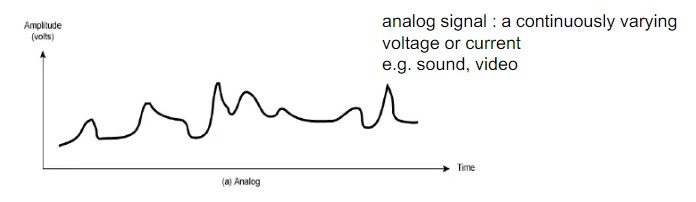
Analog signals are continuous signals that vary in amplitude and frequency over time. They are represented as smooth, continuous waves that can take on an infinite number of values. Examples of analog signals include sound waves, light waves, and radio waves.

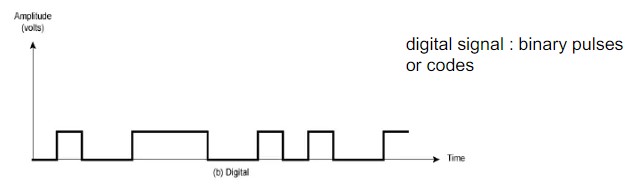
Digital signals, on the other hand, are discrete signals that take on a limited number of values. They are represented as a sequence of 1s and 0s, called bits, which can be transmitted and processed by computers and other digital devices. Digital signals can be either on or off, representing the presence or absence of a signal.

Analog and digital signals are two different types of signals that are used to represent and transmit information. Here are the main differences between them:
Refer the following link
The origins of instrumentation can be traced back to ancient times when early civilizations used basic instruments to measure time, distance, and weight. For example, the ancient Egyptians used a simple water clock to measure time, while the Greeks developed the first odometer to measure distance.
The development of modern instrumentation, however, can be traced back to the Industrial Revolution of the 18th and 19th centuries. With the growth of industry and the need for more efficient production processes, engineers began to develop more sophisticated instruments to measure and control various parameters.
One of the earliest examples of modern instrumentation was the steam engine governor, developed by James Watt in the late 18th century. This device used a centrifugal governor to regulate the speed of the steam engine, allowing it to operate more efficiently.
During the 19th century, advances in electrical engineering led to the development of electrical instruments for measuring voltage, current, and resistance. In the early 20th century, the invention of the vacuum tube led to the development of electronic instruments, such as oscilloscopes and signal generators.
Since then, instrumentation has continued to evolve and advance with the development of new technologies such as microprocessors, digital signal processing, and wireless communication. Today, instrumentation plays a critical role in a wide range of industries, from manufacturing and energy production to healthcare and environmental monitoring.
Here is an overview of some of the major developments in measurement technology in instrumentation engineering by decade:
Overall, measurement technology in instrumentation engineering has undergone significant advancements and innovations over the past century, leading to more accurate, precise, and versatile measurement devices and techniques. These advancements have enabled breakthroughs in various fields, from aerospace and automotive engineering to biomedicine and environmental science.
Instrumentation is implemented in either in Simple/ Stand alone or in Complex System. Example of Simple system is tachometer and example of Complex system is crude oil Heating process

Instrumentation engineering is a branch of engineering that deals with the design, development, installation, and maintenance of instruments and control systems used in industrial and manufacturing processes. It involves the use of sensors, transducers, and other electronic devices to measure and control various physical parameters such as temperature, pressure, flow rate, and level.
Instrumentation engineers are responsible for selecting and configuring the appropriate instruments and control systems to ensure that processes operate safely, efficiently, and within regulatory compliance. They also design and implement automation systems, which can help improve productivity and reduce operating costs.

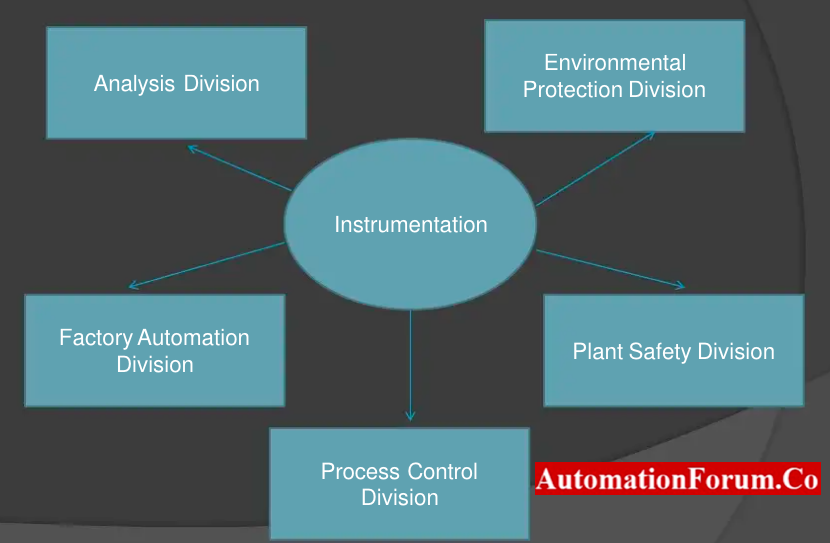
Instrumentation engineering can be broadly categorized into the following subfields:
An instrumentation engineer designs, develops, installs, and maintains instruments and control systems used in various industries and applications. Their responsibilities may include:
Instrumentation engineers work in various industries, including oil and gas, chemical, pharmaceuticals, manufacturing, and aerospace. They may work in teams or independently, depending on the project and organization.
Instrumentation engineering is important for many reasons, including:
Overall, instrumentation engineering is essential for the safe, efficient, and effective operation of many industrial processes, and for the advancement of technology in various fields.

Instrumentation engineers need to have certain skills to do well in their jobs.