
Introduction to Orifice Plates
Orifice plates are one of the most widely used primary flow elements for flow measurement in process industries. They are commonly installed in pipelines to measure the flow rate of liquids, gases, and steam using the differential pressure principle.
An orifice plate is a thin, flat metal plate with a precisely machined hole at its center or offset position. When a fluid flows through the orifice, it experiences a restriction, causing a pressure drop across the plate. This pressure difference is proportional to the square of the flow rate and is measured using a differential pressure transmitter.
Principle of Flow Measurement Using Orifice Plates
When fluid passes through an orifice plate:
- The flow stream contracts after passing the restriction
- The smallest cross-section of the stream is called the vena contracta
- The actual discharge is less than the theoretical discharge
- This reduction is mainly due to flow contraction, not energy loss
In flow measurement systems, the pressure difference created by this contraction is measured and used to calculate the flow rate accurately.
Why Different Types of Orifice Plates Are Required
Different industrial fluids have different characteristics such as:
- Presence of solids
- Viscosity
- Wetness (wet steam, oil-water mixtures)
- Slurry or colloidal nature
To handle these variations and avoid problems like clogging, erosion, and inaccurate measurement, different types of orifice plates are used.
Types of Orifice Plates
1. Concentric Orifice Plate
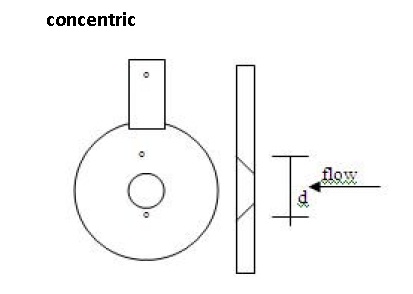
The concentric orifice plate is the most commonly used type of orifice plate in flow measurement.
Key Features:
- The orifice bore is centrally located
- Suitable for clean liquids, gases, and steam
- Provides high accuracy when flow conditions are ideal
Beta Ratio:
The beta ratio (β) is the ratio of the orifice bore diameter to the internal pipe diameter.
- Liquids: 0.15 to 0.75
- Gases & Steam: 0.20 to 0.70
- Best accuracy range: 0.40 to 0.60
To reduce friction and wear, the upstream edge is sharp while the downstream edge is often beveled at 45°.
Applications:
- Clean water
- Air and natural gas
- Superheated steam
- Process liquids without solids
2. Eccentric Orifice Plate
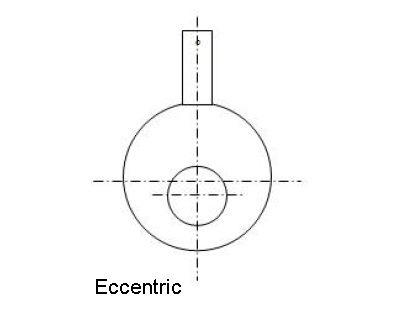
An eccentric orifice plate has the bore offset from the center of the plate.
Why It Is Used:
This design prevents the accumulation of:
- Solids
- Condensate
- Gas pockets
Key Characteristics:
- Bore is positioned at the top or bottom of the pipe
- Ideal for fluids containing suspended solids
- Commonly used for wet steam and oil-water mixtures
Pressure Tapping:
- Can use flange taps or vena contracta taps
- Taps must be located 90° or 180° opposite the eccentric opening
Applications:
- Slurry-laden liquids
- Oil containing water
- Wet steam service
3. Segmental Orifice Plate
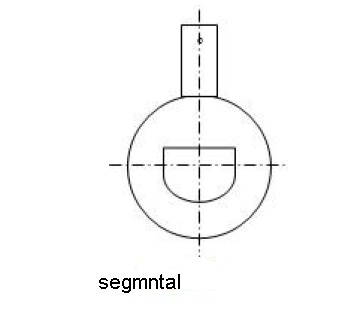
The segmental orifice plate has a hole shaped like a segment of a circle.
Design Advantage:
- Allows solids to pass through easily
- Reduces the risk of clogging
- Suitable for high-solids services
Installation Guidelines:
- Pressure taps should be located 180° opposite the segment opening
- Ensures better measurement stability and accuracy
Applications:
- Slurries
- Colloidal fluids
- Wastewater
- Pulp and paper industry
Segmental orifices are especially useful where concentric orifices would fail due to blockage.
4. Quadrant Edge Orifice Plate
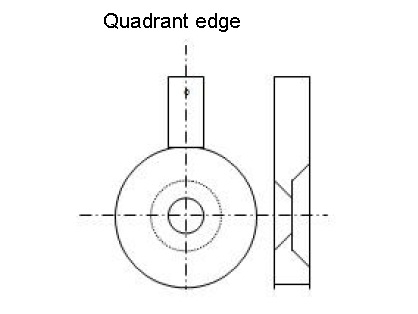
The quadrant edge orifice plate features a rounded inlet edge instead of a sharp edge.
Key Characteristics:
- Produces a stable discharge coefficient
- Performs well at low Reynolds numbers
- Commonly used in small pipe sizes
Pipe Size Range:
- Typically used for pipes less than 2 inches
Flow Conditions:
- Ideal for viscous fluids
- Suitable for low flow velocities
- Provides better repeatability than sharp-edged orifices under low-flow conditions
Applications:
- Heavy oils
- Syrups
- Polymer solutions
- Low Reynolds number services
Quadrant edge orifices are widely used in Europe for specialized low-flow applications.
Comparison of Orifice Plate Types
| Orifice Type | Best For | Key Advantage |
| Concentric | Clean fluids | High accuracy |
| Eccentric | Wet / solids fluids | Prevents buildup |
| Segmental | Slurries | Anti-clogging |
| Quadrant Edge | Viscous fluids | Stable at low Reynolds |
Advantages of Using Orifice Plates
- Simple and rugged construction
- No moving parts
- Cost-effective flow measurement solution
- Suitable for high pressure and temperature
- Easy installation and replacement
Different types of orifice plates are used in flow measurement to suit specific fluid characteristics and process conditions. While concentric orifice plates are ideal for clean fluids, eccentric and segmental designs handle solids and wet flows more effectively. Quadrant edge orifices are best suited for low Reynolds number and viscous applications.
Selecting the correct orifice plate type is critical for accurate flow measurement, long service life, and reliable plant operation.
